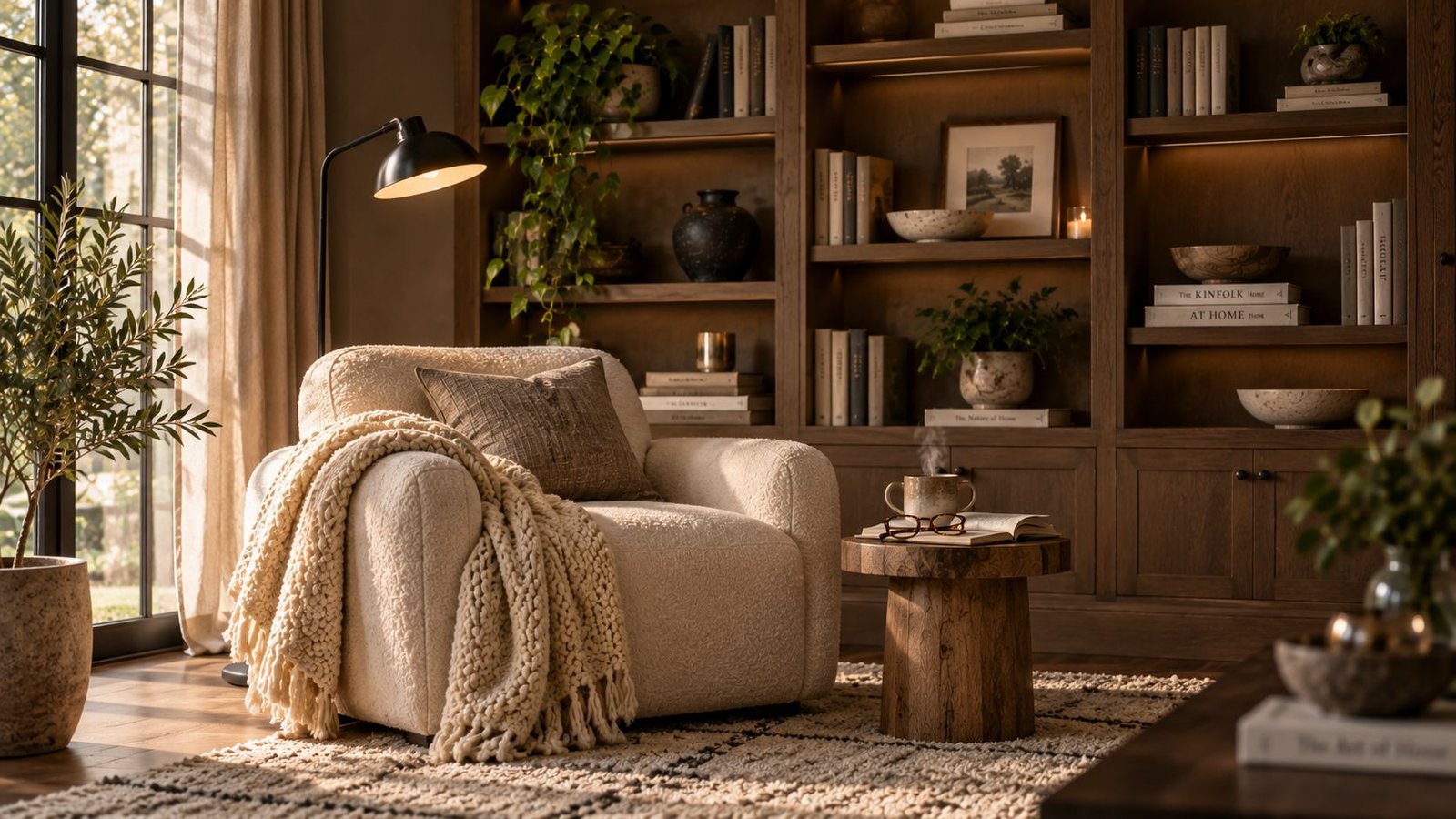
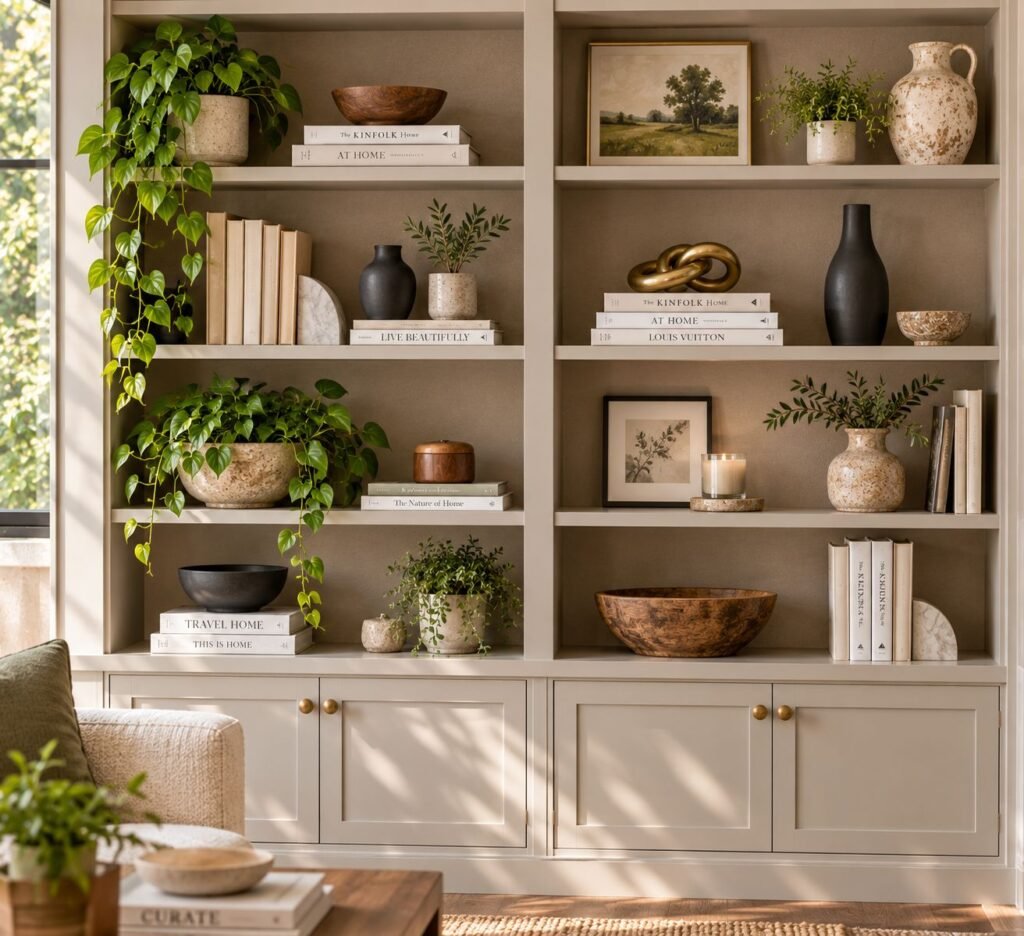
There is a certain kind of comfort that comes from settling into a chair with a good book while the rest of the house grows quiet. Maybe there’s rain against the window, a warm drink resting nearby, and a soft blanket within reach. For a little while, there’s nowhere else you need to be.
That feeling doesn’t require a library or a large home. A reading corner can be created from a small, overlooked part of your living room, bedroom, or even a sunny spot beside a window. What matters is making the space feel intentionally separate from the rest of the room, comfortable enough to linger in and calm enough to help you step away from screens and everyday distractions.
The secret is to design the corner around how you want to feel while you’re there, not simply how you want it to look. The right location, a genuinely comfortable chair, and thoughtful lighting can turn an ordinary corner into a place you’ll naturally want to return to.
Choose the Spot and Create a Visual Sanctuary
A reading corner works best when it feels slightly removed from the everyday rhythm of the room. Look for an unused corner beside a window, a quiet area of the bedroom, or a section of the living room that’s away from the television and main walkways. Natural daylight is ideal during the day, but choosing a location with minimal foot traffic is just as important.
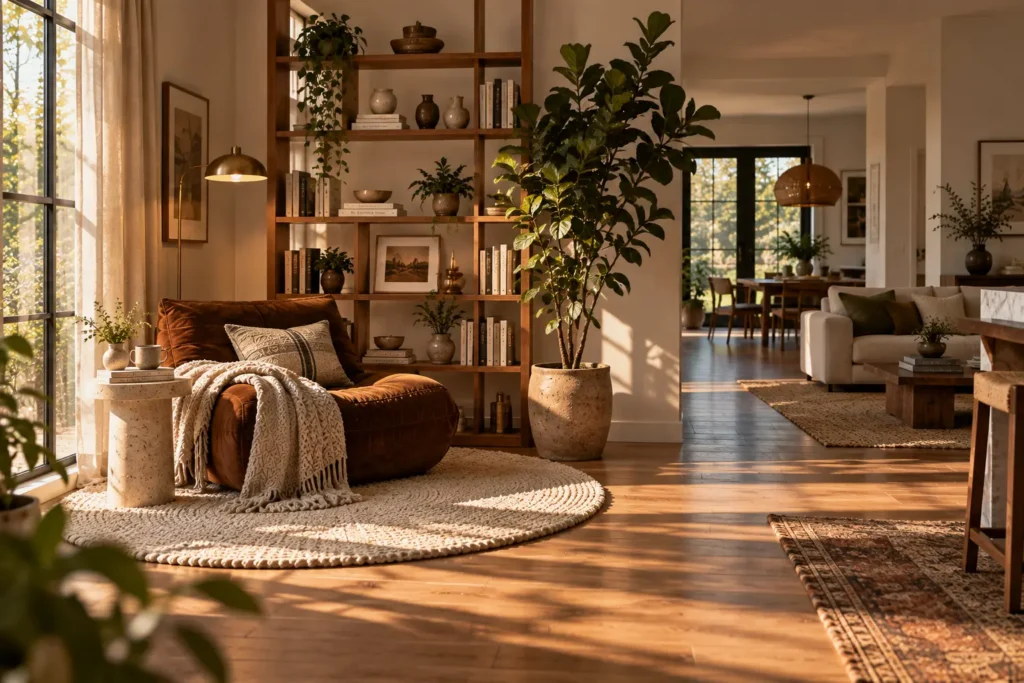
Once you’ve found the right spot, give it a visual boundary. A round or softly shaped area rug can define the footprint, while a tall plant, narrow bookshelf, or folding screen positioned slightly behind the chair can make the corner feel more private.
You don’t need to completely close the space off. The idea is simply to make the reading area feel like its own little destination rather than a chair that happens to be sitting against a wall.
If your apartment or room is small, keep the enclosure light. A tall plant or slim bookshelf can provide separation without making the space feel boxed in.
Create Your Reading Zone
- Round wool or jute area rug: defines the seating area while adding softness underfoot.
- Tall floor plant: creates a natural visual boundary without visually closing off the room.
- Narrow ladder bookshelf: helps define the nook while keeping favourite books nearby.
- Three-panel woven folding screen: useful when the reading corner shares space with a busier part of the home.
Start with an Intentionally Comfortable Chair
The chair is the heart of the reading corner, so comfort should come before appearance. A chair that looks beautiful but leaves you shifting after twenty minutes won’t create the kind of retreat you’re hoping for.
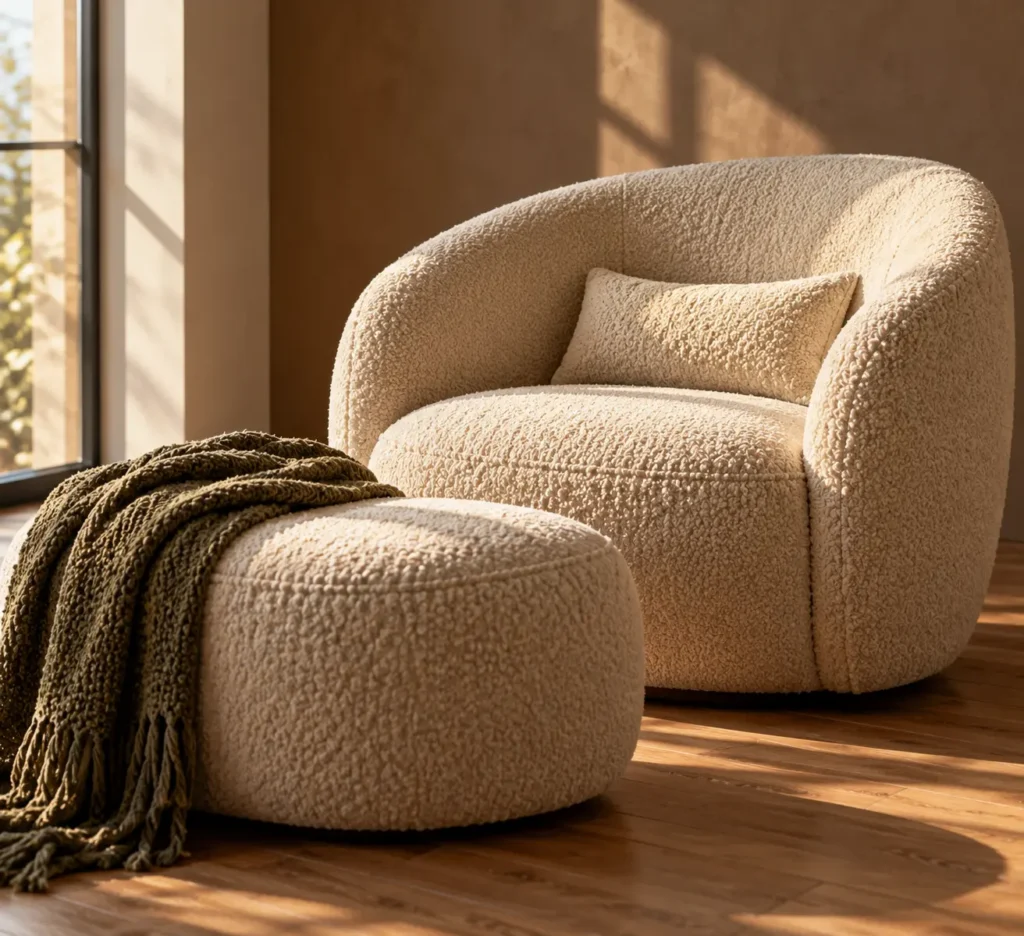
Look for a seat with enough depth to let you change positions comfortably while reading. A gently curved back or higher backrest can provide useful support, while soft but supportive cushioning makes longer reading sessions much more enjoyable.
If space allows, pair the chair with an ottoman or footrest. Being able to put your feet up changes the entire feeling of the corner and makes it easier to settle in for an afternoon rather than simply sitting down for a few minutes.
You don’t necessarily need an oversized lounge chair. The best choice is one that gives you enough room to relax while still fitting comfortably within the proportions of your room.
Choose Comfortable Seating
- Deep upholstered accent chair: gives you enough room to settle in without overwhelming a small room.
- Bouclé barrel chair: combines a rounded silhouette with tactile upholstery for a softer, cocoon-like feel.
- Matching or coordinating ottoman: lets you stretch out and supports a more relaxed reading position.
- Supportive lumbar pillow: adds another layer of comfort without requiring a larger chair.
Layer Soft, Targeted Task Lighting
Good reading light needs to do two things at once: make the pages easy to see and keep the atmosphere relaxing. A beautiful reading corner loses some of its appeal if you have to squint at a book or rely on a harsh ceiling fixture.
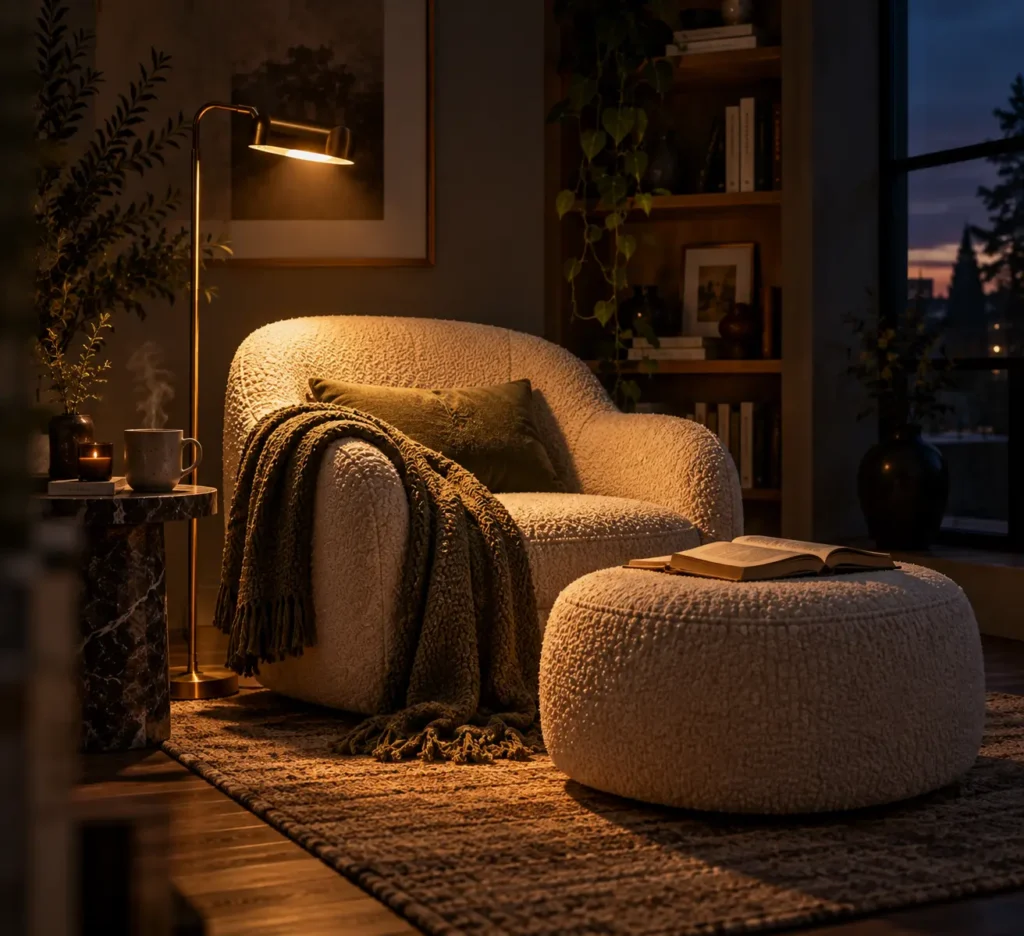
Position a floor lamp or adjustable wall sconce beside or slightly behind the chair so the light reaches the pages without creating distracting glare. A swing-arm fixture is particularly useful because you can direct the light exactly where you need it.
For a softer evening atmosphere, combine the focused reading light with a warm ambient source. Choose a dimmable warm-white bulb, generally around 2700K–3000K, so the corner feels inviting rather than clinical.
The goal isn’t to make the entire room brightly lit. Create a comfortable pool of light around the chair, while allowing the surrounding room to remain slightly softer.
Light the Pages Beautifully
- Adjustable brass pharmacy floor lamp: provides focused task lighting while adding a timeless decorative element.
- Swing-arm wall sconce: a useful choice when floor space is limited and the light needs to be directed toward the chair.
- Rechargeable table lamp: adds portable ambient light without requiring new wiring.
- Warm dimmable LED bulbs: allow you to adjust brightness while keeping the light comfortably warm.
Pile on Soft, Tactile Layers
Once the chair and lighting are right, bring in the materials that make the corner feel genuinely comfortable. The best reading spaces aren’t soft because they’re covered in accessories; they’re soft because a few different textures work together.
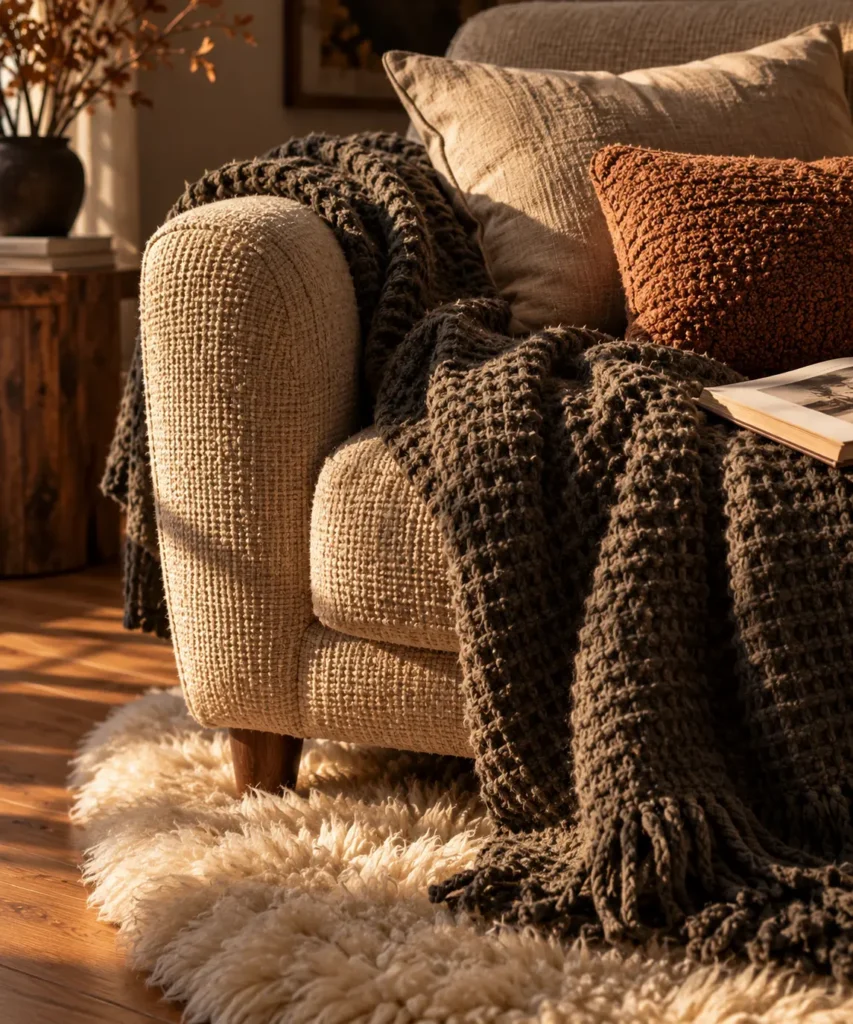
Start with something substantial underfoot. A wool or sheepskin-style rug makes the area feel warmer and more defined, while a substantial throw gives the chair an inviting, relaxed quality. Add one or two cushions in contrasting textures, perhaps bouclé beside linen, or velvet beside a woven fabric, rather than filling the chair with pillows.
A heavier blanket can also make the corner feel especially comforting. Draped casually over the arm of the chair, it becomes something you can actually reach for when the room cools down rather than simply another decorative layer.
The key is tactile contrast. Combine soft, nubby, smooth, and woven surfaces so the corner feels interesting to touch as well as beautiful to look at.
Add Cozy Layers
- Washable wool area rug: adds warmth underfoot while defining the reading zone.
- Chunky or waffle-knit throw blanket: brings substantial texture and comforting weight to the chair.
- Bouclé or linen accent cushion: adds tactile contrast without making the chair feel overcrowded.
- Soft faux-fur accent pillow: introduces a plush layer for an especially cozy winter reading corner.
BRING MORE GOOD IDEAS HOME
A little inspiration, delivered regularly.
Get thoughtful decorating ideas, practical home tips, and fresh inspiration in your inbox.
Weekly Inspiration. No Spam
Include a Practical Side Surface Within Reach
A reading corner becomes much more enjoyable when you don’t have to interrupt your book every few minutes. Keep a small table close enough that you can comfortably reach it from the chair without leaning or getting up.
The surface only needs to accommodate the things you genuinely use: a cup of coffee or tea, your current book, reading glasses, a journal, or perhaps a small candle. A compact round table works well beside a larger chair, while a C-shaped table can slide closer when floor space is particularly tight.
Don’t treat the table as another place to display accessories. Its purpose is convenience first. A simple tray or small catchall can keep the few essentials organised without turning the surface into another clutter zone.
Create a Useful Reach Zone
- Round travertine side table: adds natural stone texture while providing a stable surface beside the chair.
- C-shaped end table: ideal for compact corners because its base can slide underneath or beside the chair.
- Small catchall tray: keeps glasses, a journal, or other small essentials contained.
- Marble or stone coaster set: protects the tabletop while adding a subtle finishing detail.
Keep Your Current Reads Within Arm's Reach
A reading corner shouldn’t require you to walk across the room every time you finish a book. Keep a small selection of current or favourite reads close to the chair so the space feels ready whenever you have a few quiet minutes.
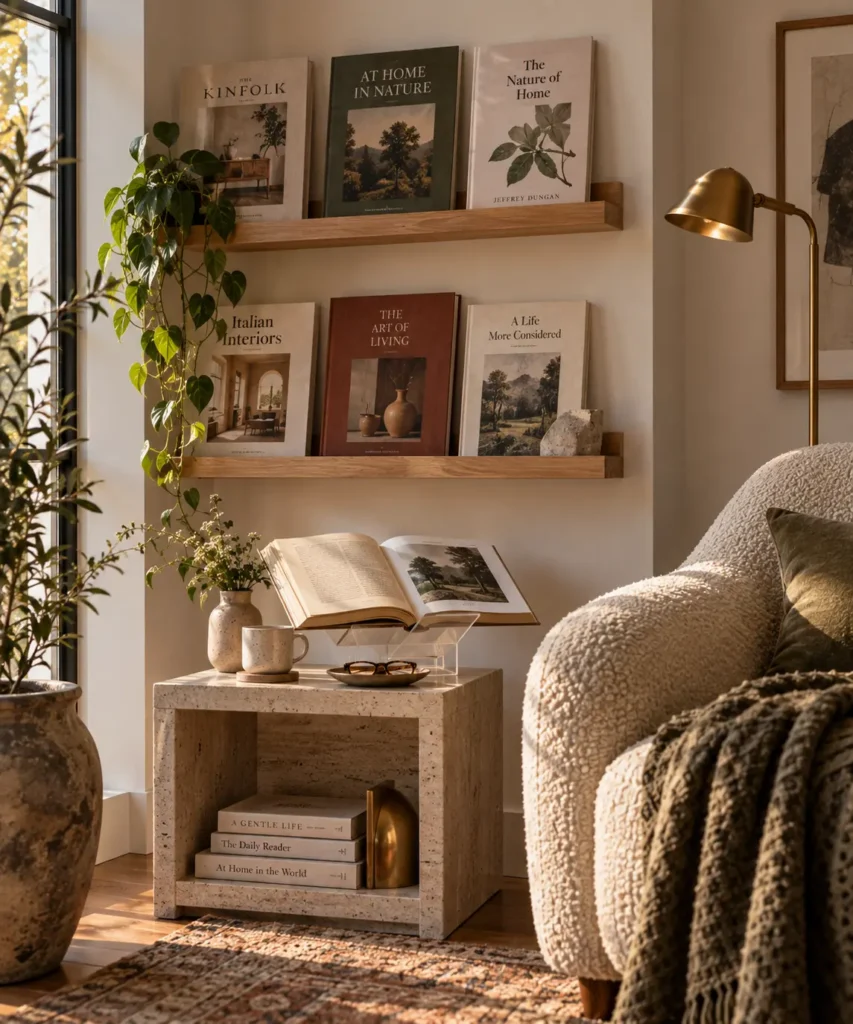
If you have floor space, a narrow ladder bookshelf or compact book cart can hold a small collection without overwhelming the corner. When floor space is limited, use the wall instead. A couple of floating shelves or slim picture ledges can display books vertically while keeping the floor completely open.
Don’t feel pressure to fill the shelves. A handful of books you are actually reading will make the corner feel more personal than an oversized bookcase packed simply for decoration.
You can also display one favourite book face-out or lean it against a small stand. This gives the corner a little visual character while keeping your current reading material immediately accessible.
Keep Your Books Close
- Narrow ladder bookshelf: provides vertical storage while taking up relatively little floor space.
- Wall-mounted book ledges: keep books visible without adding another piece of floor furniture.
- Compact rolling book cart: useful when you want flexible storage that can move with you.
- Wooden book display stand: lets you feature a current read while keeping it easy to pick up.
Engage the Senses with Personal and Living Touches
Once the practical pieces are in place, add a few details that make the reading corner feel like your space rather than a perfectly styled furniture vignette.
Start with something living. A small floor plant, trailing pothos, or simple arrangement of olive stems can soften the edges of the corner and introduce a little movement. If natural light is limited, a realistic faux plant can create a similar visual effect without adding another maintenance task.
Then add one or two personal elements that make you happy to see them there. A framed print, a small ceramic vase, or a favourite object can give the corner character without making it feel decorated for decoration’s sake. A candle or diffuser can add another sensory layer, particularly in the evening.
The goal isn’t to surround yourself with things. Choose a few details that make the space feel familiar, peaceful, and unmistakably yours.
Add a Few Thoughtful Touches
- Potted floor plant: brings natural colour and softness to the corner.
- Ceramic vase: adds a simple sculptural element without taking up much space.
- Framed artwork: gives the nook a personal focal point.
- Sandalwood or amber-scented candle: adds a warm sensory note for evening reading.
Elevate the Corner with Ritual Comforts
The final step is less about decorating and more about making the reading corner easy to maintain. A space that looks beautiful but becomes a dumping ground for chargers, blankets and cups won’t remain relaxing for long.
Give the everyday extras a designated home. A lidded basket or storage ottoman can hold blankets and cushions, while a small cable-management box can keep charging cords from becoming part of the visual clutter. If you like having a warm drink while you read, keep your mug, coaster and reading essentials together rather than allowing the side table to accumulate unrelated items.
Think of these as small rituals rather than rules. Return the blanket to its basket, put your current book back in its place, clear the side table when you’re finished, and keep the lighting ready for the next evening.
When the corner takes only a minute or two to reset, you’re much more likely to use it regularly.
Keep the Corner Ready
- Decorative lidded basket: keeps blankets and small accessories contained while looking at home in the room.
- Storage ottoman: provides hidden storage while doubling as a comfortable footrest.
- Cable-management box: keeps charging cables tucked away and the area visually calm.
- Leather or stone catchall tray: gives glasses, bookmarks, and other small essentials a dedicated landing place.
Conclusion
Creating a reading corner you’ll never want to leave isn’t about finding the biggest chair or filling an empty corner with beautiful things. It’s about designing a small space around the experience you want to have there.
Choose a spot that feels naturally quiet, give it a defined footprint, and invest in a chair that genuinely invites you to settle in. Add focused warm lighting, layer in textures you enjoy touching, keep your current book and a drink within reach, and finish with a few personal details that make the space feel like yours.
You don’t need a dedicated library or an entire room. A single comfortable corner can be enough to create a daily pause from everything else happening around you.
And perhaps that’s the real luxury of a reading nook: it’s one of the few places in your home where doing nothing except sitting down, opening a book, and staying awhile is exactly what the space was designed for