
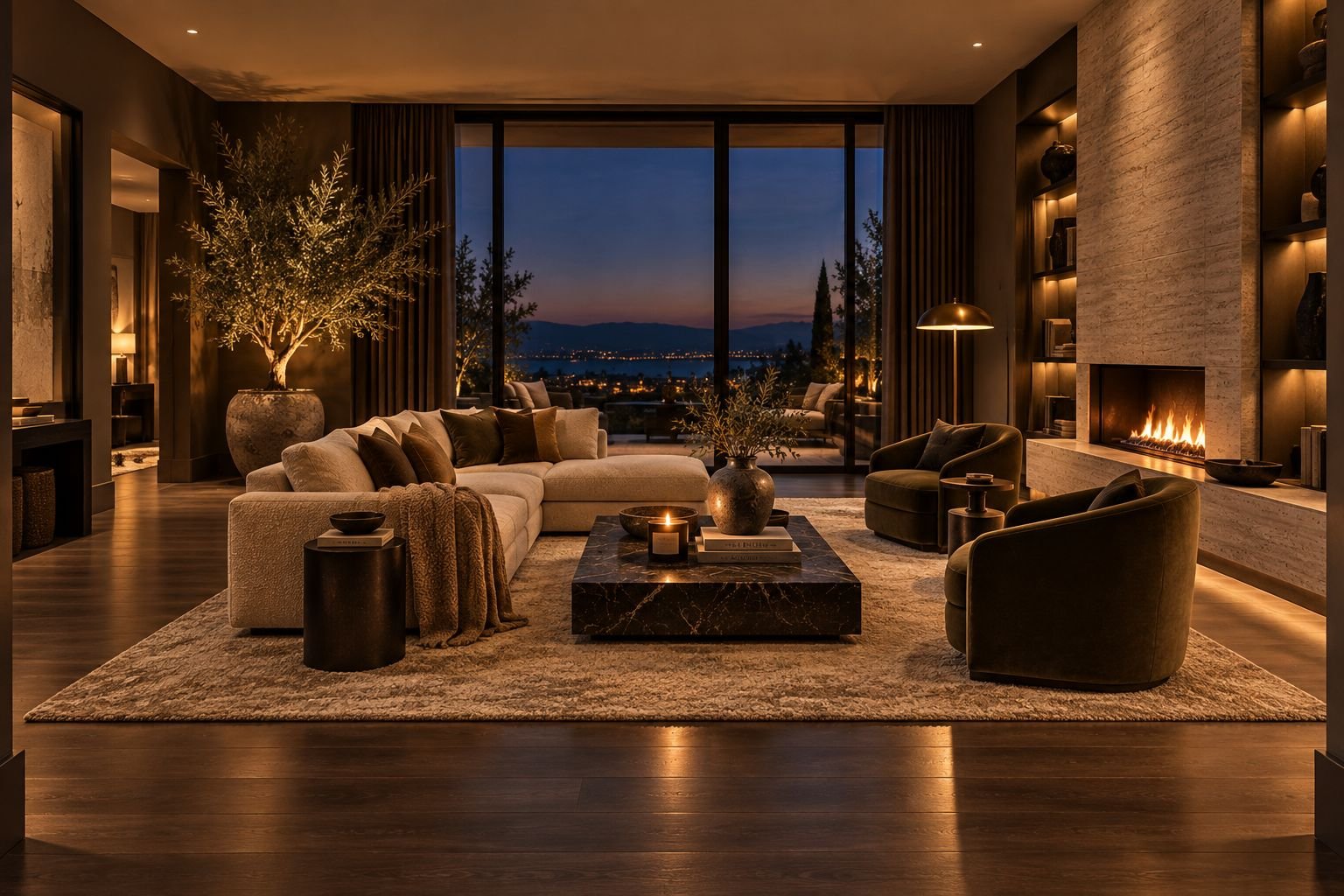
A luxury living room isn’t necessarily filled with expensive furniture or dramatic decoration. The rooms that feel most elevated usually create something more subtle; an atmosphere that feels enveloping, intentional, and removed from everyday life.
Think about the feeling of stepping into a beautiful boutique hotel lounge at the end of the day. The colours are rich but controlled, the lighting is soft, the furniture feels inviting, and every object seems to have been chosen deliberately. Nothing vies for notice, yet the room never feels empty.
You can create that same sense of retreat at home by treating the living room as an experience rather than a collection of furniture. The goal is to control colour, light, visual hierarchy, materials, proportion, and atmosphere so the room feels sophisticated without becoming cold or overly formal.
These design principles will help you create a living room that feels warm, polished, and genuinely luxurious.
The Enveloping Color Story
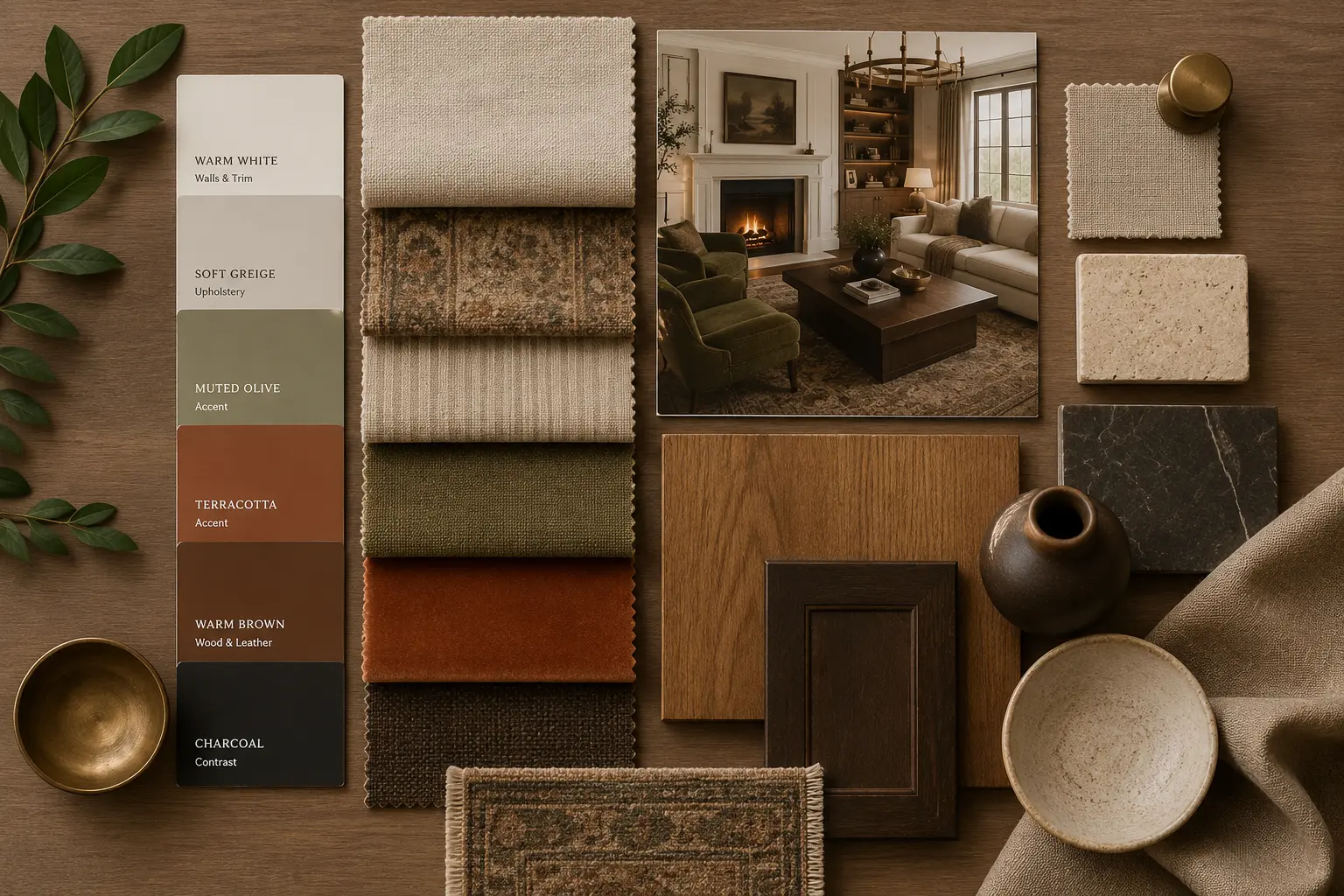
Luxury interiors rarely depend on a collection of unrelated colours. Instead, they often create a deep, enveloping colour story where several tones from the same family move across the walls, upholstery, curtains, and accessories.
This is where colour drenching can make such a dramatic difference. Rather than keeping the walls pale while introducing darker furniture as isolated accents, allow a warm, sophisticated tone to travel through more of the room.
Deep olive, warm charcoal, espresso, muted burgundy, and rich taupe can all create this enveloping effect. You don’t necessarily need to make the room extremely dark. A warm, mid-depth shade can create the same sense of intimacy while keeping the space comfortable during the day.
The key is continuity. When the walls, larger textiles, and selected furnishings share related undertones, the room feels more immersive and intentional. Then lighter or reflective accents can be introduced selectively to prevent the palette from becoming heavy.
If you’re looking for more ways to create an elevated palette, explore our guide to color combinations that make any home feel more expensive.
Build an Enveloping Colour Story
- Deep olive or earthy green: creates a sophisticated connection with nature.
- Warm charcoal or espresso: adds depth without the coldness of blue-grey.
- Muted burgundy accents: introduce controlled richness through cushions or artwork.
- Warm taupe and cream: provide lighter counterpoints that keep the palette balanced.

spaces
Happy
days ♡
The Low-Level Architectural Glow
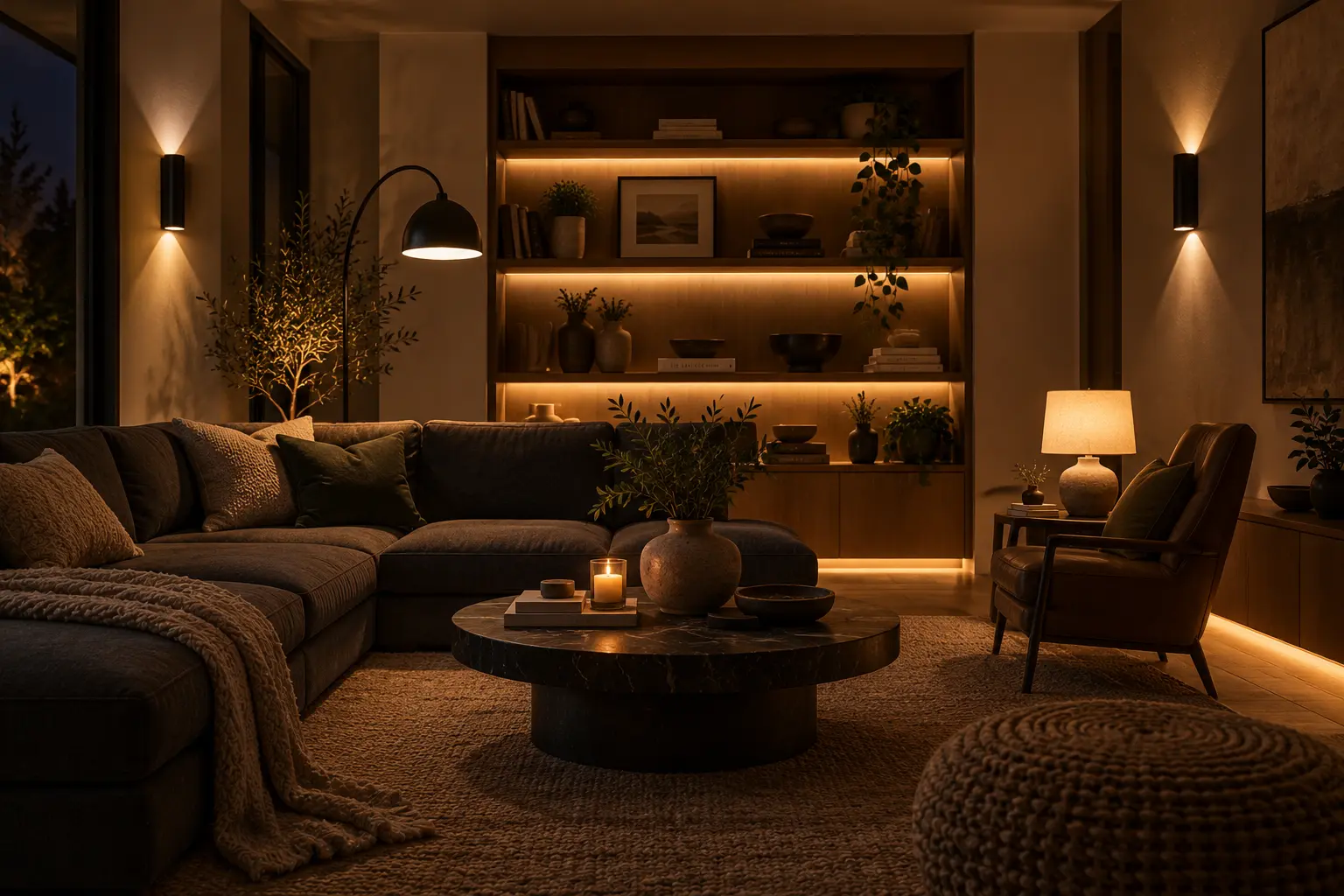
One of the biggest differences between an ordinary living room and a luxurious retreat is how the room is illuminated after dark.
A single bright ceiling fixture spreads light evenly across everything, leaving very little atmosphere. Luxury spaces work differently. Light is distributed at several levels so the eye moves between small pools of illumination rather than being flooded from above.
Use wall sconces to create vertical points of light, a floor lamp to illuminate a seating zone, and lower lamps or accent lighting to create intimate pools around furniture. If your room has architectural lighting, concealed LED strips can add a subtle glow beneath shelves, cabinetry, or architectural features.
Keep the colour temperature warm and the intensity controlled. The goal isn’t simply to make the room brighter, it is to make certain areas glow while allowing other areas to recede into shadow.
That contrast between illumination and darkness is what gives a room the intimate atmosphere of a sophisticated hotel lounge.
Create the Architectural Glow
- Sculptural wall sconces: create elegant vertical pools of light.
- Arc or sculptural floor lamp: directs warm illumination toward the seating area.
- Low-profile table lamp: adds a softer layer closer to eye level.
- Concealed LED strip lighting: creates subtle architectural highlights beneath shelves or cabinetry.
The Statement Focal Point
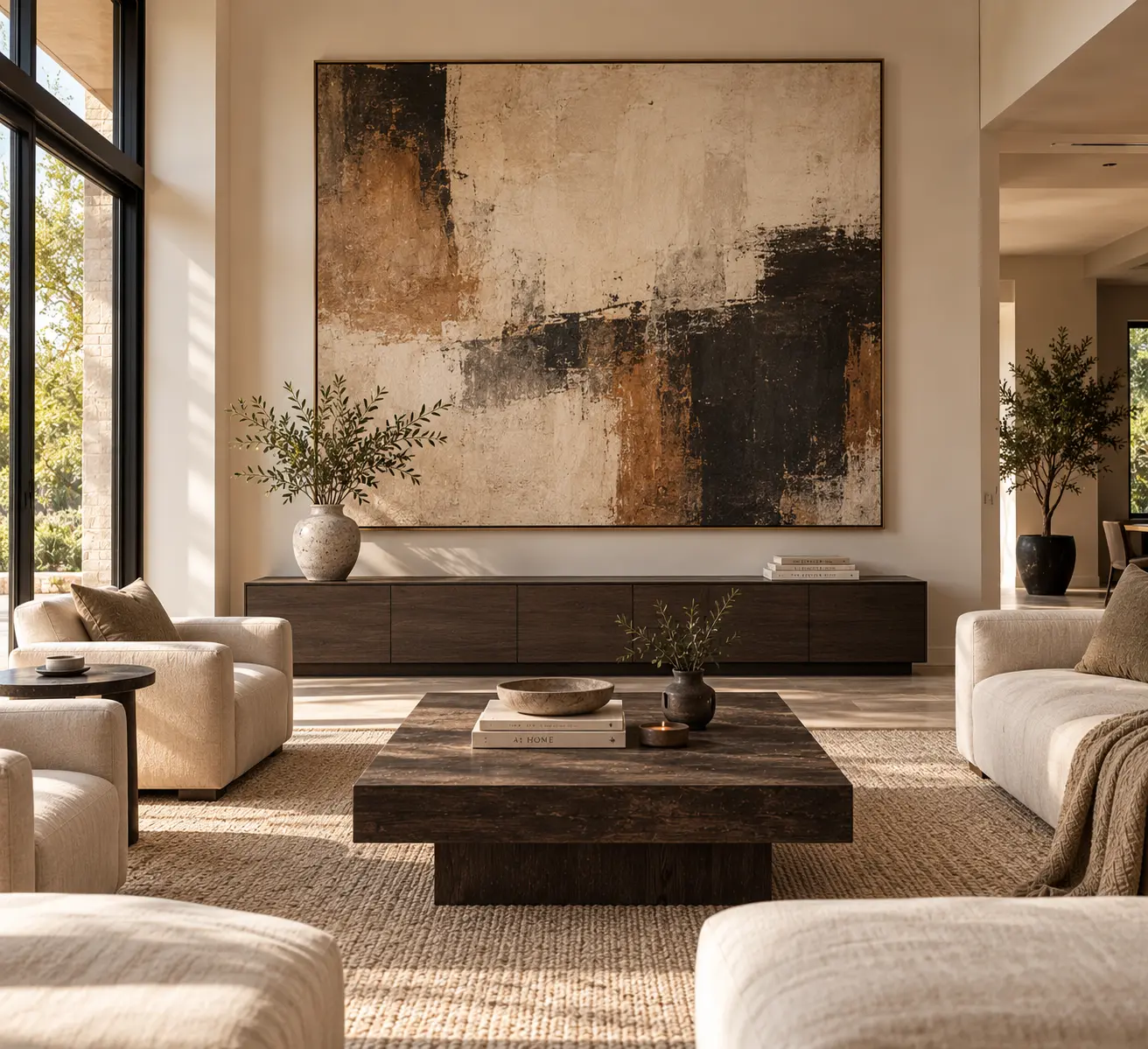
A luxury living room needs somewhere for the eye to land.
Without a strong focal point, even beautiful furniture and accessories can create visual noise. The room begins to feel like a collection of individual purchases rather than a deliberately designed environment.
Choose one commanding element to establish the visual hierarchy. It could be a dramatic fireplace, a large piece of abstract artwork, an oversized stone coffee table, or another architectural feature that naturally attracts attention.
Once you’ve selected the anchor, allow the surrounding furniture and décor to support it rather than detract from it. If the artwork is dramatic, keep nearby accessories restrained. If a fireplace or stone feature dominates the room, let the furniture frame it.
The goal isn’t to make every object impressive. It’s to create one unforgettable moment and allow everything around it to become quieter.
Create One Powerful Anchor
- Oversized abstract artwork: creates immediate visual drama without requiring architectural changes.
- Veined stone or travertine coffee table: gives the center of the room substantial visual weight.
- Sculptural fireplace surround: establishes a permanent architectural focal point where available.
- Large-scale decorative mirror: adds visual impact while helping reflect surrounding light.
Designer Trick: Make the Focal Point Work Twice
If you use a large mirror as your focal element, position it where it can catch the glow from one of your evening light sources.
The reflected light can increase the sense of depth and distribute the warm glow farther through the room without adding another fixture.
High-End Tactile Depth
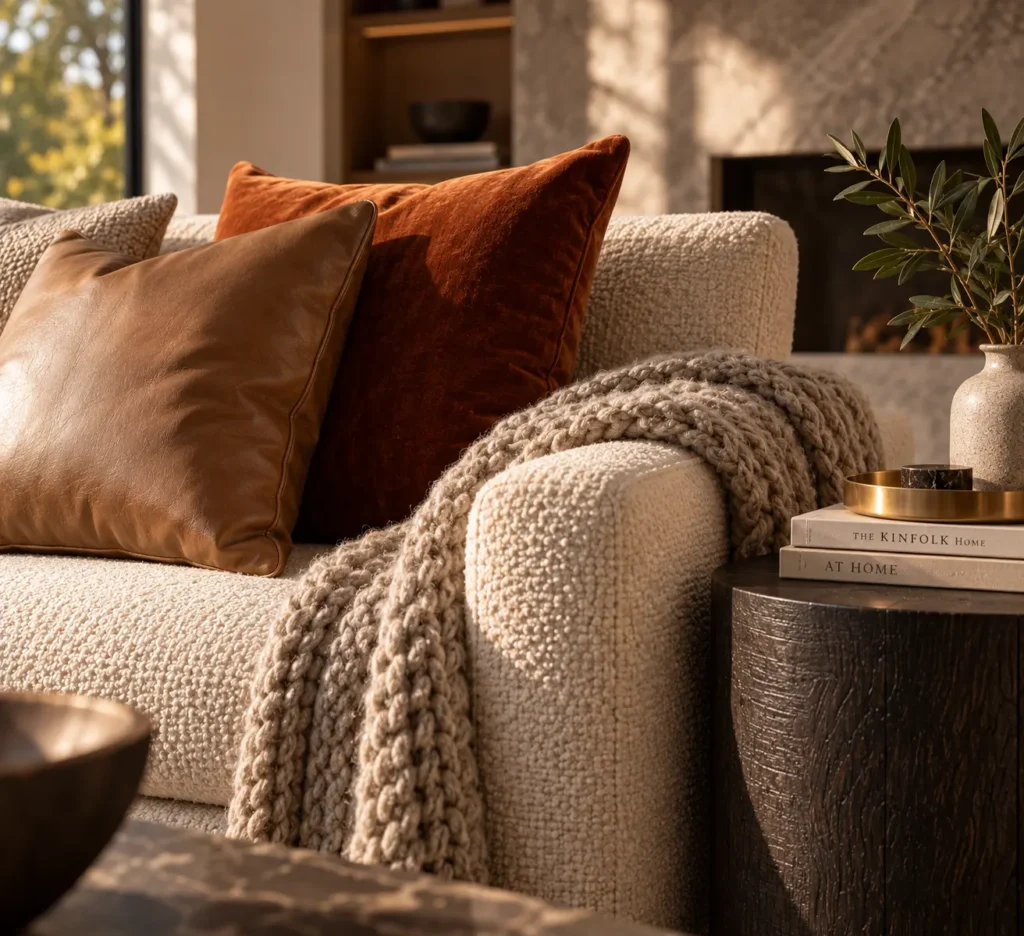
Luxury is often felt before it is consciously noticed. A living room can have beautiful furniture and an impressive colour palette, yet still feel flat if every surface has the same texture.
The solution is material contrast. Combine smooth and soft, matte and reflective, tailored and tactile finishes so the room develops depth as you move through it.
Start with one substantial upholstery material such as supple leather, performance velvet, or refined bouclé. Then introduce contrasting materials through cushions, rugs, tables, and smaller accents. A brushed-brass detail against dark wood, for example, creates a subtle reflective moment without making the room feel flashy.
The goal isn’t to use every luxurious material available. Choose a small number of distinctive finishes and give each one enough space to register.
Layer Refined Materials
- Performance velvet upholstery: adds depth and a polished, touchable quality.
- Supple leather accents: introduce smooth contrast and a tailored feel.
- Bouclé cushions: bring tactile softness without overwhelming the room.
- Brushed-brass details: add controlled warmth and subtle reflection.
Designer Maintenance Tip
Luxury materials also need to stay immaculate. A simple fabric lint roller can keep velvet and bouclé looking crisp, while appropriate leather care helps preserve smooth upholstery. Choose the maintenance product that matches the dominant material in your room rather than adding unnecessary products.
The Floating Lounge Blueprint
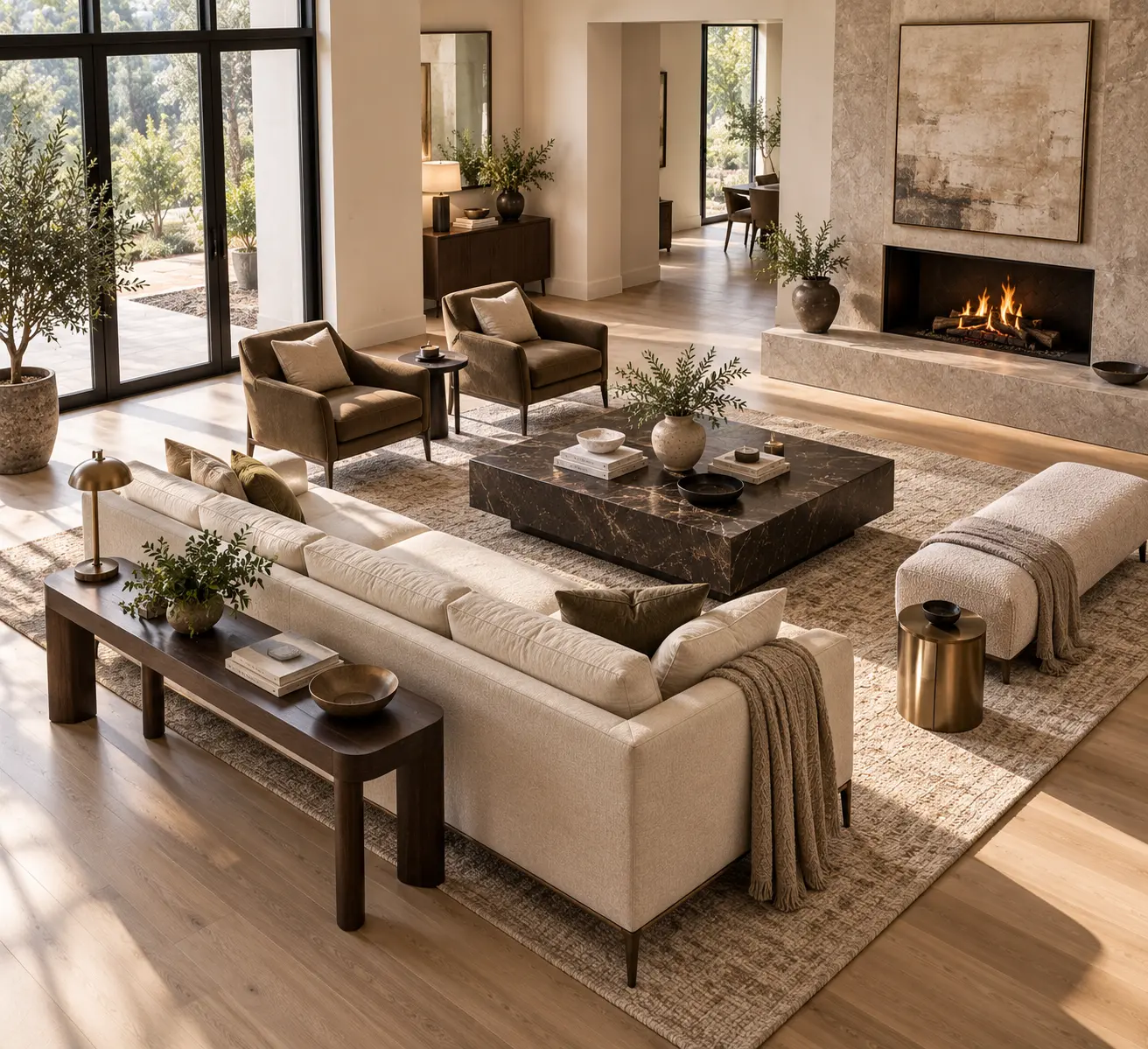
The furniture arrangement is what turns a collection of beautiful pieces into a luxury retreat.
Instead of pushing every sofa and chair against the walls, create a floating lounge arrangement that feels deliberately composed. Position the primary sofa and chairs around a central coffee table, leaving enough room around the grouping for comfortable movement.
Choose furniture with relatively clean silhouettes and enough visual breathing room underneath. Exposed legs, tailored upholstery, and carefully proportioned pieces allow more of the floor to remain visible and prevent the room from becoming visually heavy.
The arrangement should feel generous rather than crowded. A luxury lounge isn’t about filling every available inch, it is about giving each important piece enough space to look intentional.
Think of the room as a private hotel lounge: seating faces inward, circulation remains effortless, and the composition feels complete without feeling packed.
Build the Floating Lounge
- Low-slung tailored sofa: establishes the main lounge without visually dominating the room.
- Sculptural lounge chair: adds another distinctive silhouette while maintaining an elevated feel.
- Slim-legged side table: provides function without creating another visual block.
- Large proportional area rug: visually connects the furniture into one sophisticated seating zone.
BRING MORE GOOD IDEAS HOME
A little inspiration, delivered regularly.
Get thoughtful decorating ideas, practical home tips, and fresh inspiration in your inbox.
Weekly Inspiration. No Spam
Establish a Continuous Circulation Track
A floating lounge arrangement only works when the room remains effortless to move through. This is one of the details that separates a thoughtfully planned living room from one where furniture simply looks good in photographs.
Once you pull the sofa and chairs away from the walls, think about the space around the entire seating island. Create a continuous walking route between the main furniture grouping and the surrounding walls, doors, or other frequently used areas.
As a practical target, aim for roughly 90–100 cm of clear circulation where the room allows, while adjusting for the actual dimensions and needs of your space. The important thing is that people shouldn’t have to squeeze between a sofa and wall, step awkwardly around a coffee table, or walk directly through the middle of the conversation area.
This open perimeter also has a visual benefit. It separates the lounge from the rest of the room, making the seating feel like an intentional destination rather than furniture scattered across the floor.
Protect the Circulation Zone
- Slim tailored credenza: keeps storage against the wall, leaving breathing room for the floating lounge.
- Low-profile area rug: clearly defines the seating island without creating a bulky visual boundary.
- Plug-in architectural sconces: provide lighting without sending cords across walking routes.
- Slim-legged console table: adds function along the perimeter while preserving the central pathway.
Curated Hospitality Accents
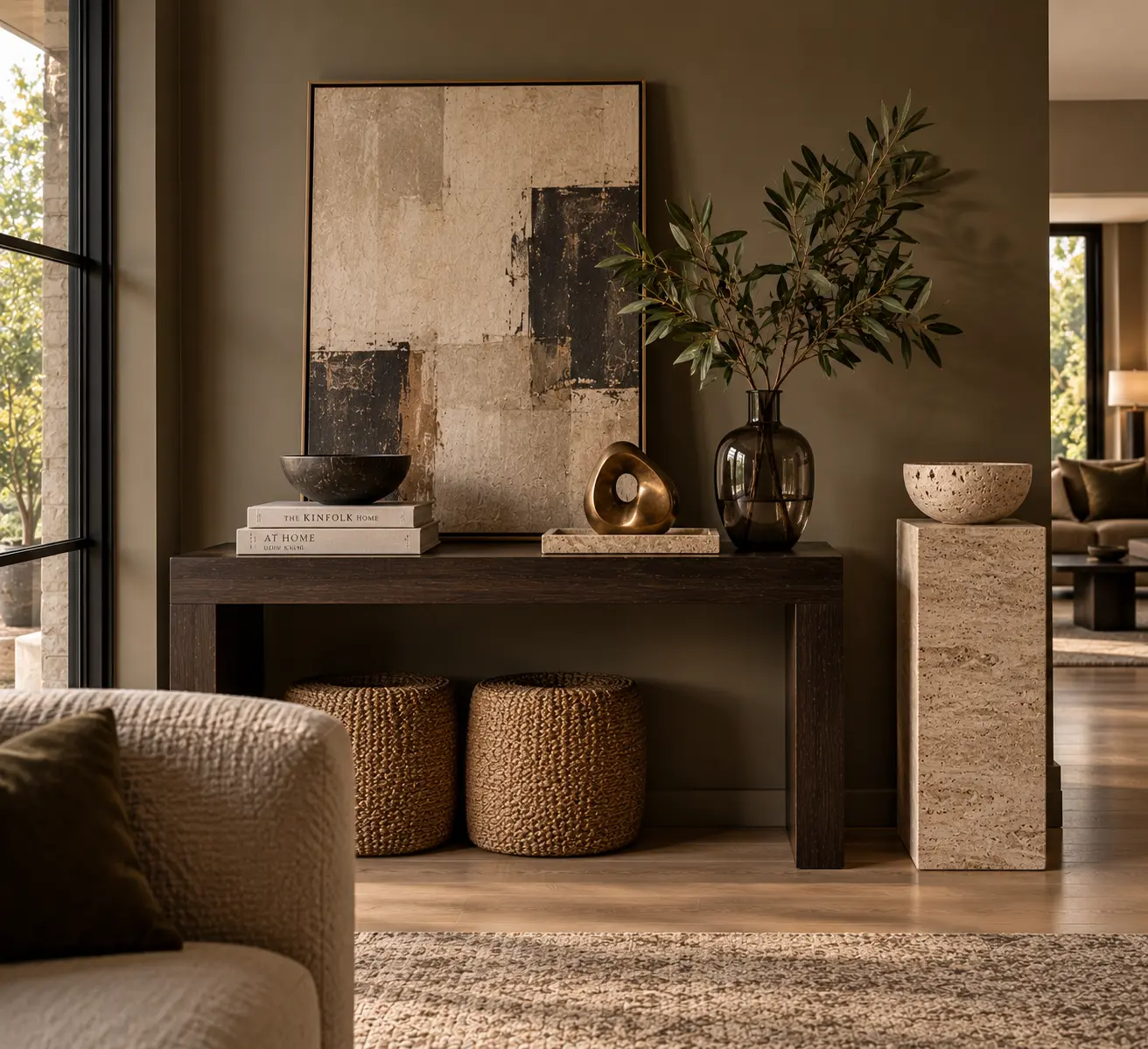
Once the major architectural and furniture decisions are complete, resist the temptation to fill every empty surface. The most luxurious living rooms tend to feel edited rather than decorated.
Think about the objects you might find in an exceptional boutique hotel: a sculptural piece on a coffee table, a few carefully selected books, a stone tray, a beautiful vessel, or a single piece of art leaning casually against a wall.
Choose accessories with interesting silhouettes and substantial materials rather than collecting lots of small decorative pieces. Travertine, marble, glass, aged metal, and natural wood can give the room visual richness without requiring a large quantity of décor.
Then create small moments around the room rather than decorating every surface equally. A sculptural object on a console, a tray on the coffee table, and one substantial piece on a side table are often enough.
Luxury comes from the edit.
Curate the Finishing Pieces
- Travertine pedestal: gives a sculptural object additional presence.
- Abstract knot sculpture: adds artistic character without visual clutter.
- Decorative glass cloche: creates a refined display moment around a small object.
- Oversized hardcover coffee-table books: provide visual weight and an effortless hospitality feel.
Scent Branding and Olfactory Identity
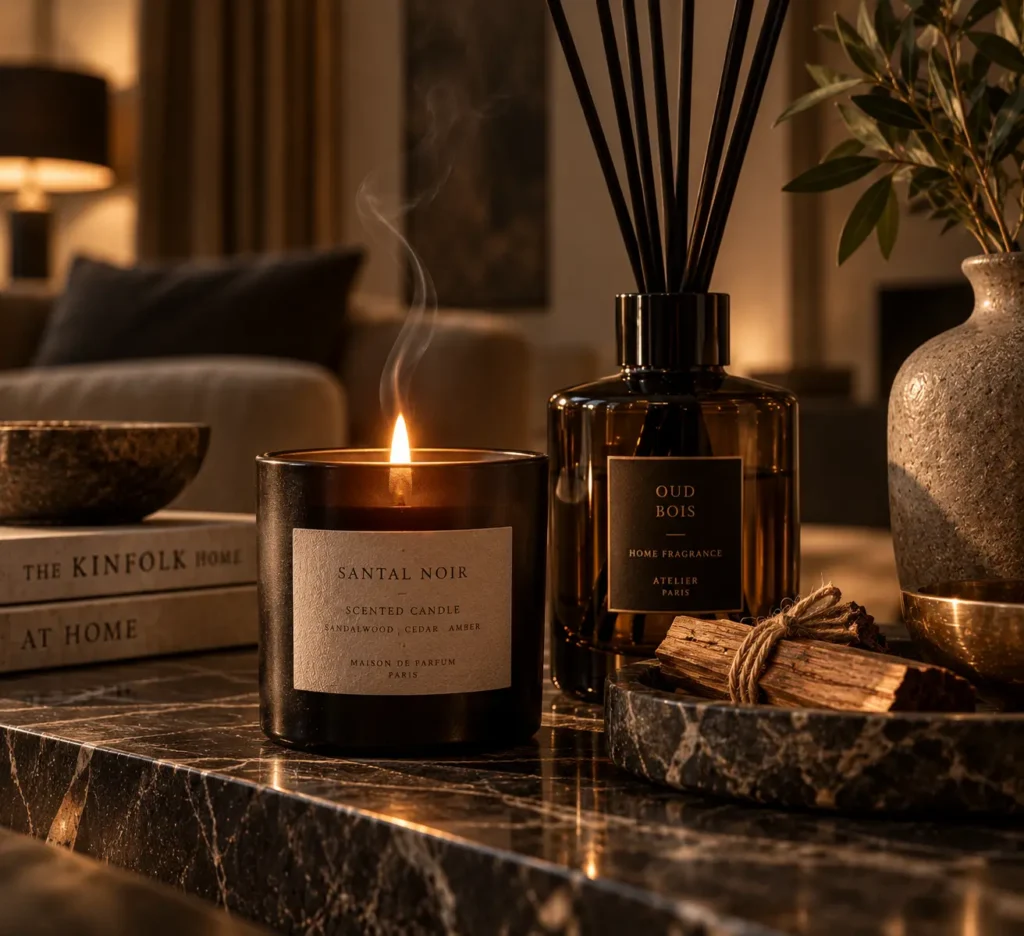
The final layer of an elite living room is one you can’t see, but you can remember.
Luxury hospitality spaces often use fragrance to create a distinctive emotional atmosphere. You can bring the same principle home by choosing one sophisticated scent family rather than filling the room with several unrelated fragrances.
Move away from overly sweet or strongly synthetic scents if you want a more refined atmosphere. Instead, consider deeper notes such as sandalwood, cedarwood, amber, vetiver, or oud. These warmer, more complex profiles work particularly well alongside the darker colours, natural materials, and low-level lighting used throughout the room.
The key is restraint. Your living room shouldn’t smell like several candles overpowering one another. Choose one primary fragrance and introduce it through a single candle, diffuser, or occasional incense ritual.
The result becomes part of the room’s identity, a subtle sensory detail that can make the space feel immediately recognizable and removed from the everyday.
Create a Signature Scent
- Amber candle: creates a warm, resinous atmosphere during the evening.
- Sandalwood diffuser: provides a subtle background fragrance without requiring an open flame.
- Cedarwood or vetiver fragrance: adds a dry, sophisticated woodiness.
- Minimalist incense holder: introduces fragrance as an occasional evening ritual.
Incorporate Solo Architectural Greenery
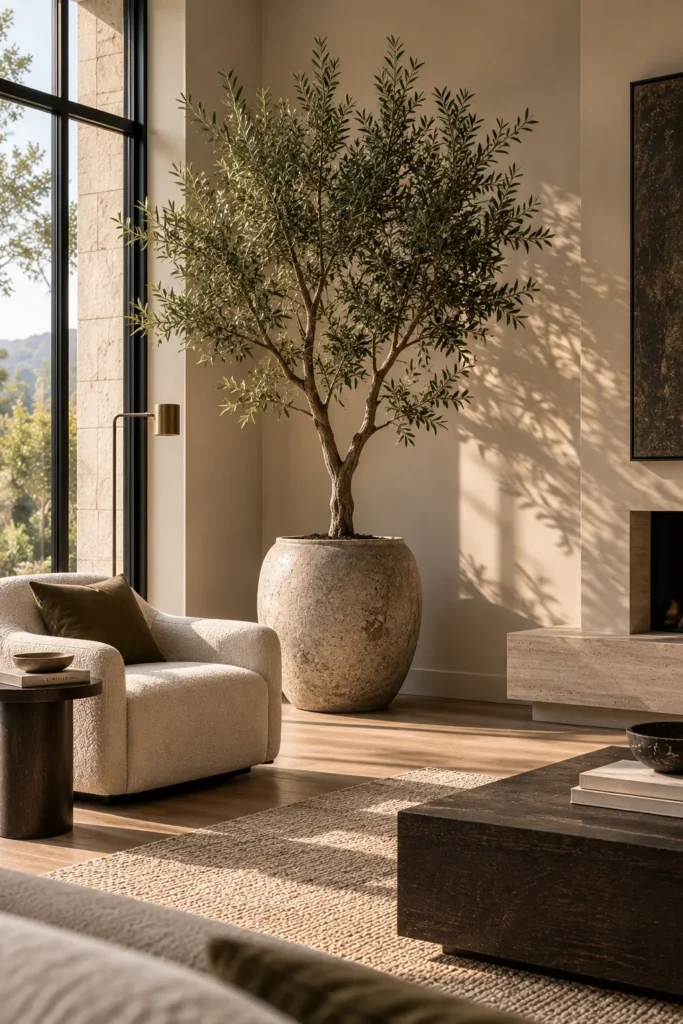
Luxury interiors tend to use greenery with considerably more restraint than casual decorating styles.
Instead of scattering small plants across shelves, tables, and windowsills, introduce one substantial piece of greenery and give it enough space to make an impact.
A tall olive tree, sculptural ficus, or another architectural indoor plant can occupy an otherwise empty corner while drawing the eye upward. Its organic silhouette softens the clean lines of tailored furniture without introducing the visual noise created by numerous small decorative plants.
Scale matters here. Choose a planter substantial enough to ground the plant and position it where its silhouette can be appreciated from across the room. The plant should feel almost like a piece of living sculpture rather than another accessory.
This is especially effective when the rest of the room has been carefully edited. One dramatic botanical element can accomplish more than five small plants cluttering the view.
Build a Sculptural Botanical Moment
- Tall architectural olive tree: brings controlled organic height to an empty corner.
- Oversized ceramic or raw-plaster planter: gives the greenery substantial visual grounding.
- Sculptural ficus tree: introduces a fuller architectural silhouette.
- Minimal plant uplight: casts dramatic botanical shadows after dark.
Conclusion
A living room that feels like a luxury retreat isn’t created by filling it with expensive things. It comes from controlling the experience of the room, what catches your eye, how the light changes after sunset, how the materials feel together, and how easily you can settle into the space.
Start with an enveloping colour story, then build layers of warm architectural light around one commanding focal point. Introduce tactile materials, float the furniture into a deliberate lounge arrangement, and protect a clear circulation track around the seating.
From there, edit the accessories rather than accumulating them. Give the room a signature scent and finish with one substantial piece of architectural greenery instead of scattering small decorations everywhere.
The result should feel warm without being casual, sophisticated without being cold, and luxurious without looking over-decorated.
You don’t need to recreate a five-star hotel literally. The goal is to capture what those spaces do so well; make you feel comfortable, removed from the noise of everyday life, and reluctant to leave.
That is the real secret to a living room that feels like a luxury retreat.
RELATED ARTICLES