
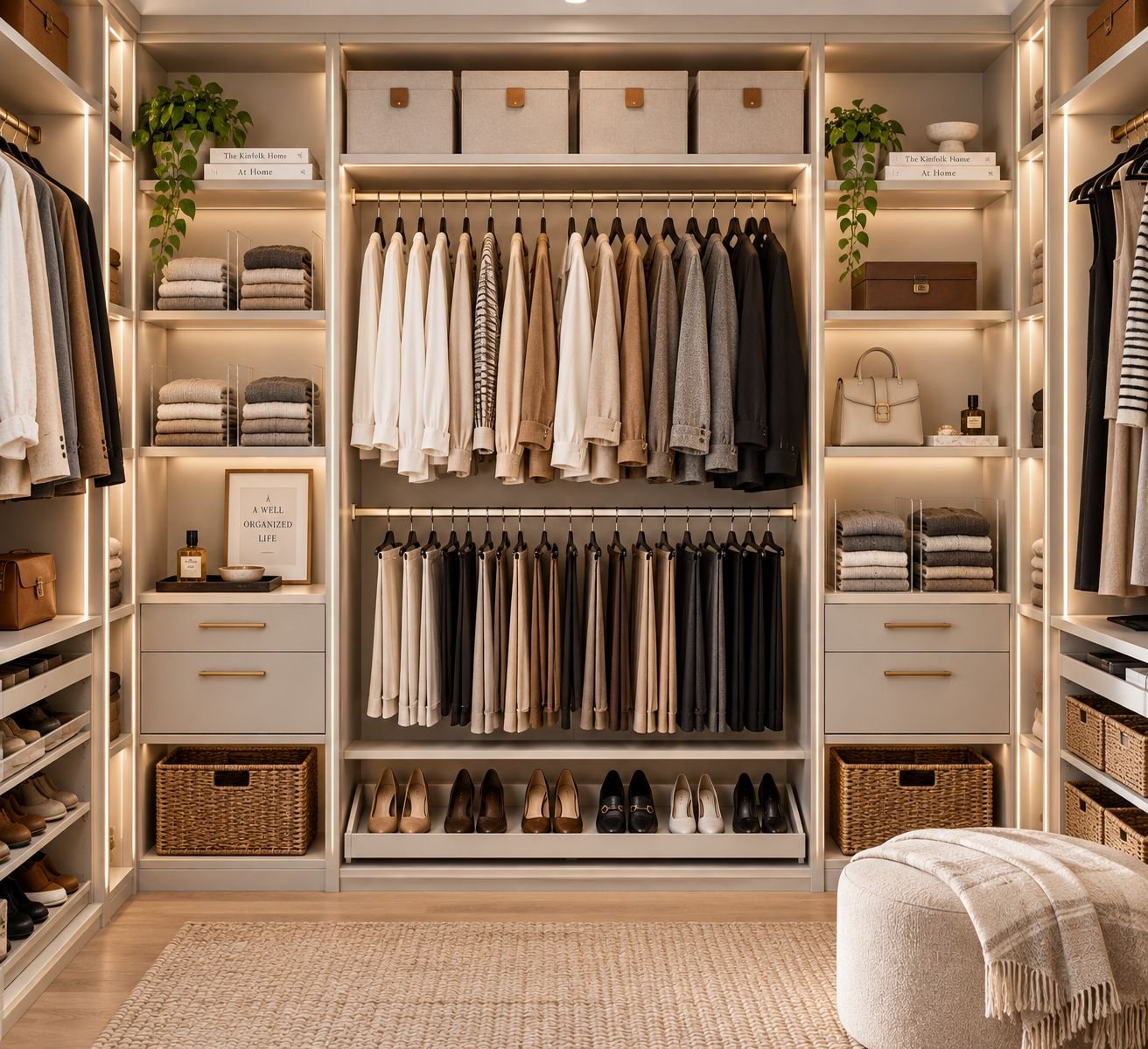
A closet that barely closes can make even getting dressed feel stressful. Clothes spill from shelves, shoes gather on the floor, and somehow there never seems to be enough room for the things you actually wear.
But a bigger closet isn’t always the answer. The real opportunity is often in the space you’re overlooking; above your clothes, beneath them, and in the gaps between them.
The key is to stop thinking of your closet as one crowded box and start treating it like a series of storage zones. By changing how you use its vertical space and giving each area a specific job, you can make a surprisingly small closet hold much more while keeping everything easier to find.
Start With a Complete Reset
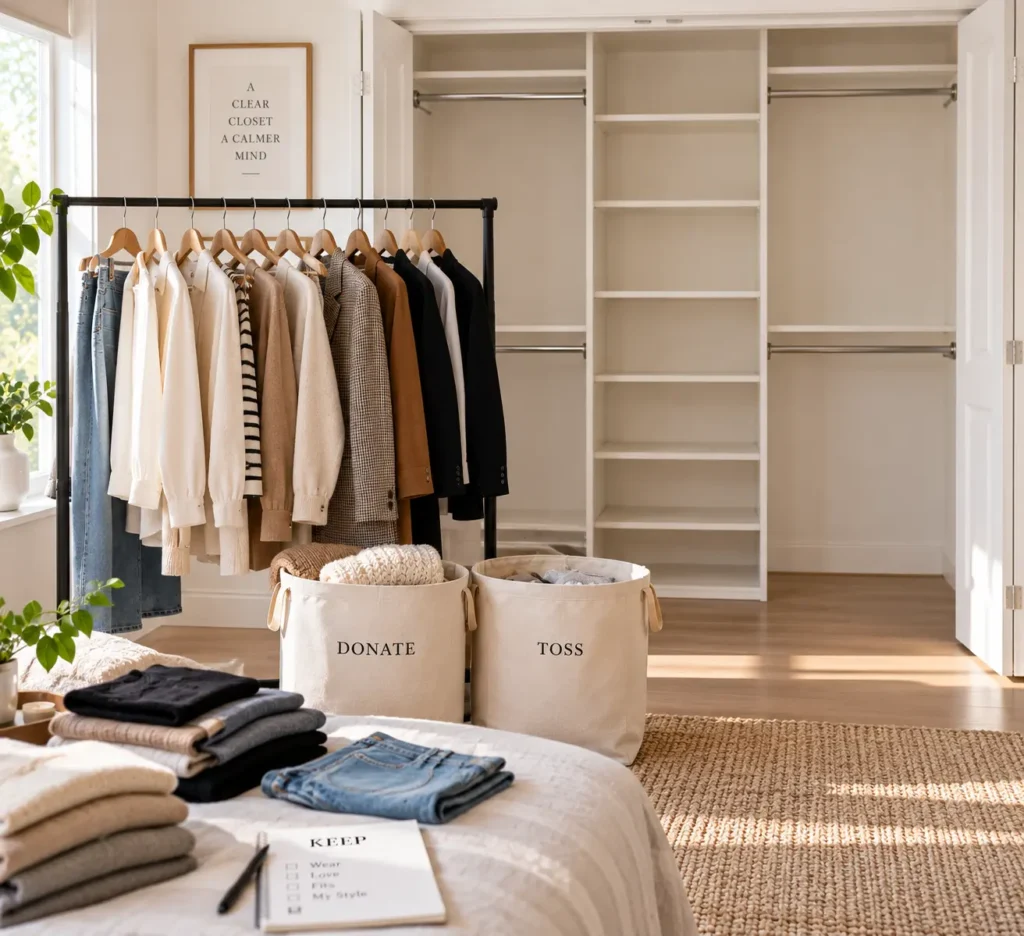
Before adding a single organizer, empty the closet completely. Seeing the entire space at once makes it much easier to spot wasted shelves, unused hanging space, and items that have been taking up valuable room without being used.
As you go, separate everything into three simple groups: Keep, Donate, and Toss. Keep the pieces you regularly wear or genuinely need, set aside good-condition items you no longer use, and remove anything damaged or beyond repair.
This first step matters because organizing a closet that’s already overcrowded only rearranges the problem. Creating even a little breathing room gives the storage system you’re about to build somewhere to work.
Reset Essentials
- Laundry basket: keeps clothing you’re sorting contained and off the floor.
- Storage bins: useful for temporarily grouping items while you reorganize.
- Clothing rack: gives you somewhere to hang pieces while working through the closet.

spaces
Happy
days ♡
Divide Your Closet Into Three Zones
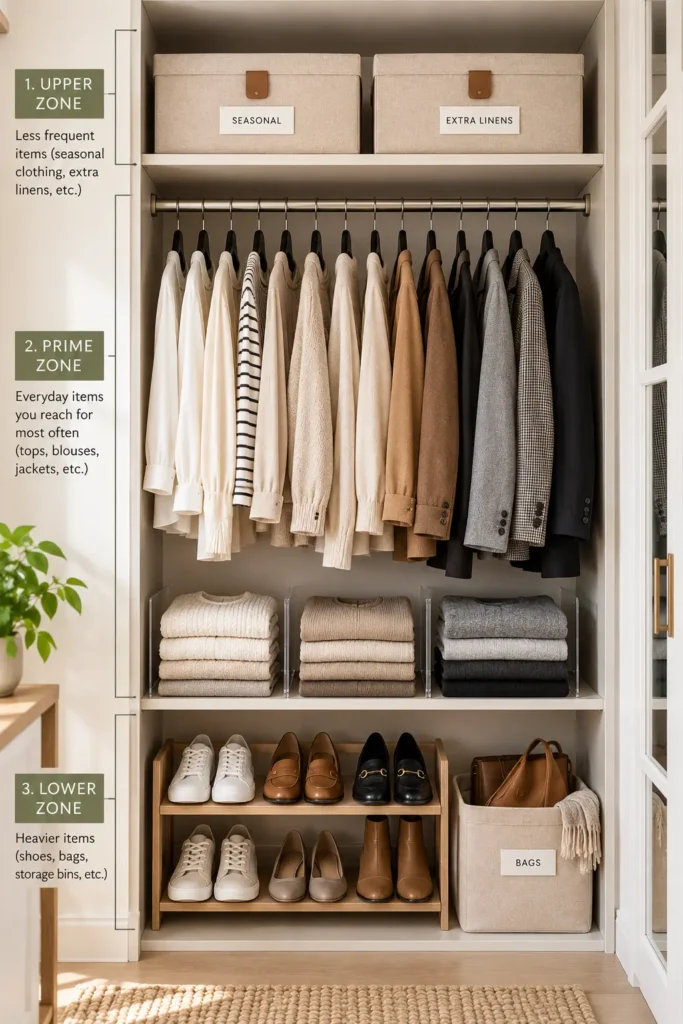
Once you’ve cleared the space, stop treating the closet as one continuous storage area. Divide it vertically into three zones, with each one handling a different type of belonging.
The prime zone is the easiest area to reach, roughly between waist and shoulder height. Reserve this space for the clothes, shoes, and accessories you use most often. Keeping everyday pieces here makes your morning routine faster and prevents frequently used items from getting buried.
The upper zone is your closet’s hidden reserve. Use the highest shelves for seasonal clothing, spare bedding, luggage, or pieces you only reach for occasionally. Storage bins and baskets can keep these less-used items contained without allowing the upper shelves to become a random pile.
The lower zone should work just as deliberately. Instead of letting the floor become a collection point for shoes and bags, use it for structured storage such as shoe boxes, slim drawers, or low-profile bins. This keeps the floor accessible while turning otherwise wasted space into useful capacity.
The goal isn’t to fill every inch. It’s to give every vertical section a purpose, so the things you use most remain easiest to reach while less frequently used belongings occupy the spaces that would otherwise go to waste.
Create Functional Closet Zones
- Slim shoe rack: keeps footwear contained without consuming much floor space.
- Stackable storage bins: make better use of upper shelves.
- Slim drawer unit: adds contained storage beneath hanging clothes.
- Shelf dividers: keep folded items upright and prevent shelves from becoming one large pile.
Make Every Hanger Count
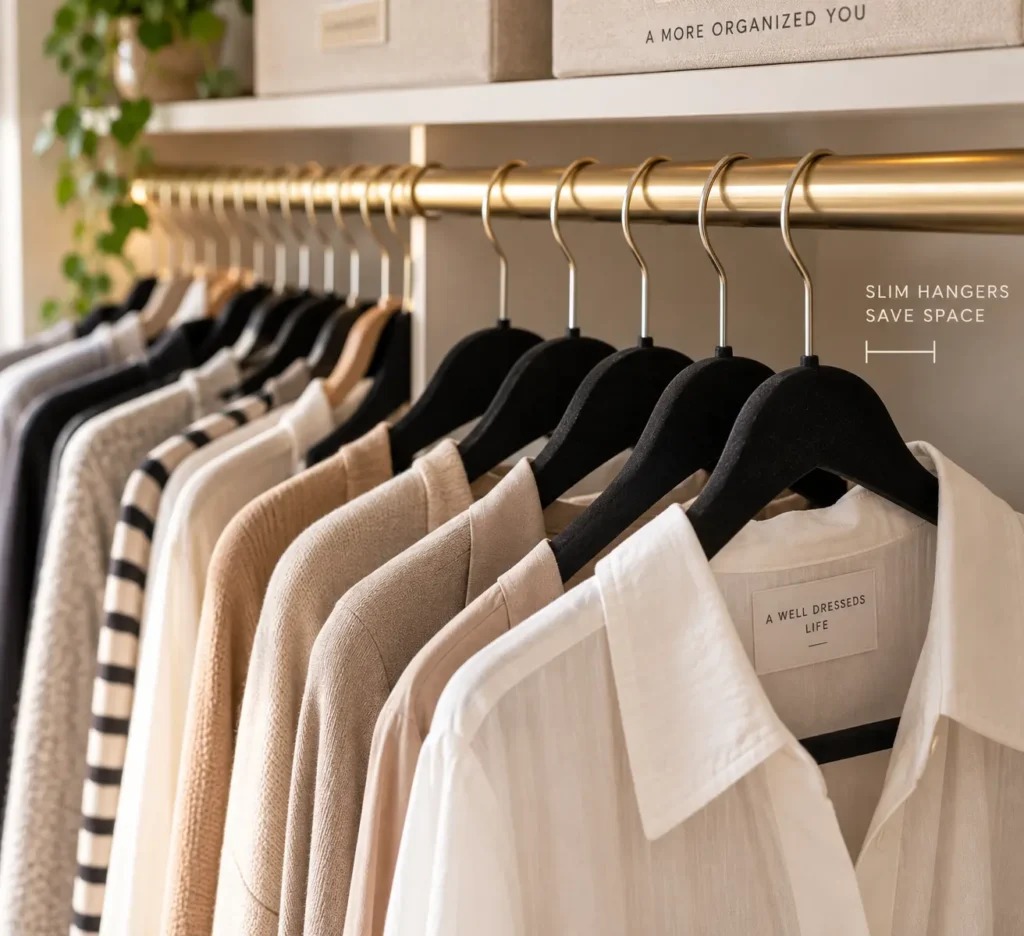
Once you’ve decided what actually belongs in the closet, look at the hanging rod. Bulky, mismatched hangers can quietly consume a surprising amount of valuable rail space, while uniform slim hangers create a cleaner, more efficient row.
Slim velvet hangers are especially useful because they take up less horizontal room and keep clothing from slipping onto the floor. You don’t need to replace every hanger at once, either. Start with the section of your wardrobe that takes up the most room and expand the system over time.
The result isn’t just a neater-looking closet. More usable room on the rail means you can see your clothes more easily without cramming them together.
Upgrade Your Hanging Space
- Slim velvet hangers: the best everyday option for saving rail space and keeping garments secure.
- Wooden hangers: useful for heavier coats, jackets, and structured pieces that need more support.
- Clip hangers: helpful for trousers and skirts without requiring a separate hanging section.
Double Your Hanging Space
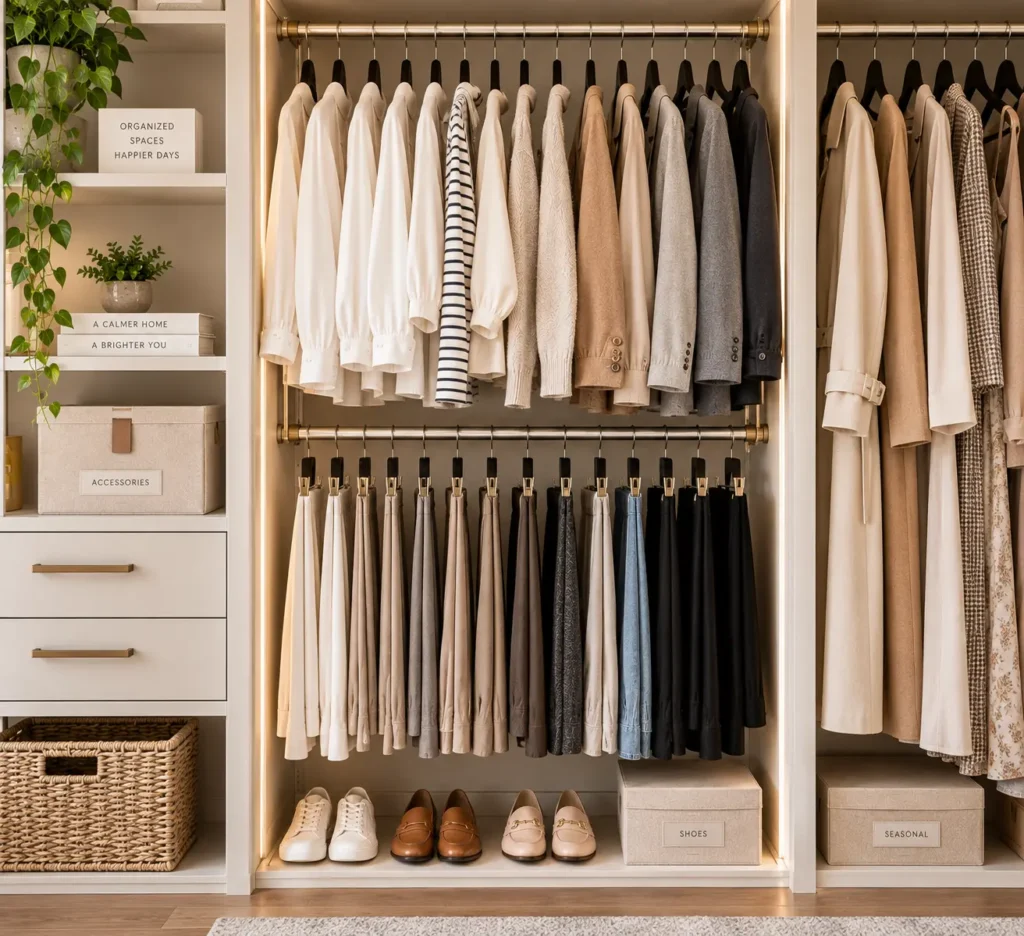
One of the biggest opportunities in a closet is the empty space beneath shorter hanging clothes. Shirts, blouses, skirts, and trousers often occupy only part of the available height, leaving valuable vertical space unused.
A second hanging level can turn that empty area into an entirely new storage zone. A closet rod extender or adjustable double-hanging system works particularly well for shorter garments, while cascading hangers can create additional vertical layers when you don’t want to install another rod.
The trick is to reserve the upper level for pieces that don’t need much vertical clearance and keep longer garments together where they can hang freely. That way, you’re not simply squeezing more clothes into the closet; you’re changing how the available height is being used.
Double Your Hanging Storage
- Double hanging rod — creates a dedicated second level for shorter garments.
- Closet rod extender: an easy option when you want to add another hanging tier without major installation.
- Cascading hanger hooks: allow several garments to hang vertically from one point.
BRING MORE GOOD IDEAS HOME
A little inspiration, delivered regularly.
Get thoughtful decorating ideas, practical home tips, and fresh inspiration in your inbox.
Weekly Inspiration. No Spam
Switch to a Vertical Folding System
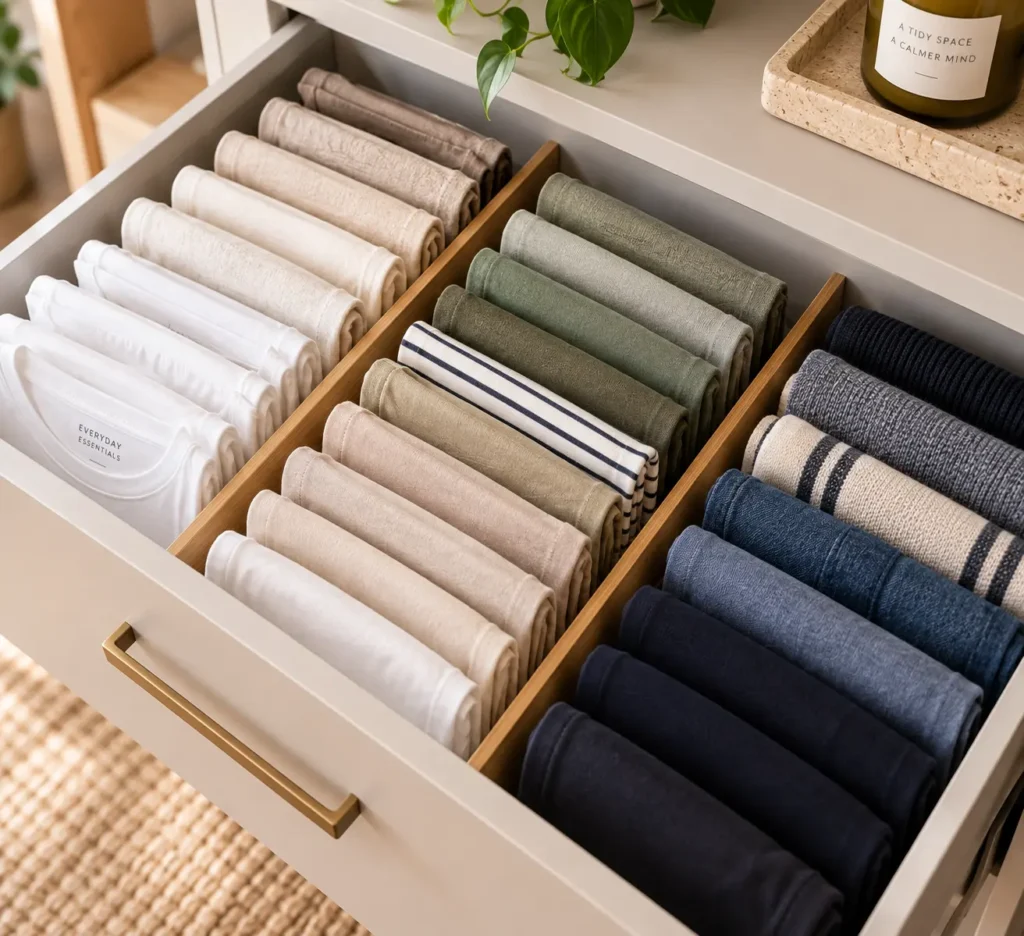
Traditional clothing stacks are silent space-killers. When you pile T-shirts or jeans on top of one another, the bottom items become invisible, and the entire stack can collapse when you pull something out. The secret to getting more from your shelves and drawers is to change the way your clothes occupy the space: stop stacking and start filing.
Fold clothes into compact, self-standing rectangles and place them upright in rows, much like files in a filing cabinet. This makes more of the available space usable while keeping each garment visible and accessible without disturbing everything around it.
You don’t need to use this method for every piece of clothing. It’s particularly useful for T-shirts, workout clothes, jeans, sweaters, and other items that tend to disappear into traditional stacks.
Streamline Shelves & Drawers
- Expandable drawer dividers: help keep folded clothing upright and separated.
- Clear acrylic shelf dividers: prevent stacks of sweaters from tipping into one another.
- Fabric storage bins: turn open shelves into contained, easy-to-access storage.
Unlock the Space Behind the Door
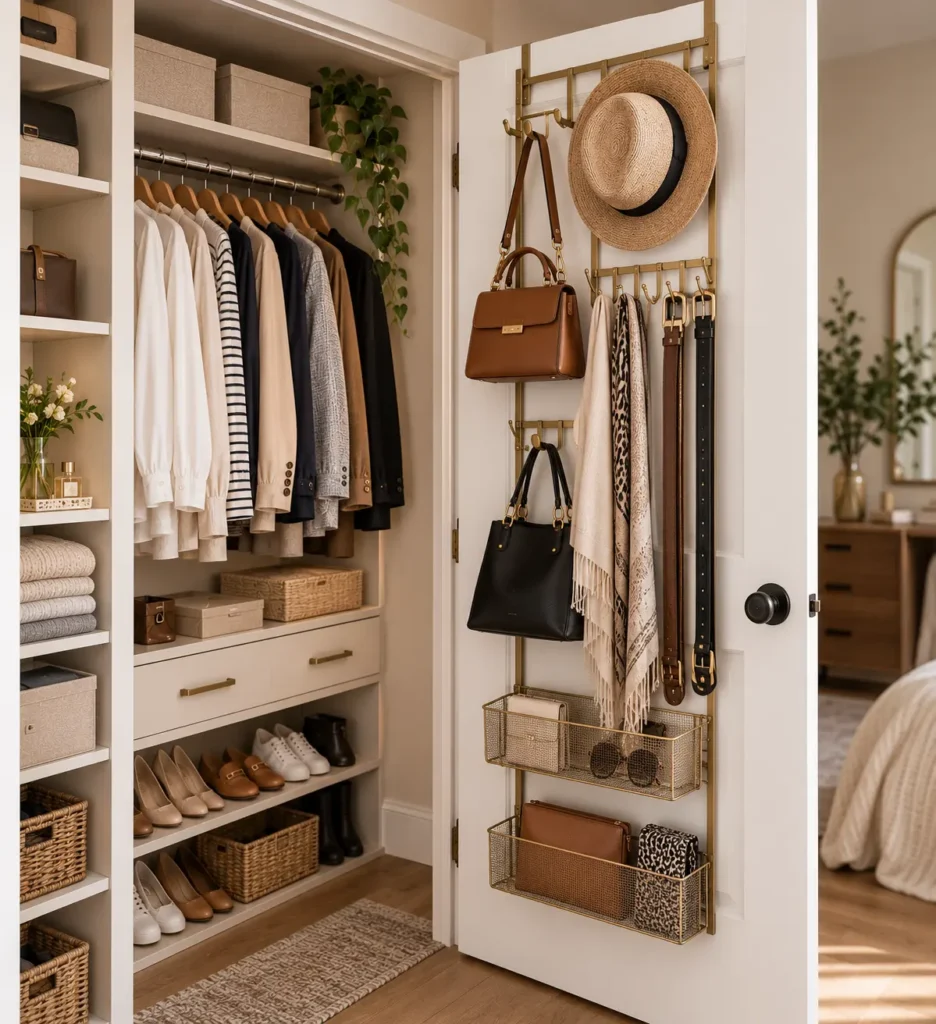
The inside of a closet door is easy to overlook because it isn’t part of the main storage area. But it’s essentially another vertical surface waiting to be used.
This is particularly valuable for smaller accessories that don’t need a shelf of their own. Belts, scarves, handbags, hats, and other lightweight pieces can be kept on a slim door-mounted organizer or a series of hooks, freeing the shelves and drawers for larger belongings.
Keep the system relatively shallow so the door can still close comfortably. The goal is to reclaim forgotten space without creating a new obstruction.
Add Storage Behind the Door
- Over-the-door organizer: useful for lightweight accessories and smaller belongings.
- Over-the-door hooks: a simple solution for bags, hats, scarves, or frequently used pieces.
- Hanging jewellery organizer: keeps small accessories visible without taking up drawer space.
Compress What You Don't Need Right Now
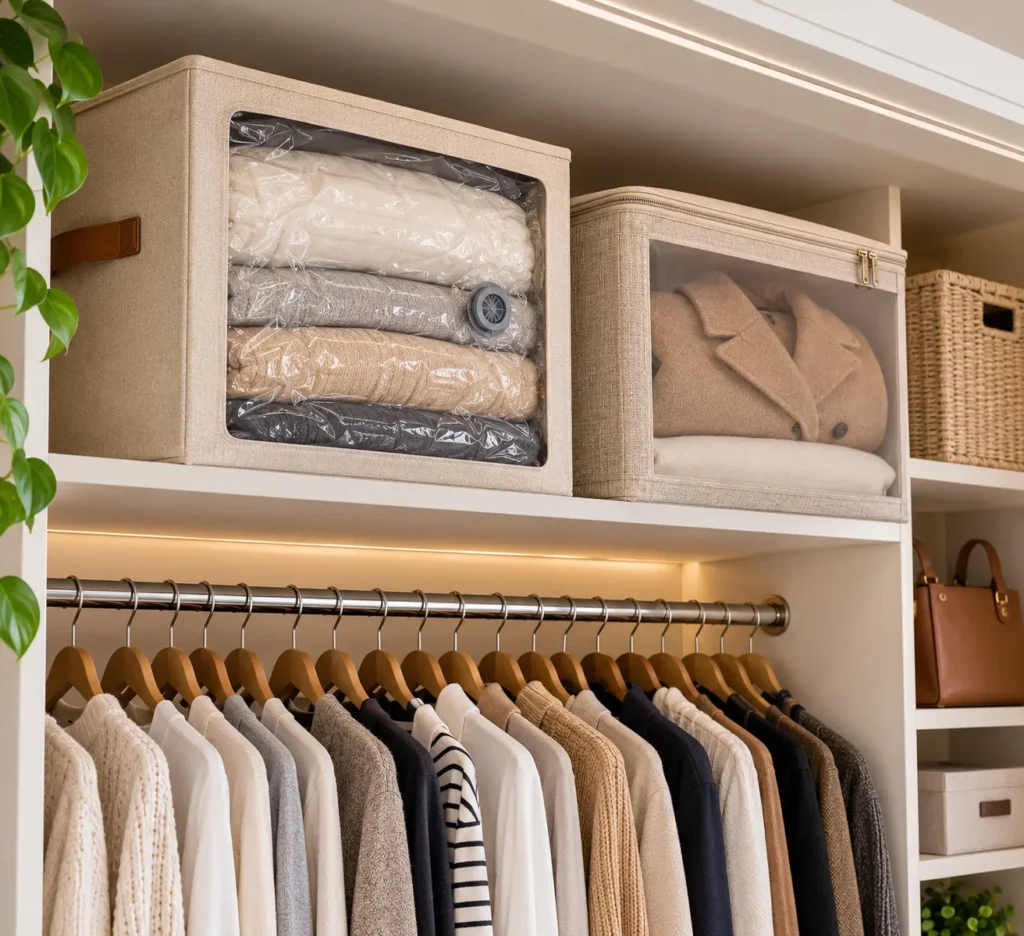
Not everything in your closet needs to be taking up prime real estate all year. Bulky winter coats, spare blankets, holiday clothing, and occasional-use pieces can consume a surprising amount of space when they’re stored alongside the things you reach for every week.
Instead, move those less-used items into the upper part of the closet or another low-access area. Vacuum storage bags can significantly reduce the volume of soft, compressible pieces, while fabric storage cubes keep those compressed items contained and make high shelves look intentional rather than cluttered.
The important distinction is to compress what can safely be compressed and contain what shouldn’t be. Delicate or structured garments may be better stored in breathable containers rather than vacuum-sealed.
Store Seasonal Pieces Efficiently
- Vacuum storage bags: useful for compressible clothing, spare bedding, and bulky soft items.
- Fabric storage cubes: keep seasonal belongings contained and easy to identify on upper shelves.
- Stackable storage bins: useful when you need sturdier protection for less frequently used items.
Leave Space for the System to Work
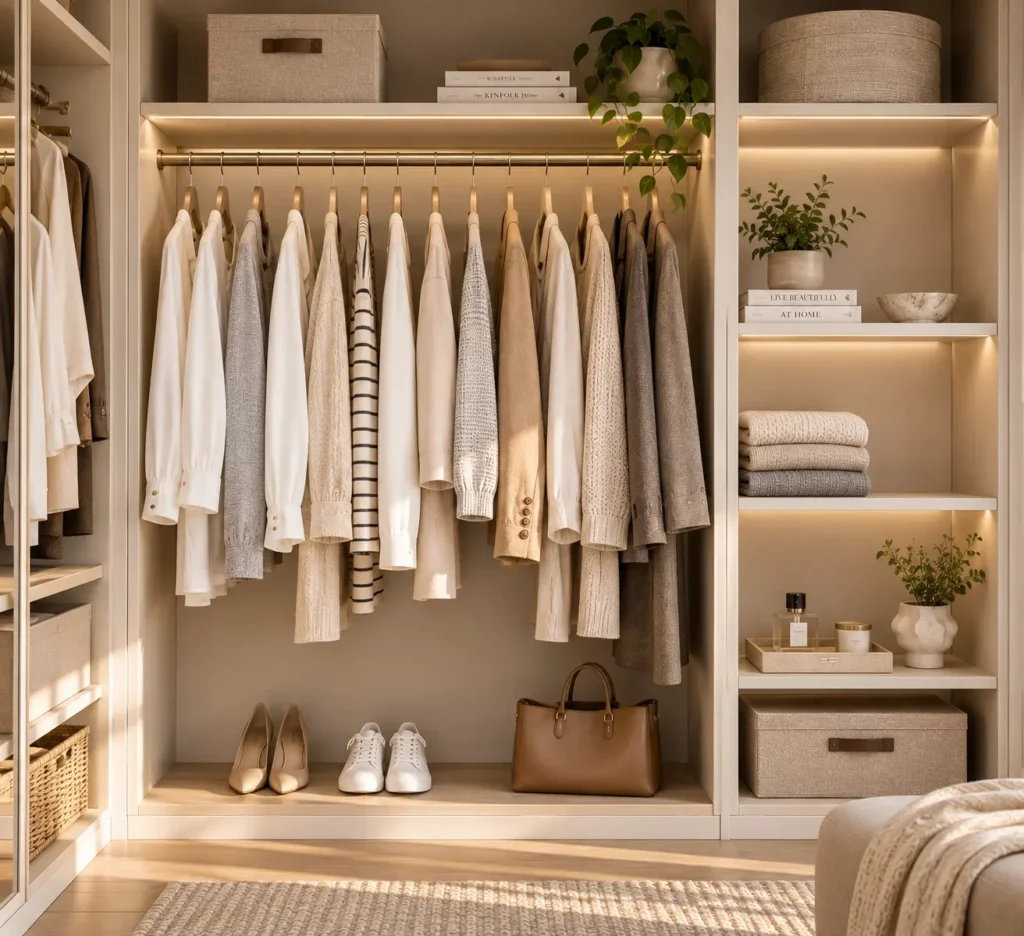
Once you’ve created more storage, the temptation is to fill every newly available inch. Resist it.
A closet that’s packed to its absolute limit may technically hold more, but it becomes harder to see what you own, harder to put things away, and much easier for the system to fall apart. Leaving a little breathing room makes the storage you’ve created genuinely usable.
Think of empty space as part of the organization system rather than wasted space. When a new purchase comes in, consider whether something else needs to leave, and give your closet a quick reset every few months so small problems don’t become another major overhaul.
A well-organized closet shouldn’t just hold more. It should make the things you already own easier to live with.
Conclusion
Doubling the usefulness of your closet isn’t about cramming twice as many belongings into the same space. It’s about changing how those belongings occupy it.
Use the height of the closet, create a second hanging level where possible, file folded clothes instead of burying them in stacks, reclaim the back of the door, and move seasonal pieces out of your prime storage zones. Each small adjustment gives the space a more deliberate job.
You may not actually double the physical dimensions of your closet, but you can make far more of its existing capacity usable. And when everything has a logical place, getting dressed becomes easier, putting things away takes less effort, and even a small closet can feel surprisingly spacious.
RELATED ARTICLES