
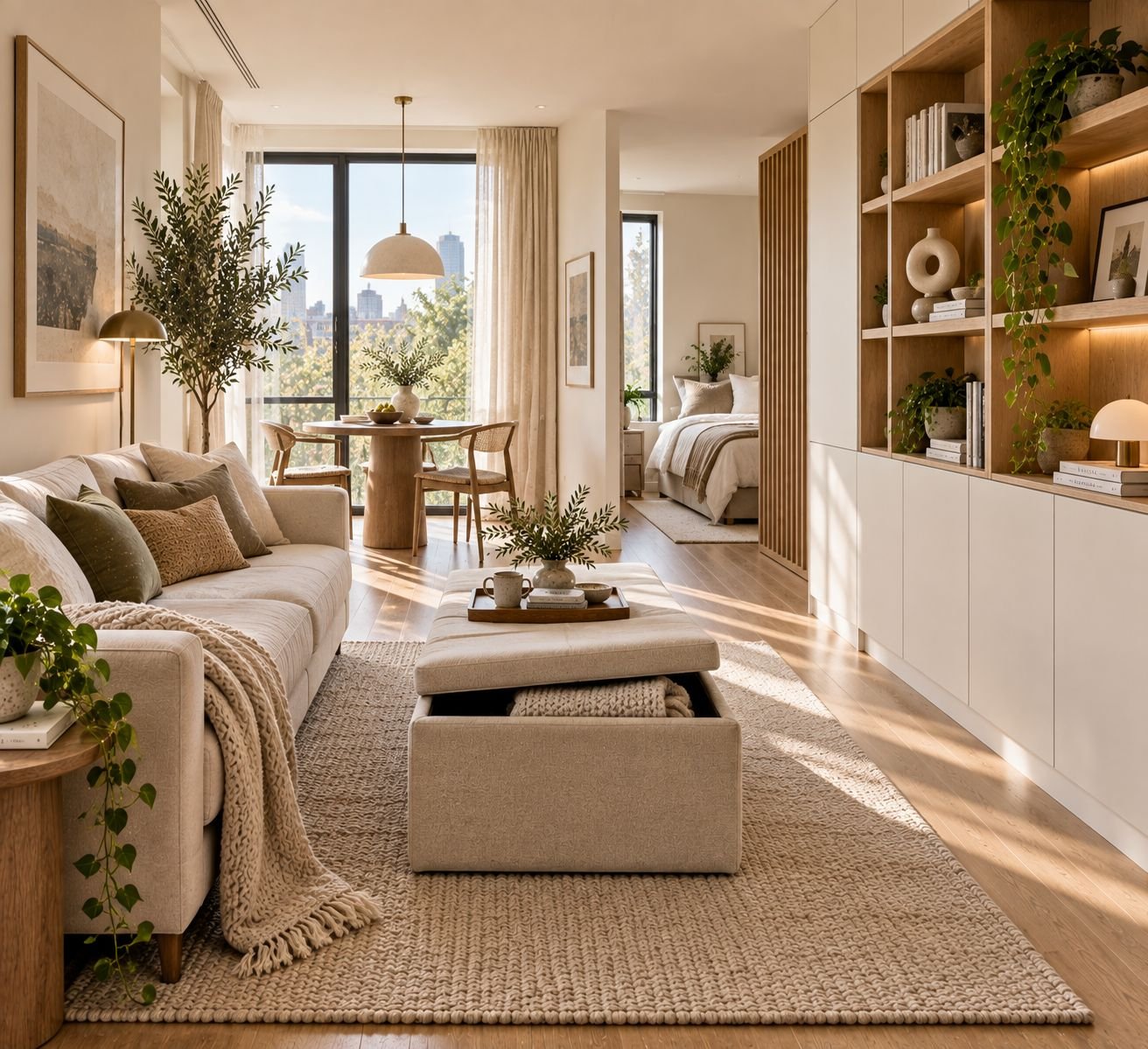
Living in a small apartment doesn’t always mean you need more storage. More often, it means making better use of the space you already have. The biggest difference between a home that feels organised and one that constantly feels crowded isn’t its size. It’s how every corner is used.
When floor space is limited, start thinking vertically, look for overlooked areas, and choose pieces that can do more than one job. From the space beneath your bed to the wall above a doorway, there are storage opportunities hiding in places you may not normally notice.
These practical ideas will help you create more room without filling your apartment with bulky organisers or making it feel like a storage unit.
Rotate Seasonal Items Under the Bed
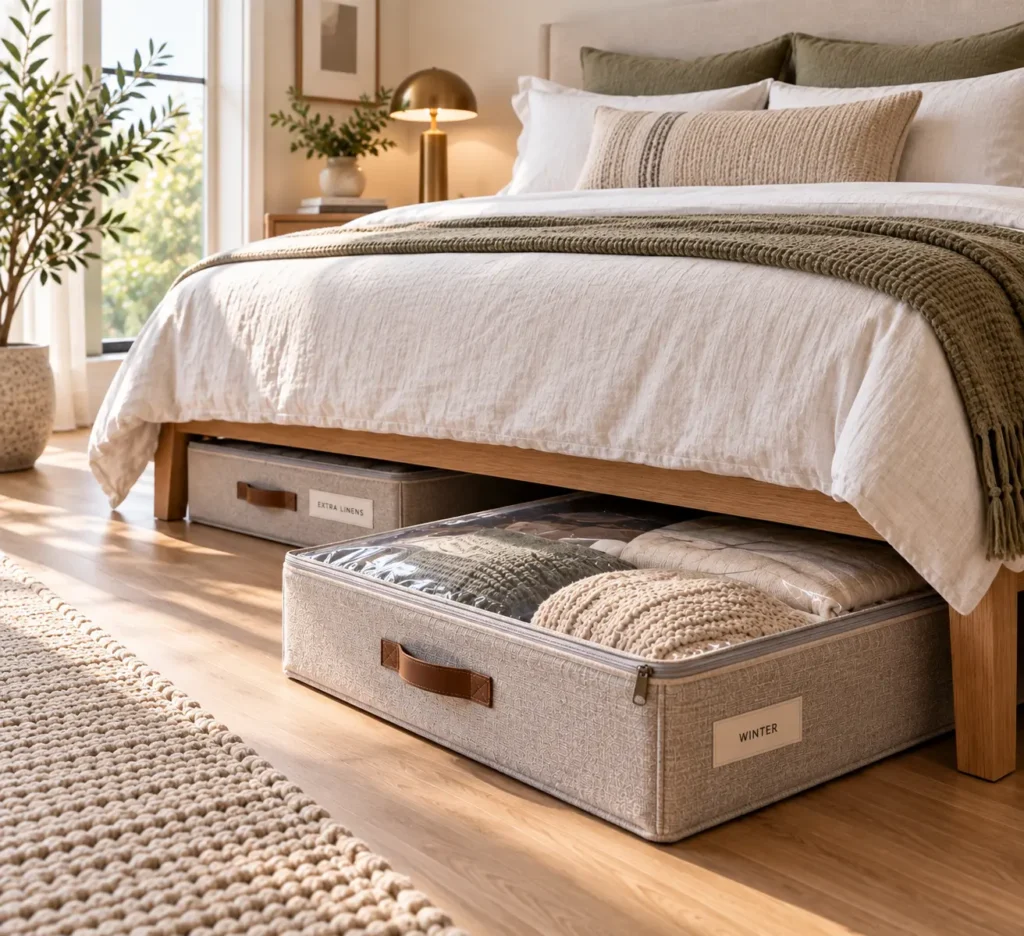
The space beneath your bed is one of the easiest areas to reclaim because it doesn’t require giving up any additional floor space. Use it for things you don’t need every day, such as seasonal clothing, spare bedding, winter blankets, or shoes.
Low-profile containers keep these items contained and accessible, while vacuum storage bags can compress bulky soft items when space is particularly tight. If your bed sits too close to the floor, bed risers can create additional clearance without replacing the entire bed.
The idea is simple: use the space that’s already there, then rotate what you store as the seasons change.
Maximise Under-Bed Storage
- Low-profile under-bed containers: for clothing, bedding, and shoes.
- Rolling storage bins: easier to access when you need to retrieve heavier items.
- Vacuum storage bags: useful for compressing bulky seasonal textiles.

spaces
Happy
days ♡
Claim Your Vertical Real Estate
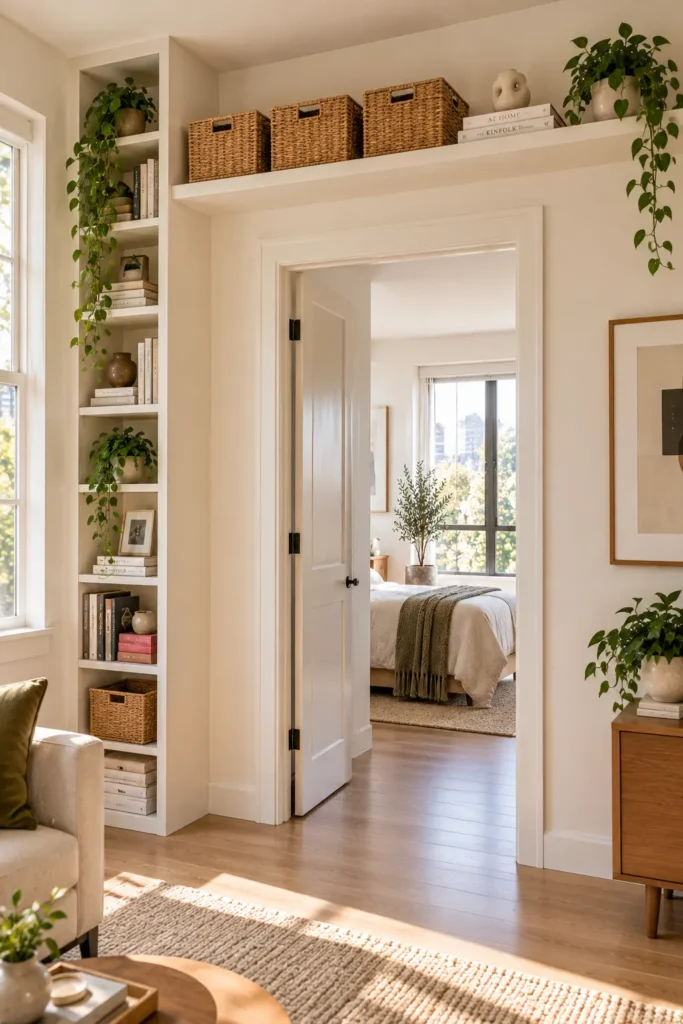
When floor space is limited, look up before adding another cabinet. Walls, the area above doorways, and even the backs of doors can provide valuable storage without increasing the footprint of your apartment.
A tall bookcase can make better use of a small floor area than several shorter pieces, while floating shelves can hold books, baskets, or everyday essentials without taking up valuable walking space. In particularly tight rooms, a shallow shelf above a doorway can also provide a useful home for things you don’t need every day.
The same principle applies to doors. A slim over-the-door organiser or a few hooks can turn an otherwise unused surface into storage for shoes, accessories, cleaning supplies, or bags.
Use the Space Above and Around You
- Tall bookcase: makes efficient use of vertical height while keeping the footprint compact.
- Floating shelves: useful when you need accessible storage without another floor-standing unit.
- Over-the-door organiser: turns an unused door surface into practical storage.
Let Your Furniture Do Double Duty
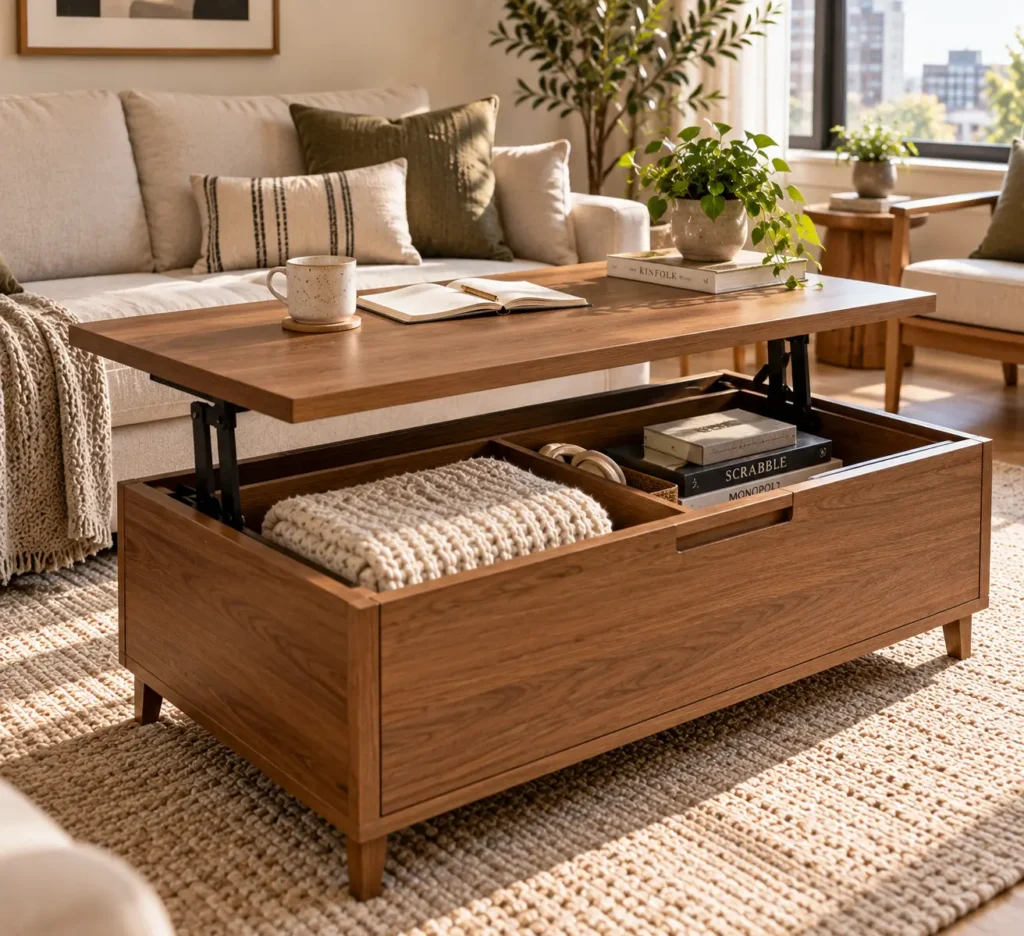
In a small apartment, every large piece needs to earn the space it occupies. Instead of adding another cabinet whenever you need storage, look for furniture that quietly provides it as part of its everyday function.
A storage bed can turn the unused space beneath your mattress into a place for bedding, clothing, or luggage. In the living room, a storage ottoman can hide blankets and games while still serving as extra seating or a footrest. A lift-top coffee table can provide concealed storage without requiring another piece of furniture.
The best small-space furniture doesn’t just give you somewhere to put things. It eliminates the need for additional storage furniture in the first place.
Choose Furniture That Does More
- Storage bed: makes use of a large area that would otherwise remain empty.
- Storage ottoman: hides everyday living-room items while doubling as a footrest or extra seat.
- Lift-top coffee table: combines a coffee table, workspace, and concealed storage in one piece.
- Storage bench: works particularly well at the foot of a bed or along an entryway wall.
Make Every Inch of Your Closets & Cabinets Count
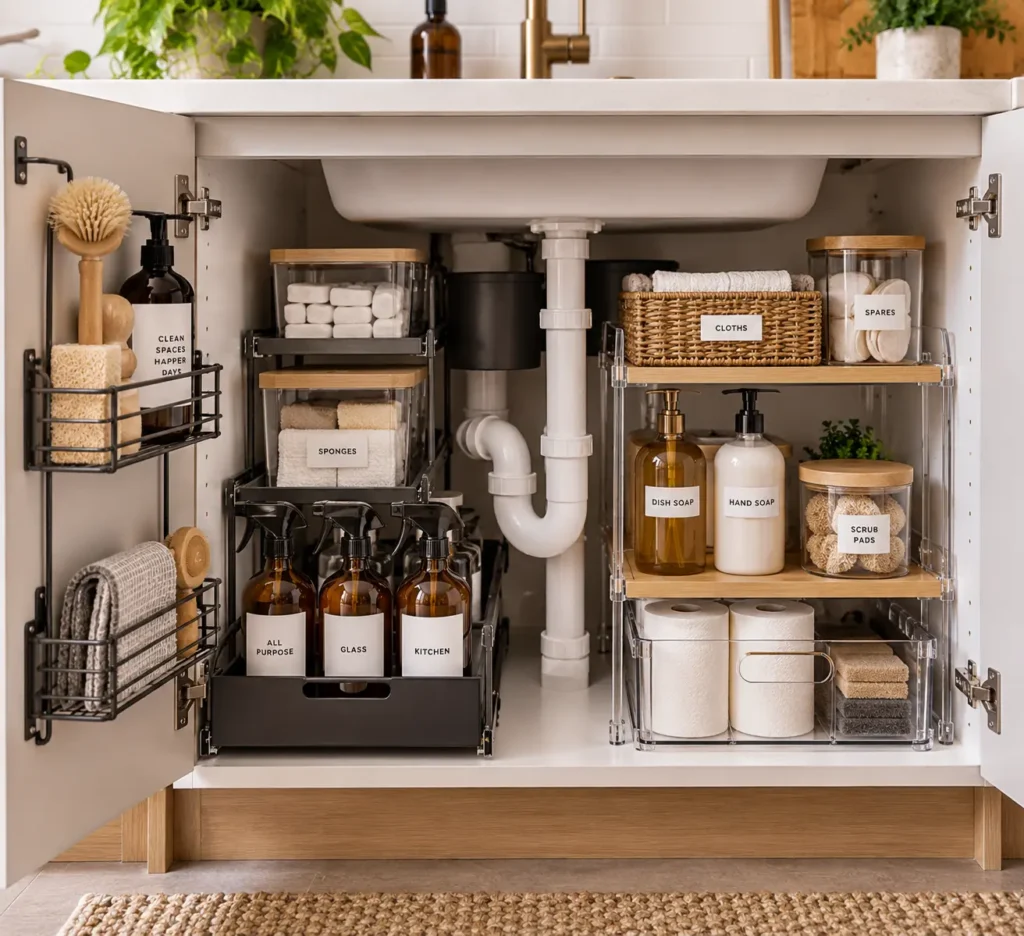
Before buying another storage unit, look at the spaces you already have. Closets and cabinets often contain unused height, depth, or door space that can be made much more useful with a few simple adjustments.
In a short closet, a second hanging rod can create another level for shorter clothes. Inside cabinets, shelf risers and pull-out organisers make better use of vertical and deep spaces, while an under-sink organiser can work around awkward plumbing instead of leaving the area unusable.
The goal isn’t to squeeze more into every available inch. It’s to make the storage you already own easier to access and more efficient to use.
Make Existing Storage Work Harder
- Double hanging rod: creates a second level of hanging space for shorter garments.
- Expandable shelf riser: turns unused vertical space inside cabinets into another usable level.
- Pull-out organiser: makes deep cupboards easier to reach without moving everything in front.
- Tiered under-sink organiser: makes awkward cabinet space more usable around plumbing.
BRING MORE GOOD IDEAS HOME
A little inspiration, delivered regularly.
Get thoughtful decorating ideas, practical home tips, and fresh inspiration in your inbox.
Weekly Inspiration. No Spam
Tackle Your High-Traffic Zones
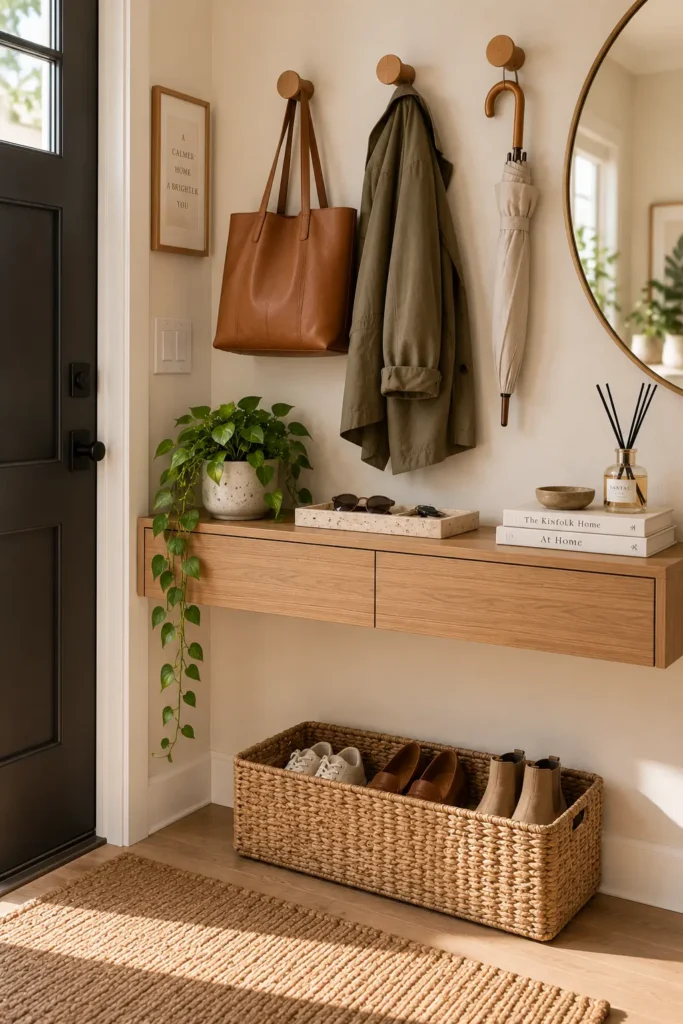
The kitchen and entryway are two places where clutter can multiply quickly because they’re constantly in use. Instead of trying to keep everything perfectly hidden, give the things you reach for most often a convenient place to land.
In the kitchen, look for unused gaps and vertical space. A slim rolling cart can turn the narrow space beside a refrigerator into useful storage, while shelf risers can create another level inside crowded cabinets.
At the entryway, keep the essentials contained from the moment you walk through the door. A narrow console or a few wall hooks can give bags, coats, and other everyday items a home without taking up much floor space.
Make Busy Areas Work Harder
- Slim rolling cart: ideal for narrow gaps beside appliances or cabinets.
- Cabinet shelf risers: add usable levels inside tall kitchen cupboards.
- Slim console table: creates an entryway landing spot without overwhelming a narrow area.
- Wall hooks: keep coats and bags off the floor and within easy reach.
Store by Routine, Not by Room
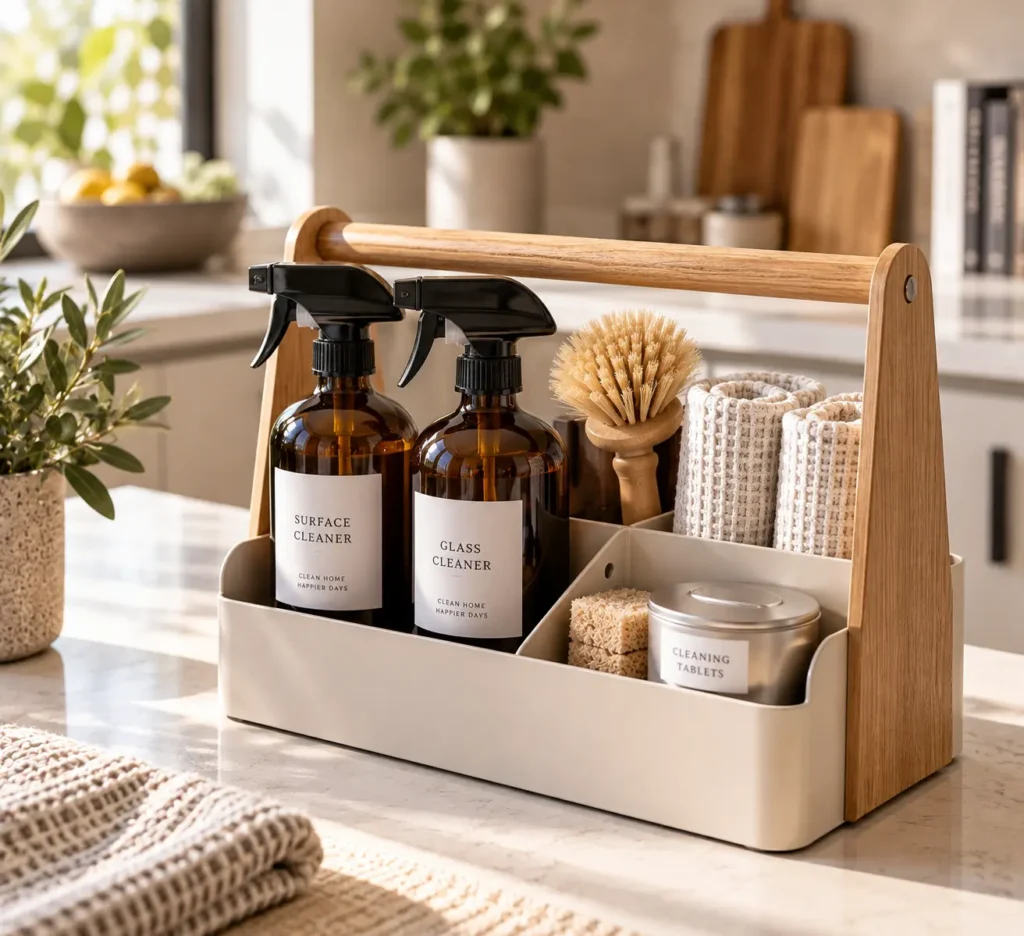
One of the smartest ways to make a small apartment easier to live in is to organise storage around what you do, rather than strictly around where you do it.
Instead of keeping related things scattered across different cupboards, create small “routine kits” for the tasks you repeat. Keep coffee beans, filters, mugs, and sweeteners together. Store your cleaning supplies in one portable caddy. Keep your work essentials together so you can set up and put everything away without making several trips around the apartment.
This approach doesn’t necessarily create more physical storage, but it makes the storage you have far more efficient. When everything needed for a particular routine lives together, you’re less likely to leave things sitting out simply because putting them away is inconvenient.
Build Simple Routine Kits
- Storage caddy: keeps supplies for a particular task together and easy to move.
- Lazy Susan: makes frequently used items in deep cabinets easier to reach.
- Stackable storage bins: group related items while making better use of vertical space.
- Shelf risers: useful when a cabinet has more height than the items stored inside it.
Balance Clear Bins with Decorative Baskets
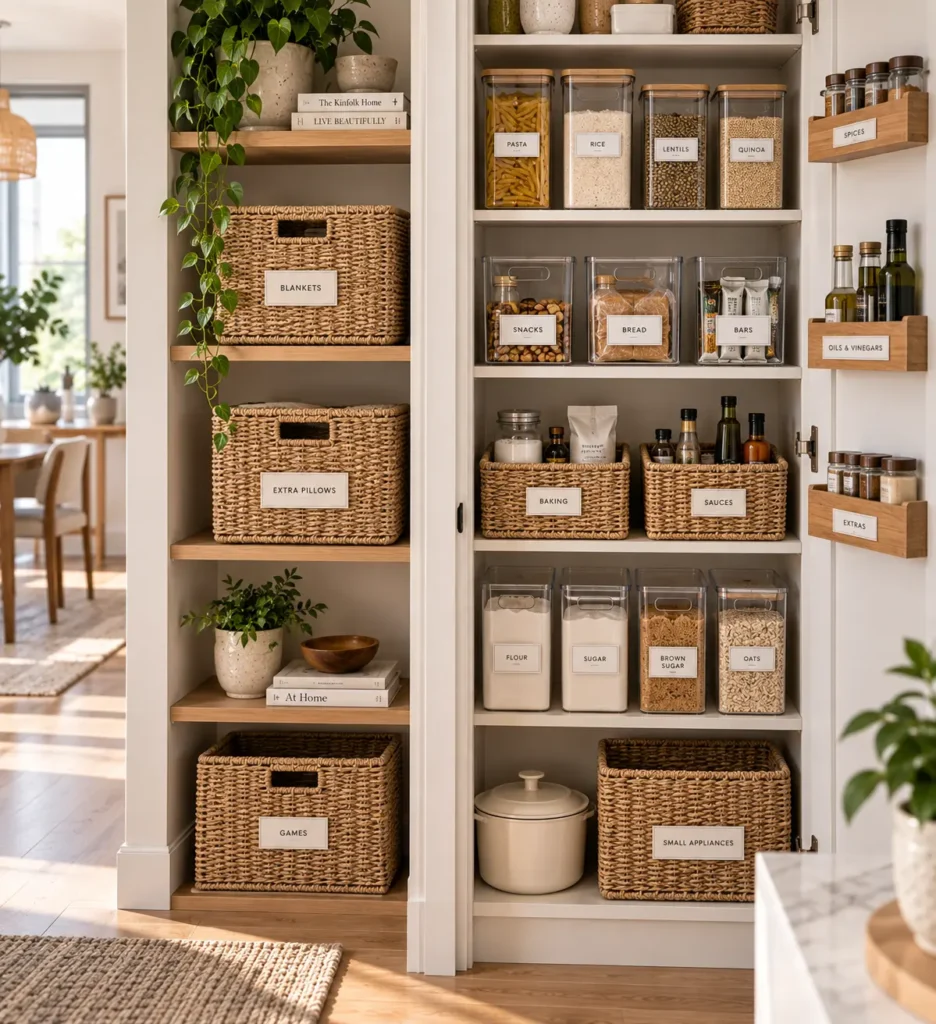
Storage doesn’t always need to disappear behind a cabinet door. The trick is choosing the right type of container for the space you’re organizing.
Use clear containers where seeing the contents saves time. They’re especially useful inside pantries, bathroom cabinets, linen cupboards, and under-sink areas, where being able to spot what you need without opening several boxes makes everyday routines easier.
For storage that stays visible, choose pieces that look like part of the décor. Woven baskets, lidded baskets, and decorative storage boxes can hide blankets, magazines, accessories, or everyday clutter while adding texture to the room.
Think of it as a simple rule: clear where visibility matters, decorative where appearance matters. This keeps functional storage efficient without making your living spaces feel overly utilitarian.
Choose Storage for the Space
- Clear stackable containers: ideal for cupboards and pantries where visibility matters.
- Lidded woven baskets: hide visual clutter while adding warmth and texture to living spaces.
- Decorative storage boxes: useful for smaller items that need to stay contained but don’t need to be visible.
- Fabric storage cubes: a practical choice for open shelving where you want a cleaner, more uniform appearance.
Conclusion
Creating more storage in a small apartment isn’t always about adding more furniture or finding somewhere else to put your belongings. It’s about noticing the space that’s already there and using it more thoughtfully.
The area beneath your bed, the height of your walls, the inside of your cabinets, and even the furniture you already need can all work harder without making your home feel crowded. When storage is designed around the way you actually live, everyday routines become easier and clutter has fewer places to accumulate.
Start with the area that’s causing you the most frustration rather than trying to reorganise the entire apartment at once. A single storage bed, a better-used cabinet, or a few well-placed vertical solutions can make a surprisingly noticeable difference.
A small apartment isn’t a limitation. It’s an invitation to make every inch count.
RELATED ARTICLES