
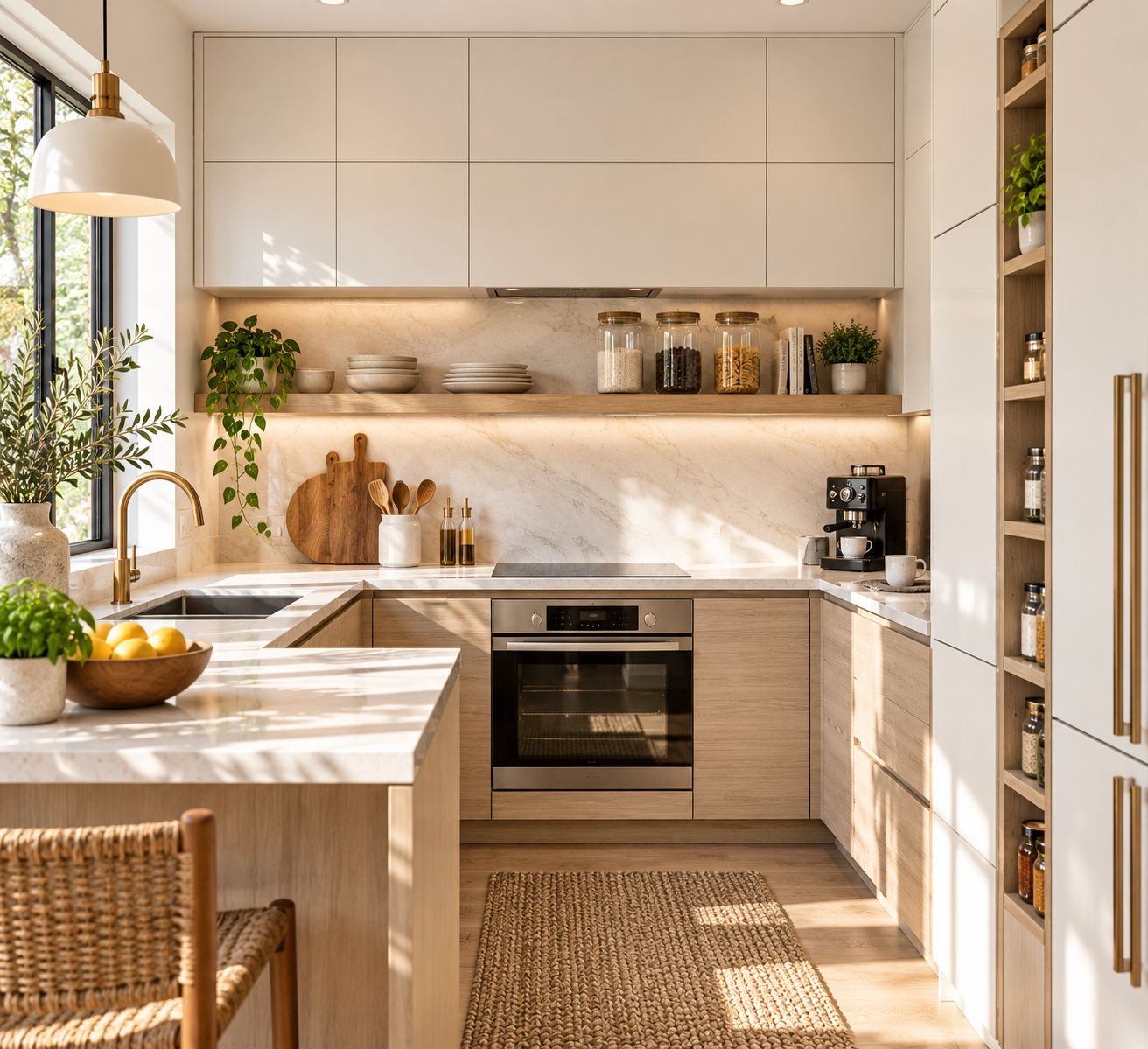
A small kitchen can feel crowded long before you’ve actually run out of storage. A stack of pans becomes difficult to reach, food containers lose their lids, and the countertop slowly disappears beneath the appliances and everyday things you use most.
The answer isn’t always another cabinet or a larger kitchen. Often, it’s about looking differently at the space you already have; the unused height inside a cupboard, the back of a cabinet door, the narrow gap beside the refrigerator, or even the empty wall above your counter.
These ideas focus on those overlooked spaces and simple systems that make a small kitchen easier to use. The goal isn’t to squeeze more and more into every corner, but to make the storage you already have work harder.
Clear Your Counters First
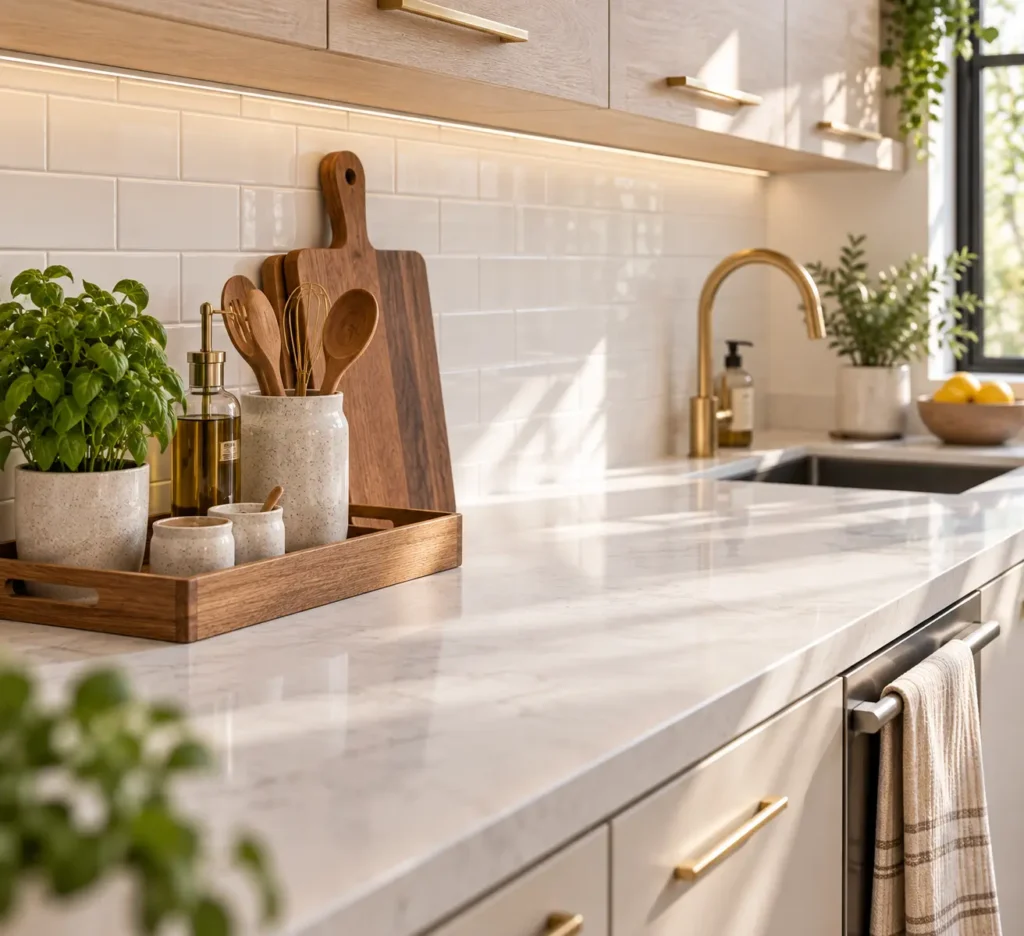
When every inch of workspace matters, a crowded countertop can make a small kitchen feel even smaller. Coffee makers, utensils, paper towels, and everyday essentials quickly spread across the surface, leaving little room for preparing food.
Start by keeping only the things you genuinely use every day within reach. Everything else can move into a cabinet, drawer, or another storage zone. For the few items that stay out, grouping them together on a tray creates a visual boundary and keeps them from gradually spreading across the counter.
The result is more than a tidier surface. A clear stretch of countertop gives you back usable workspace, making cooking and cleaning feel noticeably easier.
Keep Everyday Essentials Organized
- Decorative countertop tray: groups frequently used items into one contained zone instead of letting them spread across the counter.
- Utensil holder: keeps the tools you reach for constantly accessible without filling a drawer.
- Wall-mounted paper towel holder: moves a bulky everyday item off the countertop and onto unused vertical space.

spaces
Happy
days ♡
Store by Daily Routine
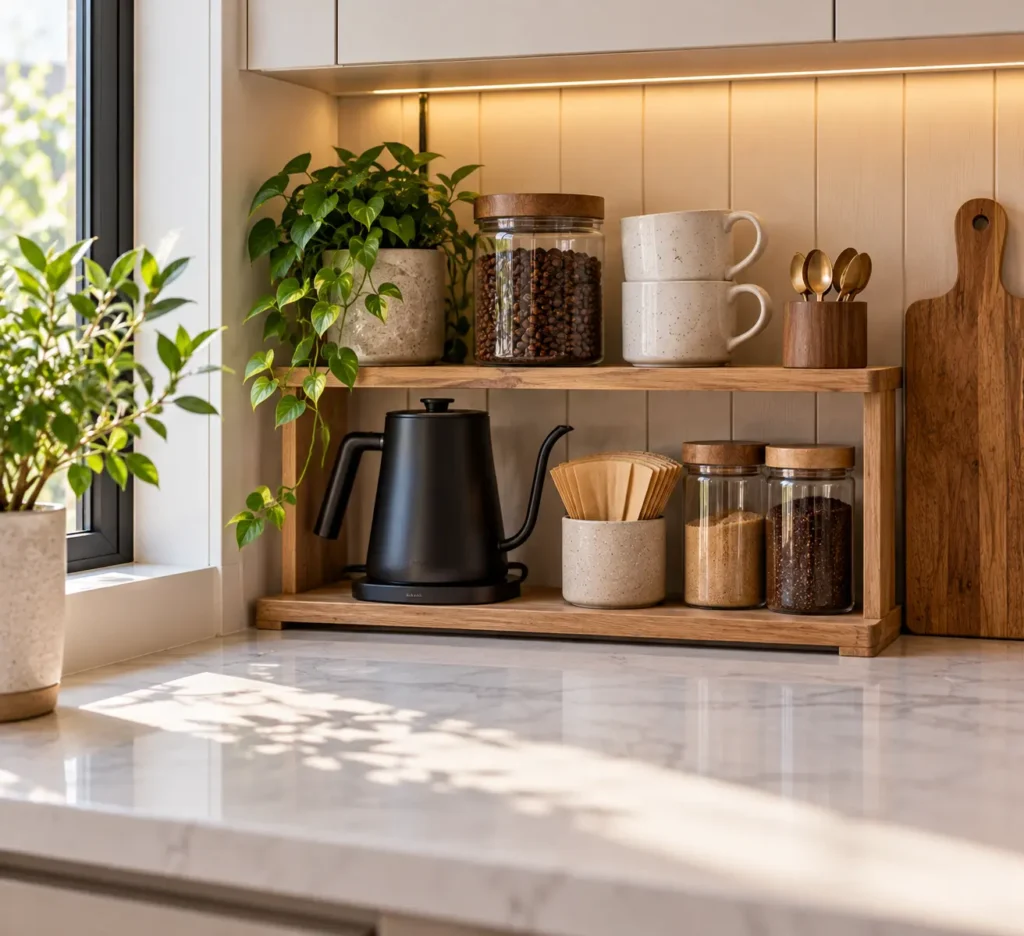
A small kitchen becomes much easier to work in when you organize it around what you do, rather than simply where an item happens to fit.
Keep the things you use for the same task together whenever possible. Your coffee-making supplies might live in one cabinet or on one shelf, while baking ingredients, measuring tools, and mixing accessories have their own zone. The same principle works for breakfast preparation, lunch packing, or everyday cooking.
This reduces the amount of searching and moving things around every time you start a task. Instead of opening several cabinets to gather what you need, you can reach for one small group of essentials and get on with your routine.
A few simple organizers can help create these zones without requiring additional cabinetry.
Build Practical Kitchen Zones
- Lazy Susan: makes bottles, sauces, spices, and other small items easier to reach in deep cabinets.
- Storage caddy: keeps supplies for a specific routine together so they can be moved as one group.
- Clear storage bins: contain smaller ingredients and make it easier to see what belongs in each zone.
- Shelf risers: add another level when a routine zone has unused vertical space.
Max Out the Capacity of Your Cabinets
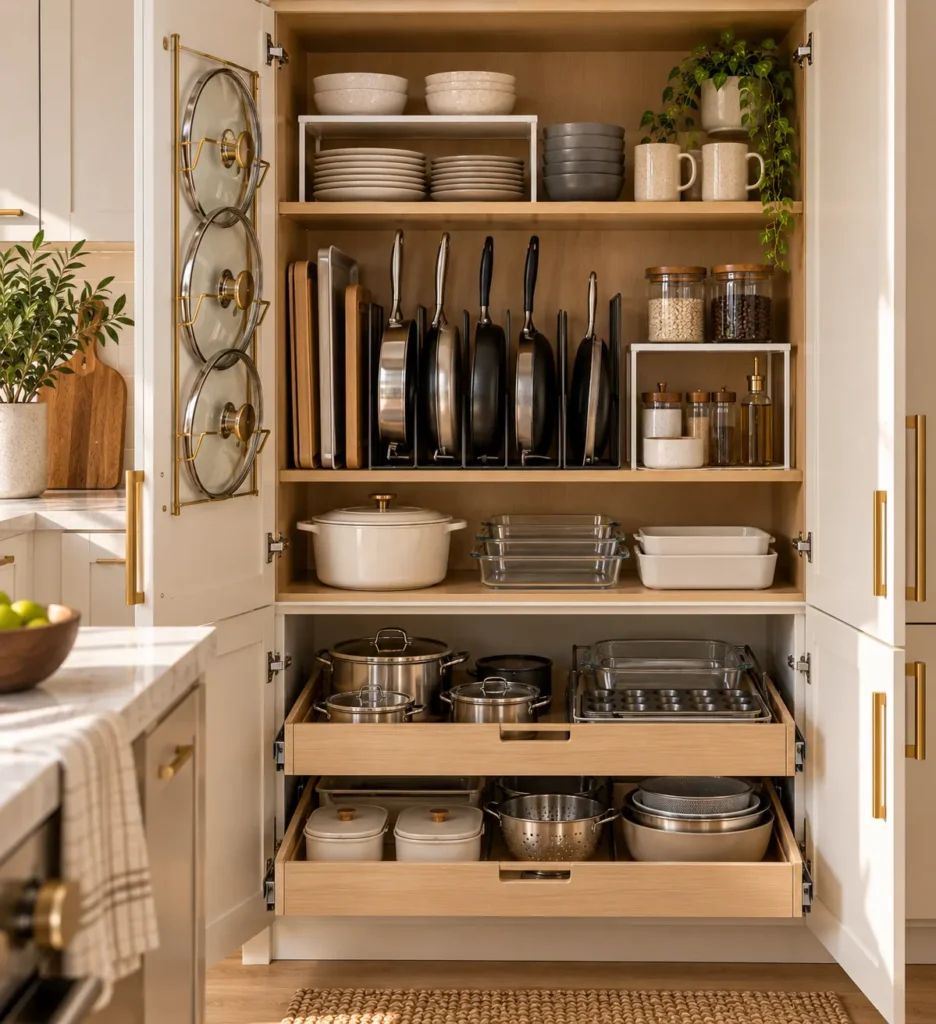
Kitchen cabinets often have more usable space than they appear to have. A single tall shelf might hold a stack of plates at the bottom while several inches of empty air sit above them. Lower cabinets create a different problem: pots, pans, and baking sheets tend to become heavy stacks that are difficult to reach.
Instead of treating each cabinet shelf as one storage level, use the full height and depth of the cabinet. Shelf risers and under-shelf baskets can create additional levels for mugs, bowls, plates, and smaller kitchen essentials, while pull-out organizers make deep cabinets easier to access.
For cookware, think vertically rather than stacking everything inside one another. A vertical pan organizer can let frying pans, baking sheets, and cutting boards stand on their sides like books, making it possible to remove one item without moving the entire stack. The inside of cabinet doors can also become useful storage for lightweight items or pot lids.
The goal isn’t simply to fit more into the cabinet. It’s to make more of the cabinet’s existing volume accessible and usable.
Hardware to Maximize Your Cabinet Space
- Wire shelf risers: split tall shelves into additional levels for plates, bowls, mugs, or smaller items.
- Vertical pan organizer: files pans, baking sheets, and cutting boards upright for easier access.
- Door-mounted lid organizer: gives loose pot lids a dedicated place without taking up another shelf.
- Pull-out cabinet organizer: brings items stored deep inside lower cabinets forward instead of leaving them hidden at the back.
Give Every Drawer a Singular Purpose
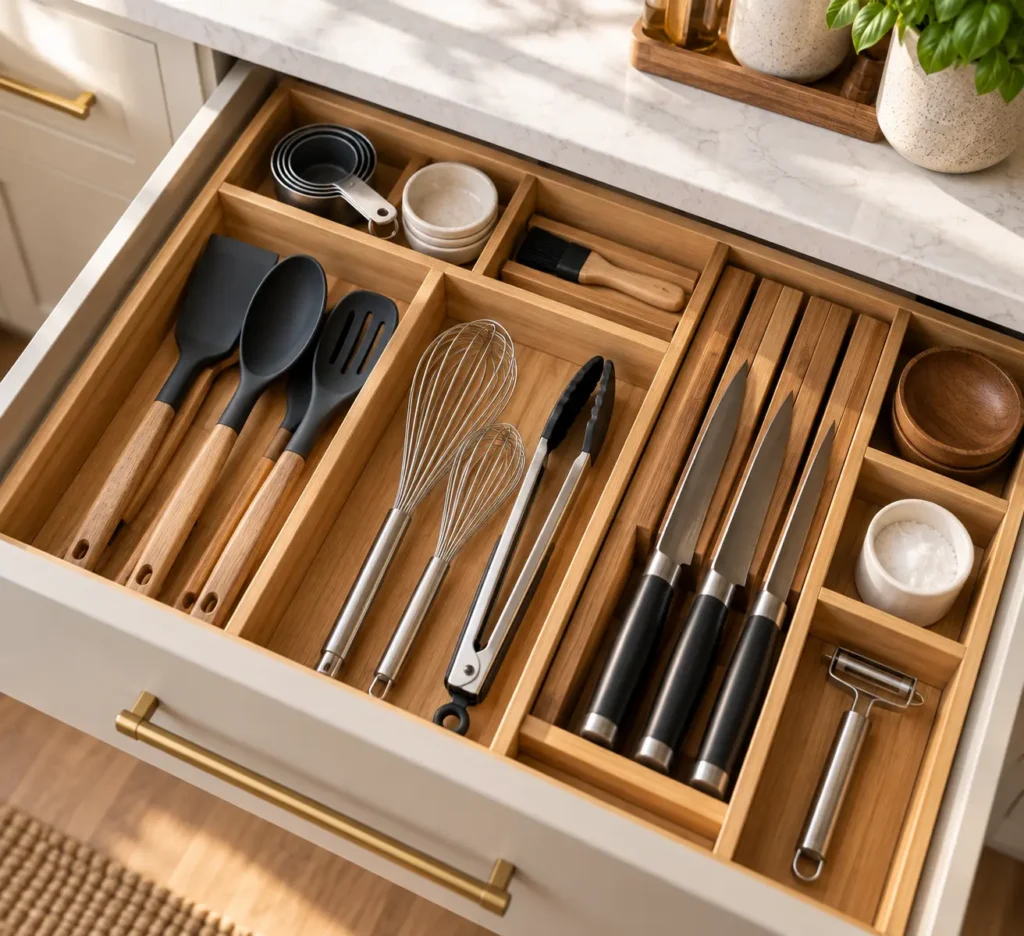
A drawer becomes much more useful when you know exactly what belongs inside it. Instead of letting cooking utensils, gadgets, measuring tools, and miscellaneous items accumulate together, give each drawer a clear category based on how you use your kitchen.
Keep cutlery together, cooking utensils in their own space, and knives somewhere designed specifically for them. Dividers help prevent smaller pieces from spreading into unused corners while making everything easier to see and reach.
You don’t need an organizer in every drawer. Start with the drawers that cause the most frustration and create a system that makes sense for the way you cook.
Organize the Drawers
- Expandable drawer dividers: create flexible sections for utensils of different sizes.
- Bamboo cutlery tray: keeps everyday cutlery contained and easy to reach.
- Knife drawer organizer: stores knives safely without requiring a countertop block.
Weaponize Your Walls and Vertical Airspace
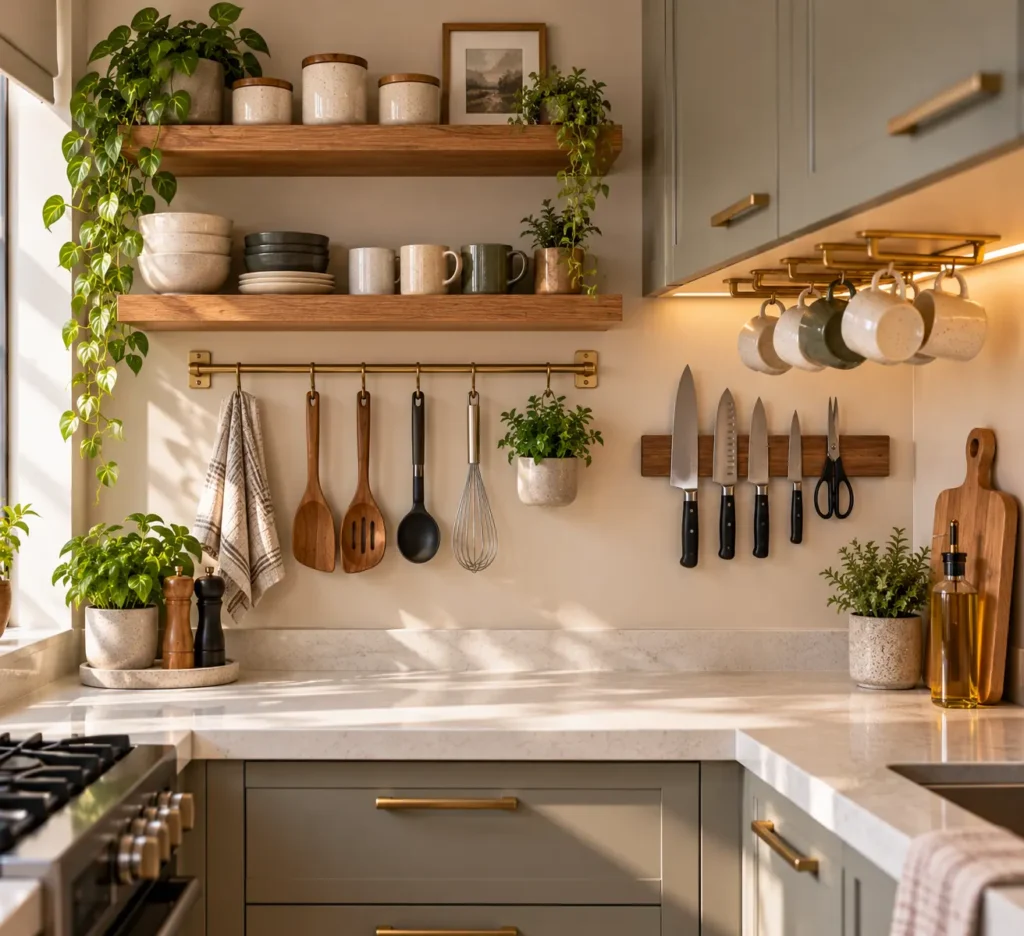
When cabinet space is limited, look at the empty wall around your work surfaces. A wall doesn’t have to remain purely decorative when it could be storing the things you reach for every day.
A slim rail with hooks can hold utensils and kitchen towels, while a magnetic knife strip can move a bulky knife block off the counter entirely. Floating shelves can provide a home for mugs, frequently used ingredients, or a few attractive everyday pieces without consuming valuable floor space.
Even the underside of an upper cabinet can contribute. An under-cabinet mug rack can turn an otherwise unused strip of space into storage while keeping your favourite cups close to the coffee station.
The trick is to keep the system visually light. Vertical storage should free the kitchen from clutter, not simply move the clutter onto the walls.
Put Your Vertical Space to Work
- Magnetic knife strip: frees counter space by moving knives onto the wall.
- Kitchen rail with hooks: keeps frequently used utensils accessible without filling a drawer.
- Floating shelves: add storage without taking up valuable floor area.
- Under-cabinet mug rack: uses the overlooked space beneath upper cabinets.
BRING MORE GOOD IDEAS HOME
A little inspiration, delivered regularly.
Get thoughtful decorating ideas, practical home tips, and fresh inspiration in your inbox.
Weekly Inspiration. No Spam
Use the Hidden Space Above Your Cabinets
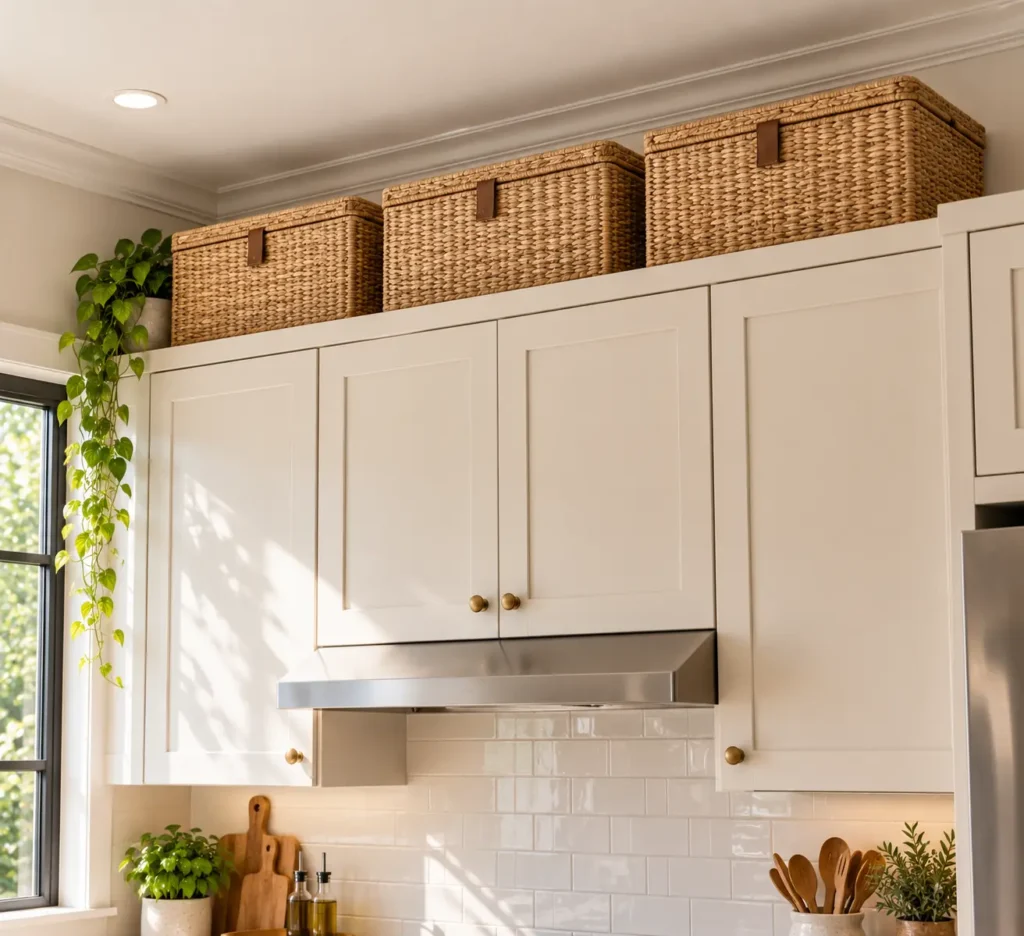
The space above your upper cabinets is easy to overlook because it’s outside your normal eye level. But in a small kitchen, even this awkward strip of space can take pressure off the cabinets you use every day.
It’s best reserved for things you don’t need constantly; serving pieces, seasonal dishes, entertaining supplies, or appliances you only bring out occasionally. Rather than leaving loose items exposed to dust, group them inside a few matching baskets or lidded containers. This keeps the area visually calm while giving those rarely used belongings a proper home.
Because this space is harder to reach, don’t use it for anything you need during everyday cooking. Think of it as your kitchen’s overflow storage rather than an extension of your daily workspace.
Store Occasional Items Up High
- Woven storage baskets: useful for containing seasonal dishes, linens, and other infrequently used pieces while keeping the area visually cohesive.
- Decorative storage boxes: a good option for smaller items that need to stay contained and protected.
- Lidded storage baskets: keep dust away from belongings stored in this less-accessible area.
Exploit Awkward Gaps Wisely
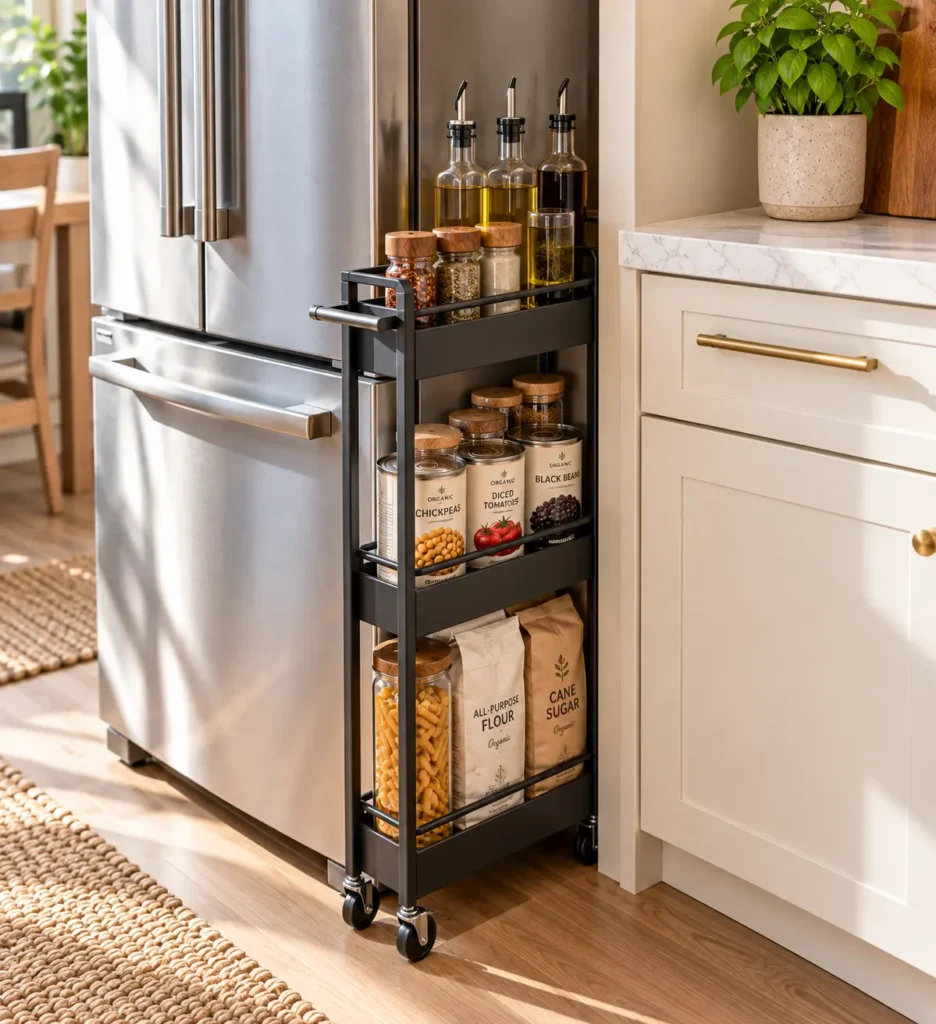
Small kitchens are full of narrow spaces that don’t seem useful enough to furnish but are too valuable to ignore. The gap beside a refrigerator, the space between a cabinet and an appliance, or a slim unused section at the end of a counter can become surprisingly practical storage.
A narrow rolling cart is particularly useful because it can slide into a gap when you don’t need it and pull out when you do. Use it for oils and spices, canned goods, baking supplies, or cleaning essentials depending on where the gap is located.
The key is to measure the opening before buying anything. A storage solution only saves space if it fits comfortably without blocking doors, drawers, ventilation, or normal movement through the kitchen.
Make Narrow Spaces Useful
- Slim rolling cart: turns a narrow gap beside an appliance or cabinet into accessible vertical storage.
- Gap storage shelf: adds simple shelving where a conventional cabinet would be too wide.
- Pull-out gap organizer: keeps narrow items contained while making everything easy to reach.
- Slim stackable drawers: useful for small supplies when the available space is short but deep.
Organize Your Pantry Like a Grocery Store
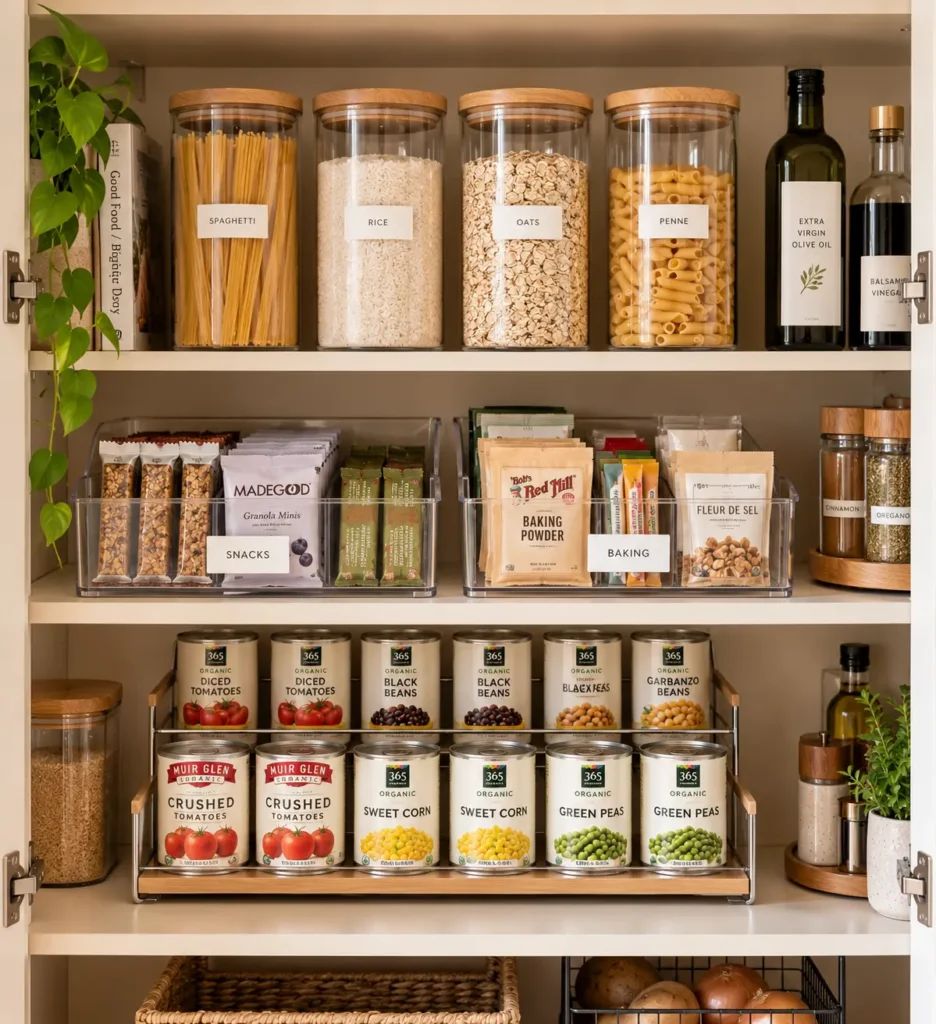
A small pantry becomes much easier to manage when you can see what you have at a glance. Instead of allowing packets, cans, and half-used ingredients to disappear behind one another, group similar foods together and give each category a defined place.
Think about the way a well-organized grocery shelf works: breakfast items together, baking ingredients together, snacks in their own zone, and cans or jars grouped by type. This makes everyday cooking faster and also helps prevent buying something you already have simply because it was hidden at the back.
For foods you use frequently, clear containers can make a particularly big difference. Transfer staples such as flour, rice, pasta, cereal, or grains into airtight containers where practical, while using clear bins to group smaller packets and items that don’t need to be decanted. The goal isn’t to make every shelf perfectly uniform; it’s to make everything easy to see, reach, and put away.
Create a More Efficient Pantry
- Airtight food containers: keep frequently used dry goods contained and easy to identify.
- Clear pantry bins: group smaller packets and loose ingredients so they don’t disappear at the back of the shelf.
- Can organizer: keeps cans arranged in visible rows rather than buried in a deep cabinet.
- Pantry labels: make categories easier to maintain, particularly when several containers look similar.
BONUS: Keep Only What Earns Its Space
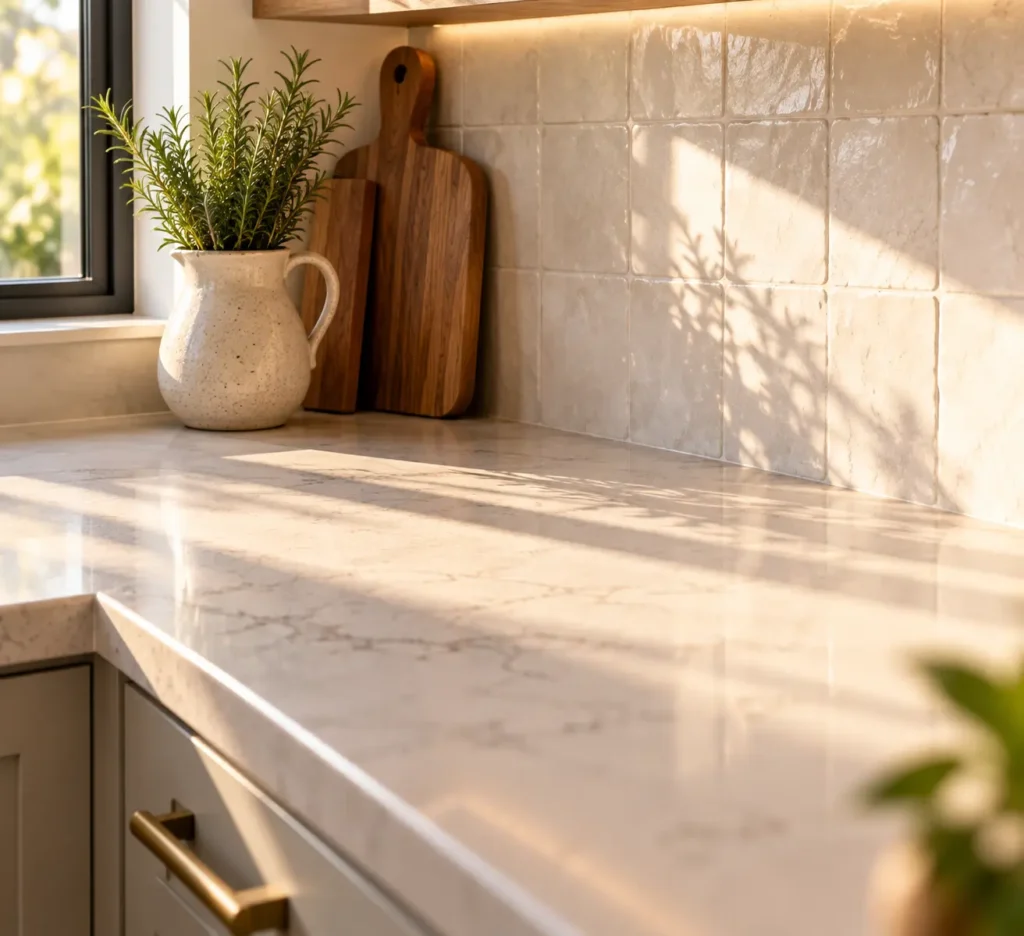
Once you’ve optimized your cabinets, drawers, walls, and pantry, there’s one final question worth asking: does everything in your kitchen actually deserve the space it occupies?
Small kitchens have very little room for things that are rarely used. Duplicate utensils, single-purpose gadgets, chipped containers, and appliances that haven’t been touched in years can quietly consume the storage you’ve worked so hard to create.
You don’t need to strip your kitchen down to the bare minimum. Keep the things you genuinely use and enjoy, but let go of what repeatedly gets pushed to the back. Every item you remove creates a little more breathing room for the things that earn their place.
And before buying another organizer, look at the problem itself. Sometimes the best storage solution isn’t a clever container; it’s realizing you don’t need to store that particular item at all.
Conclusion
Creating more storage in a small kitchen isn’t about squeezing another container into every available corner. It’s about making the space you already have easier to use.
Clear the surfaces, organize around your daily routines, divide the unused air inside cabinets, give drawers a purpose, use your walls, reclaim awkward spaces, and make your pantry visible. Then, once you’ve created that extra capacity, resist the urge to immediately fill it again.
A small kitchen can work remarkably well when every item has a logical home and the things you use most are the easiest to reach. The goal isn’t simply a kitchen that holds more. It’s a kitchen that makes everyday cooking feel simpler, calmer, and more enjoyable.
RELATED ARTICLES