
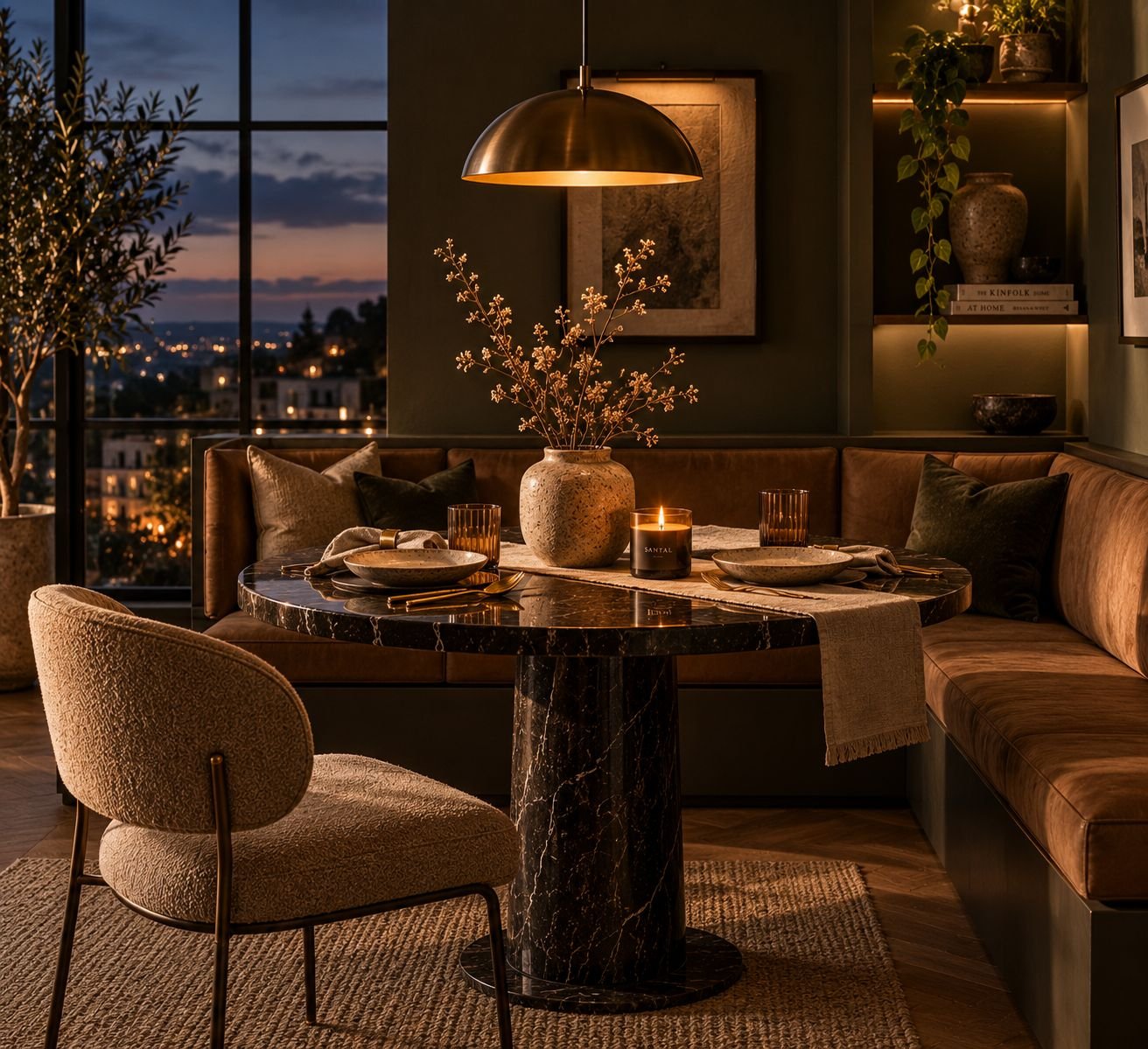
There’s a specific feeling you get eating breakfast at a boutique hotel. The table is tucked into a quiet corner, but it never feels like an afterthought. The lighting is soft, the seating feels comfortable, and everything from the furniture to the linens seems carefully chosen.
Boutique hotels have a way of making even the smallest dining spaces feel warm, elegant, and inviting. The secret isn’t oversized rooms or expensive furniture. It’s the balance of comfortable proportions, atmospheric lighting, natural textures, and a few carefully chosen details.
Whether your dining nook is tucked into a kitchen corner, built into a breakfast area, or part of a small apartment, these ideas can help you create that same feeling at home; a space that feels less like somewhere you simply eat and more like a little retreat of your own.
Let the Table Fit the Room
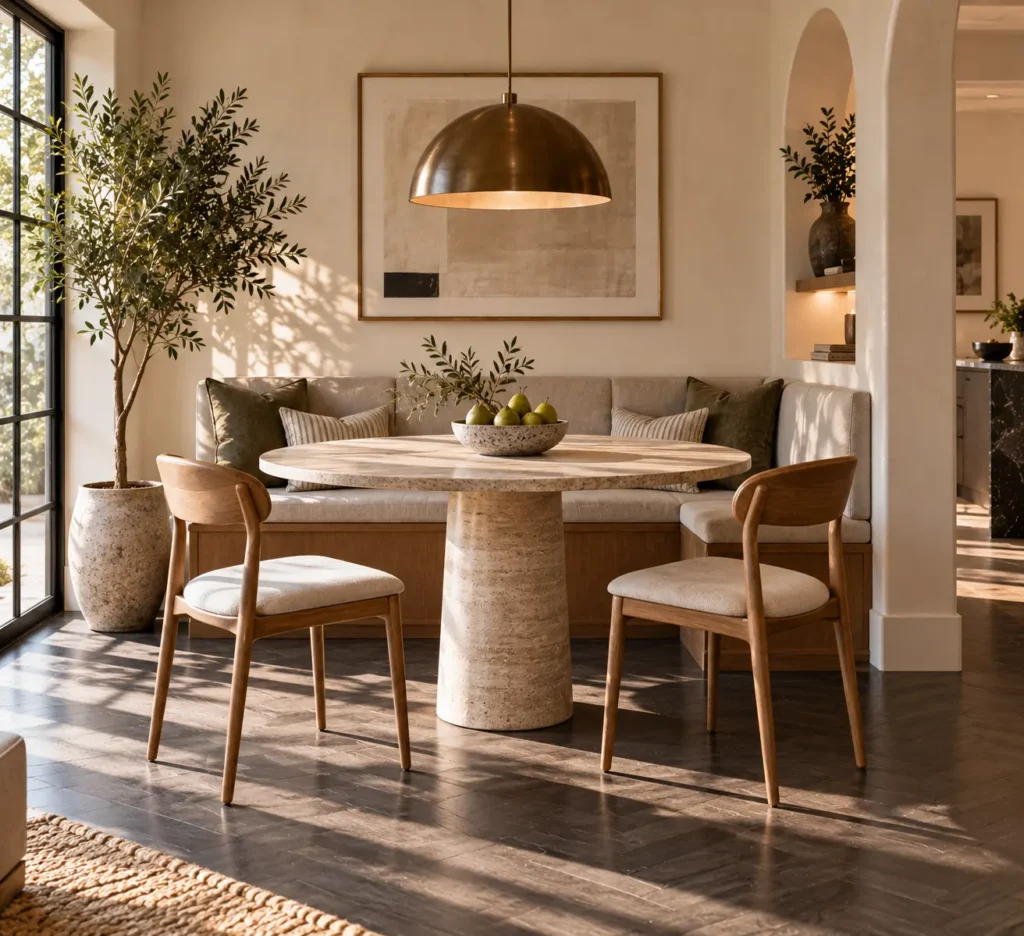
One of the easiest ways to make a small dining nook feel more luxurious is to resist buying the biggest table that fits the space. Boutique hotels often do the opposite. They choose a table that leaves enough room to move comfortably around it, making the entire nook feel lighter and more considered.
Round tables are especially useful in smaller spaces because they soften the room and make it easier for everyone to gather around. A pedestal base is even more practical when space is tight because there are no four corner legs getting in the way of chairs or a nearby banquette.
If you occasionally host more people, an extendable dining table can give you that flexibility without making the nook feel oversized every day. The goal isn’t to fill the available space. It’s to leave enough breathing room that the table feels like it belongs there.
Find the Right Fit
- Round pedestal dining table: ideal for creating a softer, more intimate arrangement in a compact nook.
- Compact dining table: a good choice when every inch of floor space matters.
- Extendable dining table: useful when you want a small everyday footprint with the option to accommodate guests.

spaces
Happy
days ♡
Make Every Seat the Best Seat
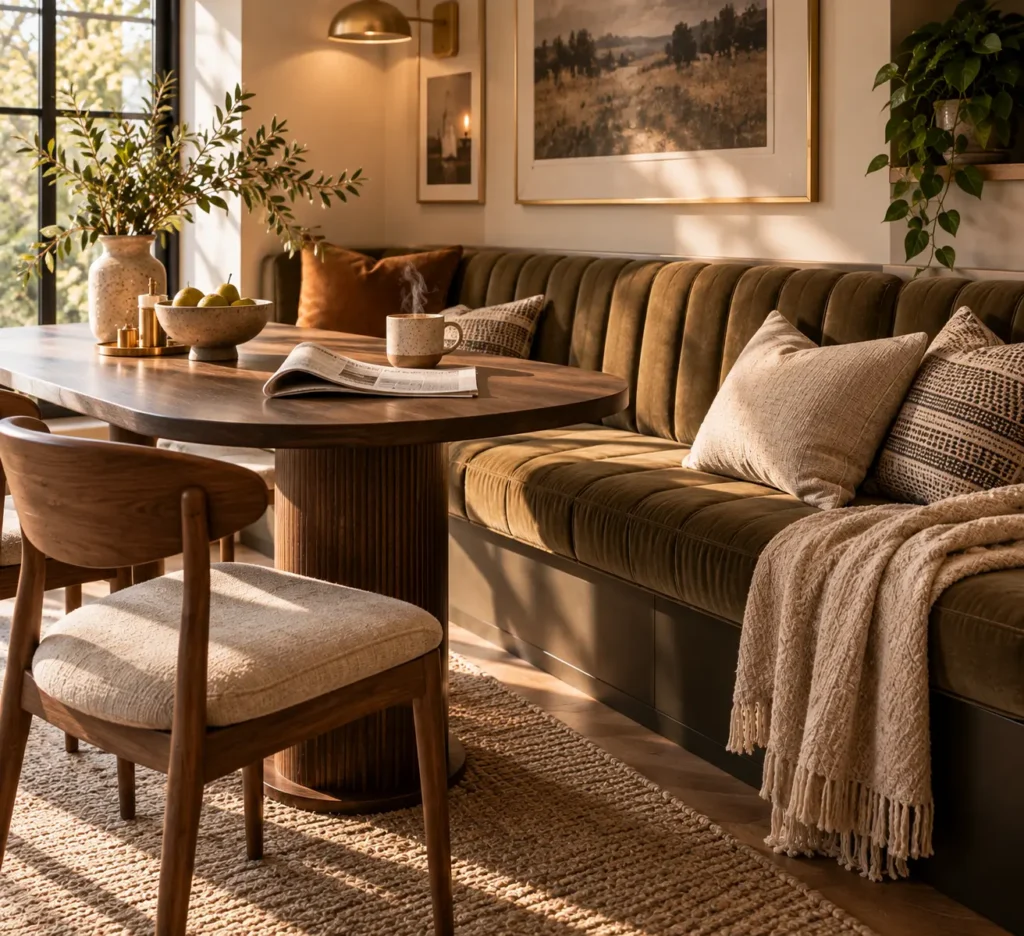
A beautiful dining nook isn’t much use if no one wants to sit there. Boutique hotels pay just as much attention to comfort as they do to appearance, choosing seating that encourages guests to settle in and stay awhile.
Look for chairs with supportive backs, upholstered seats, or gently curved frames that feel comfortable even after a long breakfast or dinner. In a particularly small nook, an upholstered bench or banquette-style seat can make better use of the wall space while giving the area that tailored, restaurant-inspired feeling.
You don’t necessarily need a custom built-in. A well-proportioned upholstered bench can create a similar sense of permanence without turning the project into a renovation. If your space already has a bench, soften it with a comfortable cushion so it feels just as inviting as the chairs around it.
The best seating is the kind that makes you want to linger a little longer.
Choose Comfortable Seating
- Upholstered dining chairs: add softness while keeping the arrangement refined.
- Upholstered dining bench: particularly useful for compact nooks and wall-side seating.
- Curved-back dining chair: softens the harder lines of a table and surrounding architecture.
- Dining seat cushion: an easy way to make an existing bench or hard seat more comfortable.
Put the Light Where the Conversation Happens
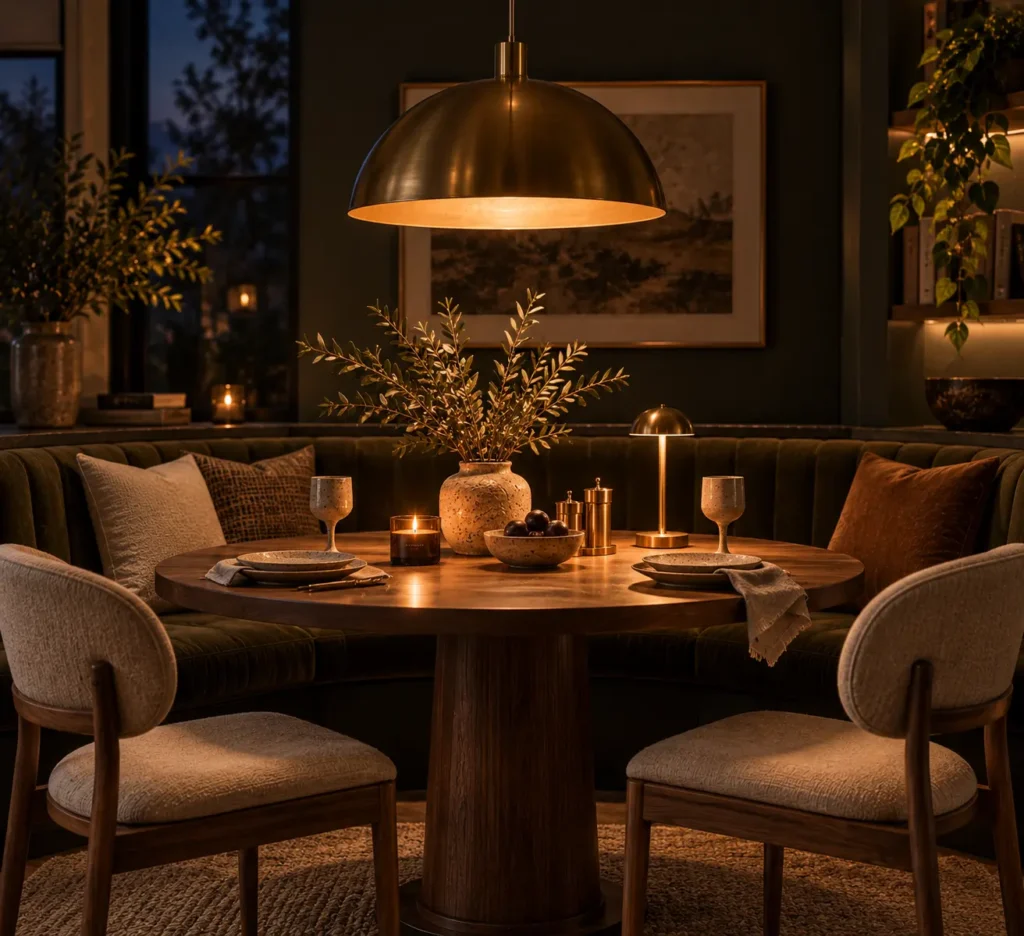
Lighting has a bigger impact on a dining nook than almost any other detail. A bright overhead fixture can make a small space feel exposed, while a softer, more focused glow makes the table feel like its own little destination.
Boutique hotels tend to keep the light close to where people actually gather. Hang a pendant directly above the centre of the table whenever possible, ideally low enough to create intimacy without getting in the way of conversation. A sculptural shade, warm brass finish, or softly diffused glass can also become part of the room’s design rather than simply serving as a practical light source.
If rewiring isn’t an option, a rechargeable table lamp can create a similar atmosphere without any installation. Pair it with warm-toned bulbs, and if possible, choose a dimmable option so the nook can shift from bright morning breakfasts to a softer evening setting.
Light the Table
- Low-hanging pendant light: creates a visual anchor and focuses light directly where you gather.
- Rechargeable table lamp: an easy way to introduce a warm, intimate glow without hardwiring.
- Warm white LED bulbs: around 2700K–3000K can create a softer, more welcoming atmosphere.
Keep the Table Ready for Guests
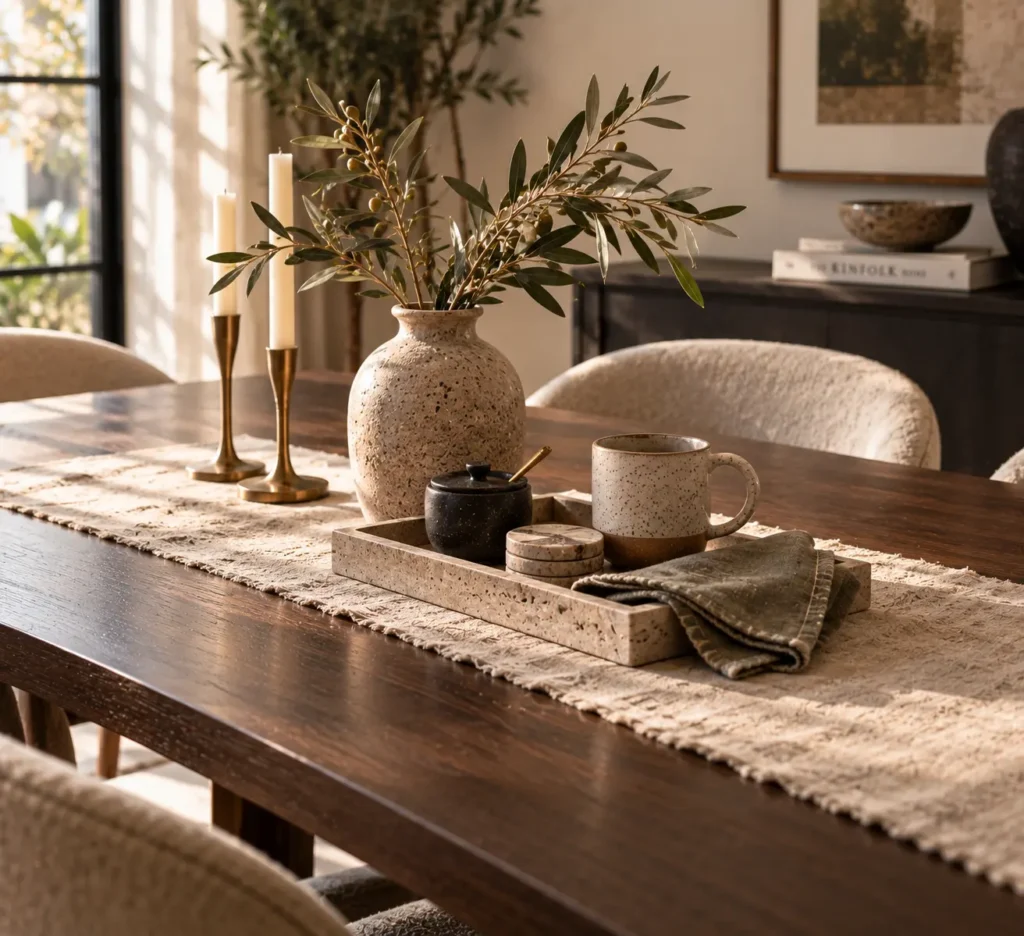
One thing you’ll notice in boutique hotels is that the dining table is rarely completely empty. It doesn’t need an elaborate centrepiece or carefully arranged décor. A few useful, beautiful pieces are enough to make the space feel welcoming before anyone even sits down.
A linen table runner can soften the surface without making it feel formal, while a small ceramic vase or simple decorative bowl gives the table a finished focal point. You could also keep a serving tray nearby for breakfast essentials, allowing practical objects to become part of the arrangement rather than adding decoration simply for the sake of it.
The key is restraint. Leave enough open space that you can actually sit down and eat without having to move half the room first.
Style the Table Every Day
- Linen table runner: adds softness and a relaxed, hotel-inspired layer.
- Small ceramic vase: keeps the centrepiece simple while bringing in a touch of shape and texture.
- Decorative bowl: useful for fruit or other everyday items while adding visual weight.
- Marble or stone serving tray: creates a polished base for pieces you use regularly.
Give Everyday Pieces a Home Nearby
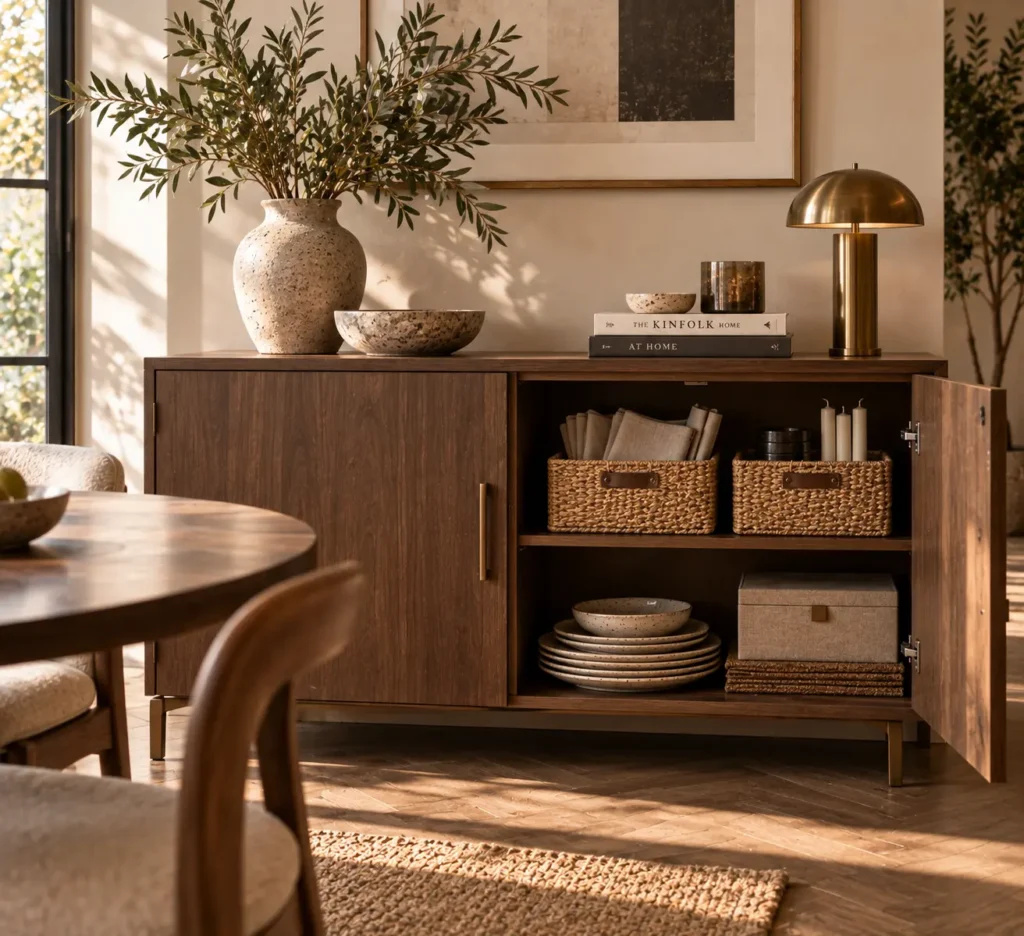
Boutique hotels keep the dining table reserved for dining, not storage. Plates, serving dishes, table linens, and entertaining essentials have a dedicated place nearby, making it easy to set the table without searching through different cupboards.
A slim sideboard, buffet cabinet, or credenza can provide that same sense of order at home. Choose one that fits comfortably along the wall without crowding the dining area, then use its interior for the things you reach for regularly.
Inside, woven baskets or decorative storage boxes can keep smaller items such as napkins, candles, placemats, and serving utensils organised. Keeping everything close but out of sight helps the nook feel calm and intentional.
Store Dining Essentials
- Slim sideboard or credenza: keeps dining essentials close while leaving the table clear.
- Buffet cabinet: useful when you need more enclosed storage for dinnerware and serving pieces.
- Woven storage baskets: soften open storage and keep smaller items grouped together.
- Decorative storage boxes: useful for napkins, candles, placemats, and other smaller essentials.
BRING MORE GOOD IDEAS HOME
A little inspiration, delivered regularly.
Get thoughtful decorating ideas, practical home tips, and fresh inspiration in your inbox.
Weekly Inspiration. No Spam
Wrap the Room in Softness
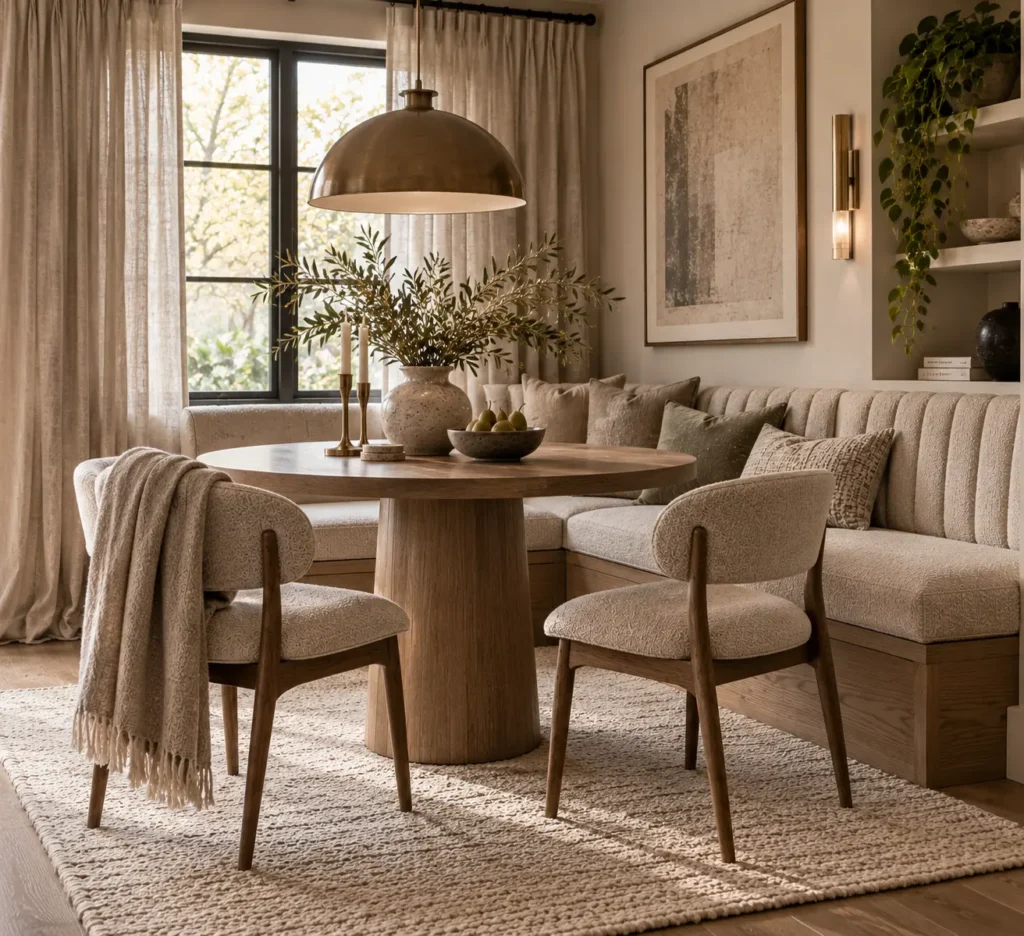
A dining nook filled with hard surfaces can feel cold, no matter how beautiful the furniture is. Boutique hotels balance wood, stone, and metal with softer materials that make the space feel warmer and more comfortable.
An area rug helps define the dining area while adding softness underfoot, particularly when the nook shares an open-plan room with the kitchen or living space. Linen curtains or tailored Roman shades can soften the light coming through a window, while upholstered seating adds another layer of comfort.
You don’t need to cover every surface with fabric. A few carefully chosen textiles are enough to change the way the nook feels.
Add Soft Layers
- Low-pile area rug: anchors the dining area while adding warmth and softness underfoot.
- Linen curtains: gently filter daylight and make the nook feel softer and more finished.
- Roman shades: a tailored option when you want a cleaner, more architectural look.
- Linen tablecloth: adds another tactile layer when you want the table to feel more relaxed and intimate.
Style with Things You'll Actually Use
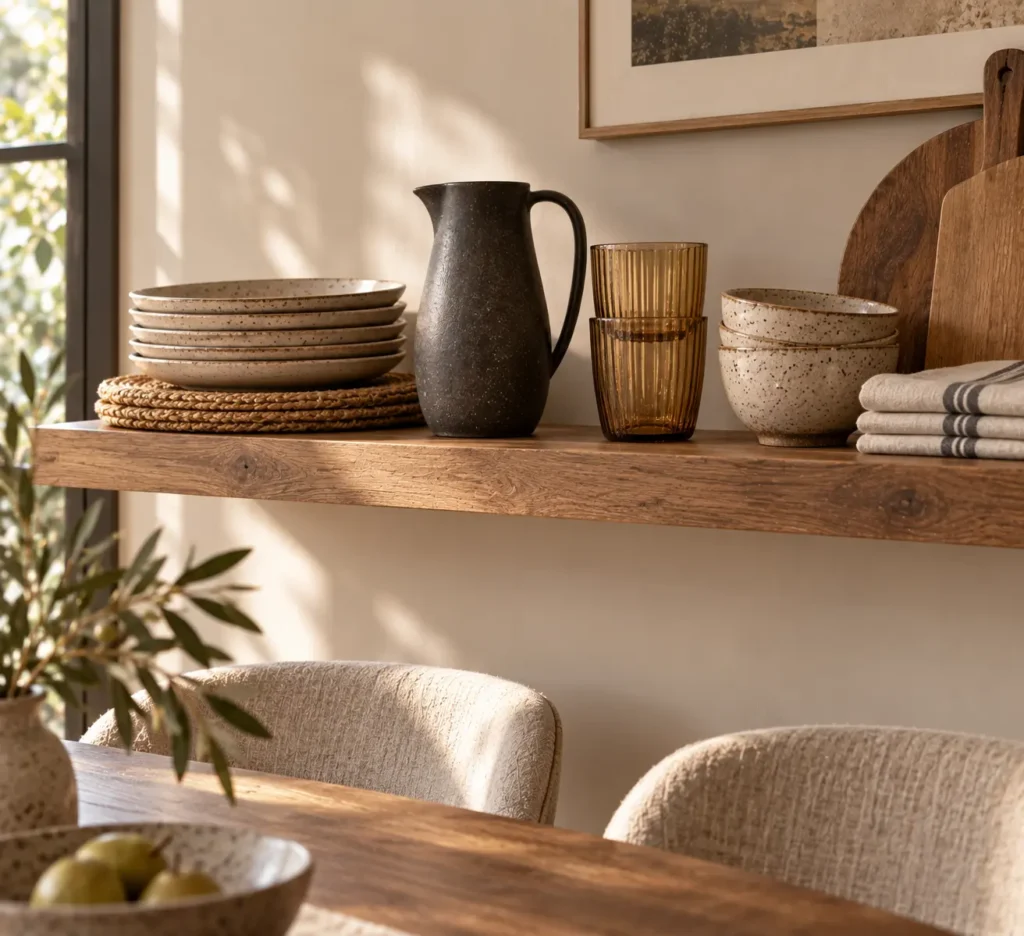
One of the reasons boutique hotels feel so effortless is that the décor rarely exists purely for decoration. The pieces on display are often the same things guests use throughout the day, which makes the space feel both beautiful and practical.
Instead of filling your dining nook with objects that simply take up space, let everyday essentials become part of the design. Stack your favourite dinnerware on a nearby shelf, keep linen napkins within reach, or display beautiful glassware where you can easily grab it.
A few well-chosen pieces can make the nook feel lived in without making it look cluttered. Stoneware dinnerware, woven placemats, a ceramic pitcher, or a wooden serving board can all add character while still earning their place at the table.
Display Everyday Essentials
- Stoneware dinnerware set: adds warmth and texture while remaining practical enough for everyday meals.
- Linen napkins: introduce softness and a more elevated dining experience.
- Drinking glasses: attractive everyday glassware can become part of the visual styling.
- Woven placemats: add natural texture while protecting the table.
- Ceramic pitcher: useful for serving water while doubling as a simple tabletop accent.
- Wooden serving board: brings warmth to the table and can be used for breakfast, snacks, or entertaining.
Give It a View, Even a Small One
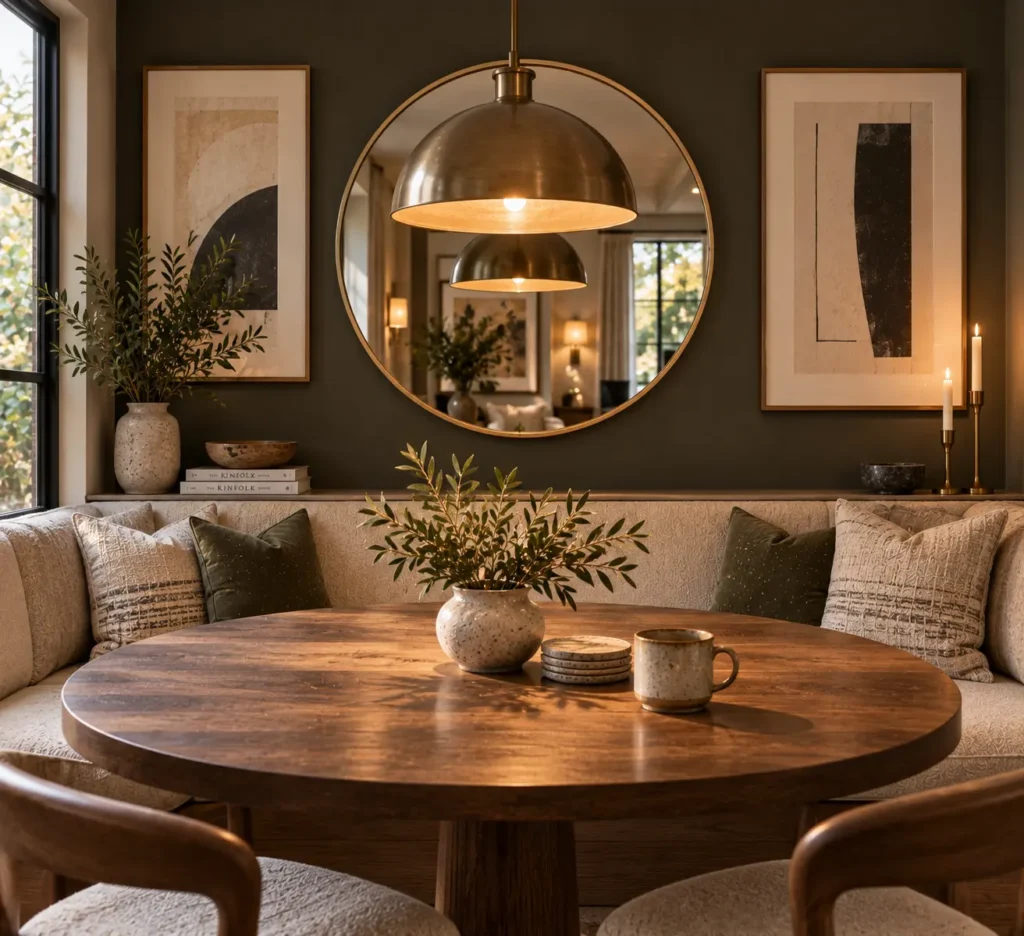
Not every dining nook has a beautiful window or an expansive view. What matters is giving your eye somewhere pleasant to rest while you’re sitting at the table.
Boutique hotels often use a single strong focal point rather than filling every wall with decoration. If your nook faces a blank wall, a large framed print or oversized mirror can immediately give the area more presence. A mirror is particularly useful when positioned to catch the glow of a pendant or reflect natural light, making a compact nook feel brighter and more open.
If you have a little more room, a floating shelf can provide a place for a few favourite pieces without turning the wall into a collection of small objects.
The goal isn’t to fill the wall. It’s simply to make the view from the table feel considered.
Create a Beautiful View
- Large framed artwork: gives the nook a clear focal point without overwhelming it.
- Wall mirror: reflects light and can make a compact dining area feel more spacious.
- Floating shelf: provides a restrained place to display a few useful or meaningful pieces.
Finish with Something Living
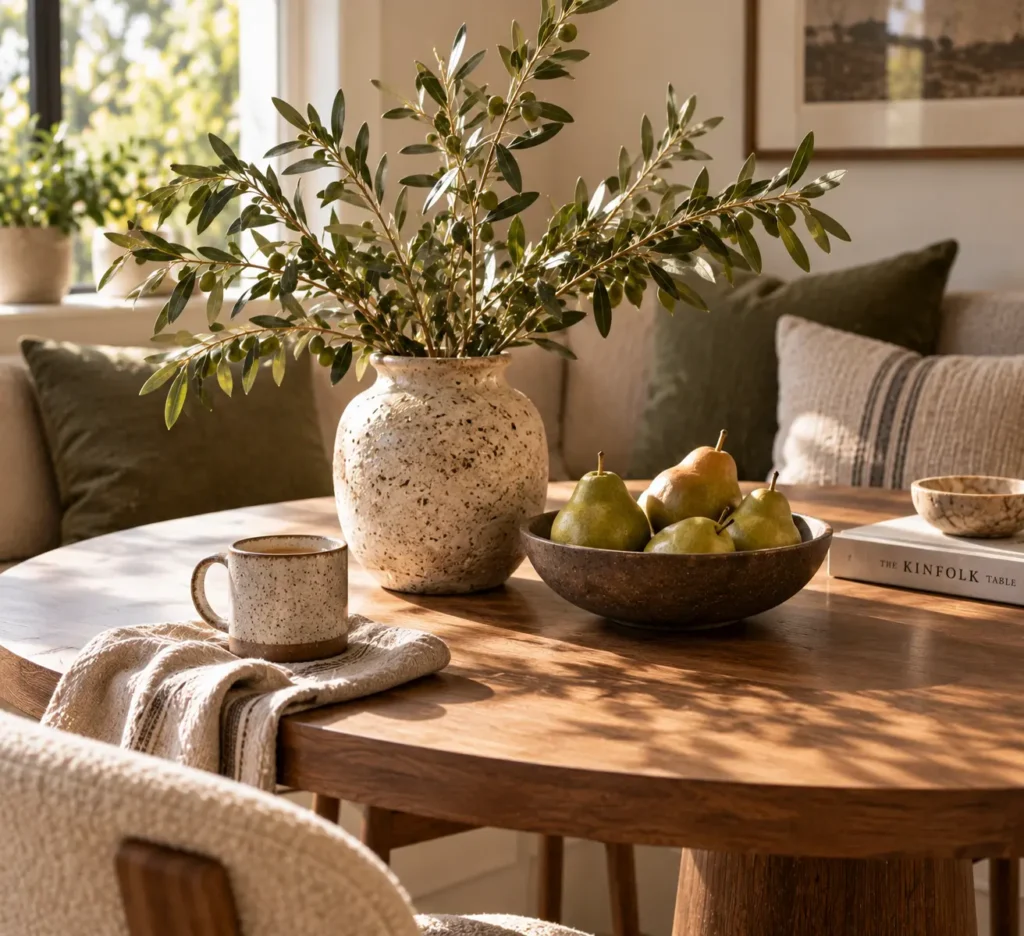
The easiest way to make a dining nook feel welcoming is to bring in something that changes with the seasons. Fresh flowers, leafy branches, or even a simple bowl of fruit add colour, texture, and a sense of freshness that no purely decorative object can quite replace.
Keep the arrangement relaxed rather than overly elaborate. A ceramic vase with a few branches, a small arrangement of flowers, or a bowl of seasonal fruit is often enough to soften the table and make the nook feel cared for.
If you don’t want the maintenance of fresh greenery, realistic faux stems can give you the same visual softness with very little upkeep. The important thing is to choose just one or two natural elements rather than filling the space with greenery.
Bring the Space to Life
- Ceramic vase: a simple, tactile foundation for fresh or faux stems.
- Faux olive stems: bring in an understated, Mediterranean-inspired touch without regular maintenance.
- Fresh flowers: add colour and a sense of occasion to an otherwise everyday dining space.
- Decorative fruit bowl: combines function and styling while bringing natural colour to the table.
A Small Detail That Changes the Whole Experience
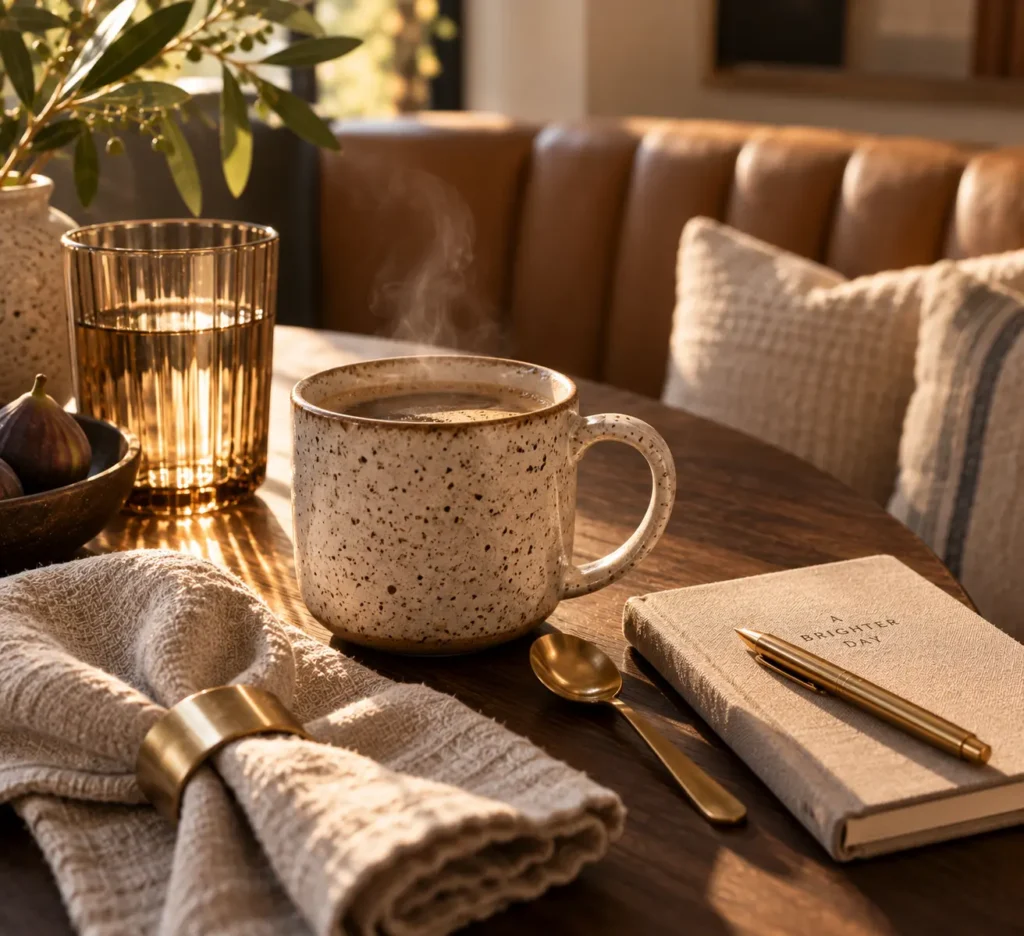
The most memorable dining nooks aren’t necessarily the ones with the most impressive furniture. They’re the ones where every detail quietly contributes to how the space feels.
A favourite vase, a beautiful set of glasses, soft lighting, comfortable seating, and a table that isn’t crowded with unnecessary objects can make an ordinary breakfast feel surprisingly special. Think of these details the way a boutique hotel does: not as things to display, but as small touches that make the experience of being there better.
You don’t need to recreate an entire hotel restaurant. Choose the details that suit the way you actually use your dining nook, and let the space become a little more inviting over time.
Conclusion
The best boutique hotels don’t rely on grand dining rooms or extravagant décor to leave a lasting impression. They make the most of every square foot by choosing pieces that are comfortable, practical, and beautiful to live with every day.
Whether you’re refreshing a cosy breakfast corner or furnishing a small apartment dining nook from scratch, focus on the details that make the space feel welcoming. A well-sized table, comfortable seating, warm lighting, soft textures, and a few carefully chosen finishing touches can transform even the smallest corner into a place you’ll look forward to gathering in.
You don’t need a passport or a massive budget to bring a little of that boutique-hotel feeling home. Sometimes, creating your own retreat is simply about making an ordinary corner feel special enough to linger in.
RELATED ARTICLES